
14 Reasons Why Thailand Is NOT the Sick Man of Asia
Recent headlines, sparked by the Financial Times’ February 2026 article, How Thailand Became the ‘Sick Man’ of Asia, raise concerns about Thailand’s economic health. The article points to economic growth stuck near 2%, household debt around 87% of GDP (Bank of Thailand, Q3 2025), and an aging population, with more than 20% of the population aged 60 or older. It also highlights strained consumption, stalled manufacturing, slowing tourism, and ongoing political instability.
These are real structural pressures, not passing shocks, and they represent Thailand’s most serious test in decades. Yet the label misses deeper realities I’ve witnessed firsthand.
For more than three decades, I have built businesses, invested capital, and worked alongside Thai professionals through financial crises, political upheavals, and global shocks. Since I arrived in 1992, the country has endured multiple coups and constitutional changes, yet it has continued to function, adapt, and often emerge stronger from the ordeal.
It is easy to dwell on what is broken. It is harder, and more important, to recognize what still works. Beneath the current pressures lies a foundation that remains unusually solid for a middle-income economy.
1. A weak central government is not all bad
Thailand’s political instability and relatively weak central government are often seen as weaknesses. That view is understandable. But there is another side worth considering.
A government with limited central power has less ability to impose heavy taxes, dense regulation, or intrusive controls on daily life and business. For people who value independence and flexibility, this can be an essential advantage.
To examine whether Thailand’s weaker central government is associated with a lighter tax and regulatory burden, I compared 21 medium- and large-population countries across five measures: government spending as a share of GDP, tax-to-GDP ratio, top personal income tax rate, corporate tax rate, and average VAT or sales tax rate, using data from the World Bank, IMF, OECD, and significant tax advisory firms. Countries such as the Netherlands and Germany ranked among the highest-tax jurisdictions. Thailand and Indonesia ranked among the lowest.
This does not mean weak government is always better. Strong institutions and practical public services matter. But it does suggest that Thailand’s lighter state footprint leaves more room for individual initiative and entrepreneurship.
For those who value economic freedom and lower state interference, this is an often-overlooked strength.
2. A diversified economy reduces the risk of major economic collapse
Thailand does not rely on a single engine. Agriculture, manufacturing, tourism, and digital services all contribute meaningfully. In recent years, exports have accounted for roughly 65-70% of GDP (World Bank and Bank of Thailand data). From automobiles to electronics to rice, this diversity has helped triple per capita income since 2000.
When I first arrived, the export base was narrow and fragile. Over time, it broadened. Today, when one sector weakens, another often absorbs the shock. That balance does not eliminate risk, but it reduces the chance of systemic collapse.
3. Food security gives Thailand long-term economic and social stability
When compared with other large-population countries, the contrast is striking. Neighbors such as Indonesia and the Philippines must import millions of tons of food each year to meet basic needs. Thailand, by contrast, remains a net exporter, consistently producing more than it consumes.
It is one of the few countries, alongside major producers like Brazil and the United States, that can fully feed its population and still generate large surpluses. According to the World Bank and the Food and Agriculture Organization, about one-third of Thailand’s land is arable and supports reliable crop production. In 2024, rice exports reached nearly 10 million tons, one of the highest volumes globally, according to USDA Foreign Agricultural Service data.
I remember speaking with my colleague from Egypt after the war in Ukraine began and hearing how quickly daily life had become more difficult. As one of the world’s largest wheat importers, Egypt was hit hard when global grain markets were disrupted, and a weakening currency made the shock even worse. By late 2023, inflation had surged to nearly 38%, and food prices had risen more than 70%, turning what might seem like abstract statistics into real pressure on ordinary families.
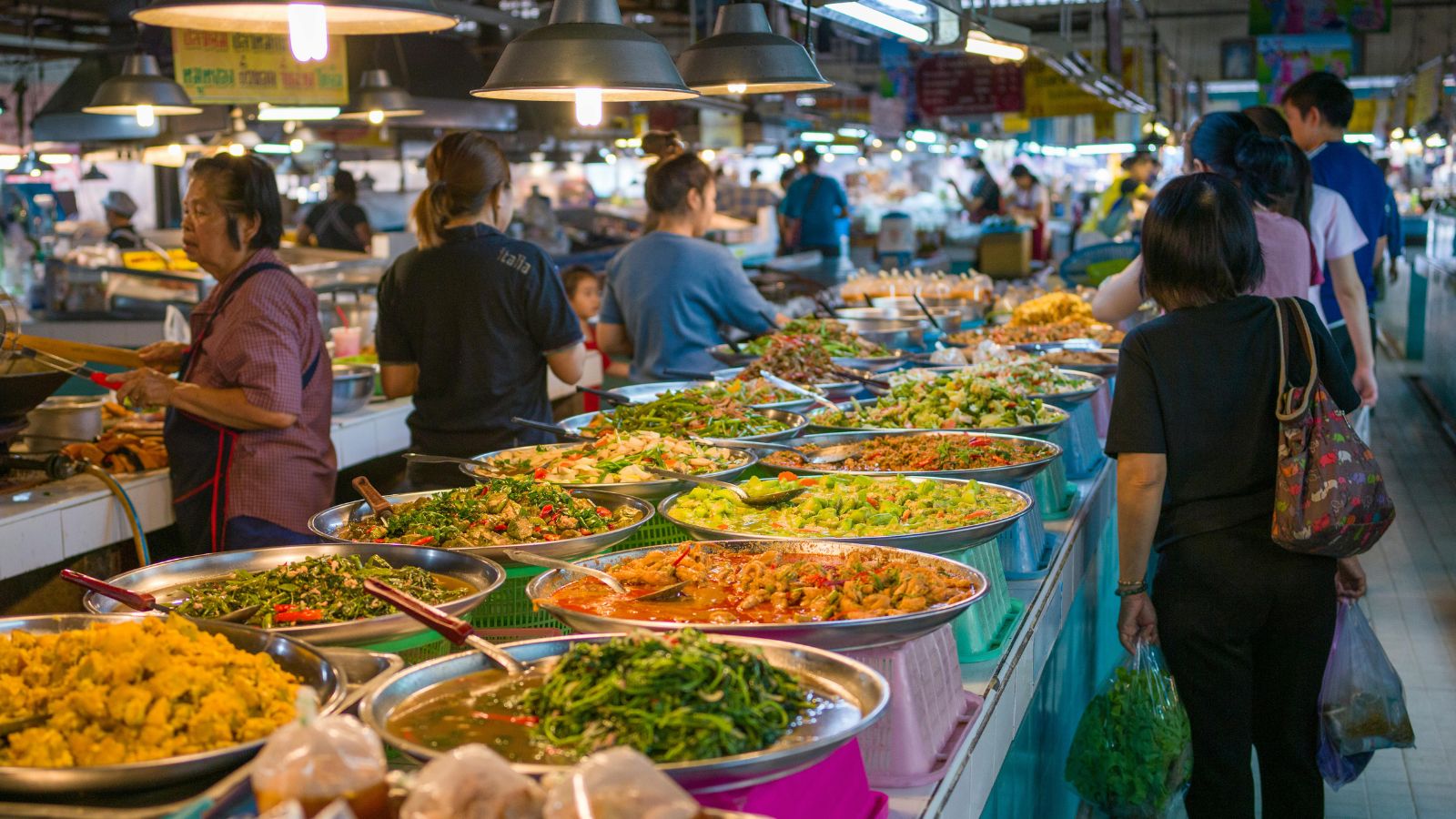
After traveling through more than 50 provinces in Thailand, what stands out most is how deeply people remain connected to the land. Almost every usable surface is cultivated, from rice fields in the northeast to coffee in the northern mountains to coconuts and pineapples in the south. Food production here is not abstract. It is visible, constant, and woven into daily life. And in an era of fragile global supply chains, that matters. While countries like Egypt remain vulnerable to external shocks, Thailand’s food surplus serves as a quiet yet powerful source of stability, fostering steady confidence amid uncertainty.

4. Economic institutions continue to function despite political disruption
Thailand rarely makes headlines for bold reform, yet its economic institutional base is stronger than many assume. Inflation was near zero in 2024 and remained subdued through 2025 and early 2026 (Bank of Thailand). The baht has stayed relatively stable. The banking system remains conservative and well supervised. Political volatility imposes real costs, but core administrative and financial systems continue to function.
I witnessed the devastation of the 1997 Asian financial crisis firsthand. More important than the recovery was the mindset shift that followed. Banks became cautious. Regulators became vigilant. Risk management improved significantly. It’s far from perfect, but it’s much improved.
Public finance shows similar discipline. The 2018 fiscal framework set a formal ceiling near 70% of GDP. The Public Debt Management Office and earlier informal rules reinforced restraint. Thai politicians are unable to borrow public funds to buy short-term political popularity routinely. That restraint is rare in emerging markets.
5. Reliable energy infrastructure strengthens Thailand’s competitiveness
Blackouts in Bangkok are almost nonexistent. Early private-sector participation created a reliable grid, with stable profits encouraging investment in capacity and maintenance. This stands in sharp contrast to places such as Pakistan, Lebanon, or parts of Sub-Saharan Africa, where frequent outages disrupt daily life and business, and even to recent examples in Europe, including the 2025 Iberian Peninsula blackout. Thailand’s consistent power supply is a meaningful advantage that supports manufacturing, data centers, and urban life without interruption.
6. Thailand’s transport network quietly supports growth
I recently returned from two road trips, one to northern Thailand and the other to the northeast. In both cases, I was impressed by the quality of the highways, especially the newly opened routes. Thailand has built an extensive road network of more than 180,000 kilometers of highways and main roads (Department of Highways data), with high paving rates and strong connectivity across provinces. This is far superior to many developing countries, where poor roads slow logistics and raise costs. This partially explains why Thailand relies more on efficient trucking than long-distance rail.
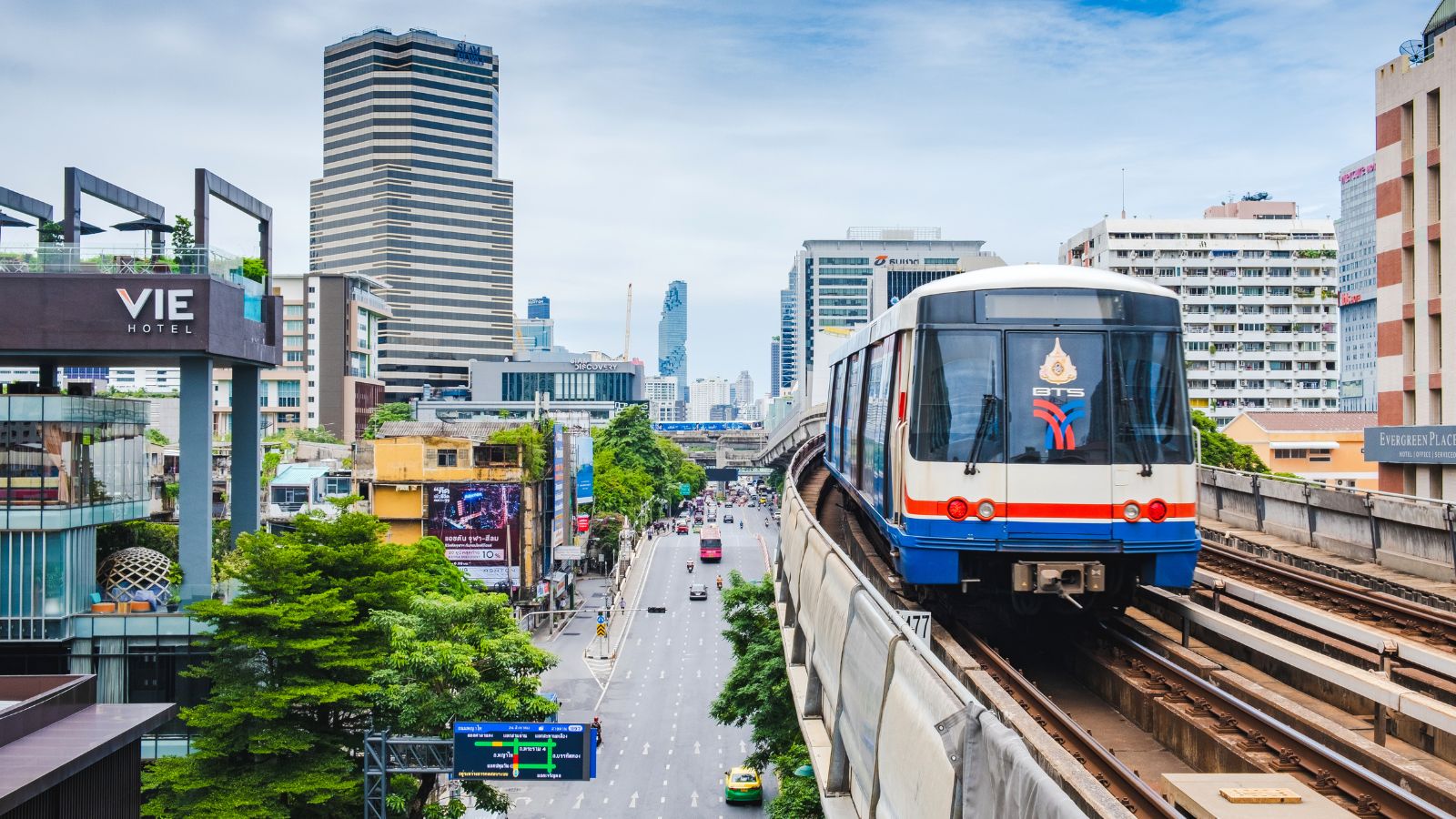
Bangkok’s electric rail system, including the BTS and MRT, ranks among the world’s most effective urban networks for coverage, reliability, and ridership in a megacity context. A trip on mass transit in New York or London highlights how well Bangkok’s system performs and how safe and trouble-free it is. These networks support labor mobility and reduce population pressure in central areas.
Airports are another strength. Thailand has commercial facilities in nearly every medium- to large-sized province and a highly competitive domestic airline market. Carriers such as Thai AirAsia, Nok Air, and Thai Lion Air keep fares low and connectivity high, even to remote regions. Bangkok’s Suvarnabhumi Airport consistently ranks around the 20th most busy airports in the world.
Together, solid roads, advanced urban rail, and widespread airports form a logistics backbone that remains competitive in Southeast Asia. They support productivity and investment despite broader challenges.
7. Strong execution drives performance, but innovation now limits growth
Thailand offers a combination of affordable labor and solid technical skills. That is why foreign investment continues to arrive. Surely other countries can provide a more cutting-edge workforce, but Thailand’s workforce has its strengths.
But execution has limits. When we launched CoffeeWORKS in 1995, I asked our team to build a professional accounting system. After months, I had to do it myself, not from lack of effort, but from lack of exposure to scalable, world-class systems.
I have seen this pattern many times. Expect Thai teams to invent systems from scratch, and expect progress to stall. Provide structure and clarity, and performance accelerates. Japanese manufacturers in Thailand, like Toyota, demonstrate this well. With embedded systems, Thai teams perform at world-class levels. They are disciplined, fast learners, and highly loyal.
Now this strength must evolve. With rapid aging and a shrinking labor supply, Thailand must move beyond execution. It needs stronger education, deeper critical thinking, and greater innovation capacity. The next phase requires builders, not just operators.
8. High-quality digital connectivity supports global integration
Thailand’s digital backbone has reached global standards. From my home office in Bangkok, I run two broadband lines delivering nearly 1,000 Mbps. That has supported more than 800 remote interviews for my podcast, My Worst Investment Ever, without technical failure. In fact, many of my US-based guests report slower speeds.
This is not about convenience. It is about readiness for remote work, digital services, and global integration. Thailand has built this foundation quietly and effectively.
9. Tourism remains a large, resilient, and widely shared industry
Years ago, when I was Thailand’s head of research at regional investment bank CLSA, a visiting World Bank economist asked me a simple question: What is Thailand’s real competitive advantage?
He listed strengths for other Asian countries, then paused and said he struggled to define Thailand’s. I asked him where he had stayed the night before. He replied, “The Mandarin Oriental, just down the street.” I asked how it was.
“Best service in the world,” he said. He answered his own question. Thailand’s true competitive advantage is its people. Their service mindset and genuine desire to help others remain unmatched.
Tourism is not just an industry. It is part of Thailand’s identity. In 2019, the country welcomed about 40 million international visitors. After reopening, arrivals rose to roughly 35 million in 2024 before slipping to about 33 million in 2025 amid safety concerns, regional tensions, and competition. Even with that decline, Thailand remains among the world’s top ten destinations, and Bangkok is ranked among the most visited cities globally with about 30 million international visitors in 2025.
At this scale, fast growth in the tourism industry is nearly impossible. So it would be unrealistic to expect it. What makes Thai tourism special is how widely the benefits spread. Drivers, vendors, small hotels, restaurants, and staff all participate. Visitors are not just welcomed. They are embraced.

10. Improving capital markets and governance attracts serious investment
It has been a rough ride for the Stock Exchange of Thailand since I started as a financial analyst at the now-defunct Dynamic Eastern Finance Thailand in September 1993. I remember the SET Index peaking near 1,789 in early 1994. More than 30 years later, the index sits around 1,354 (February 2026), still well below that high.
There is no arguing with the data. Thailand’s listed companies are in poor shape. According to LSEG statistics that I track, the market ranks near the bottom in Asia for revenue growth, profit growth, and profit margins. This weakness is reflected in valuations: price-to-sales and EV-to-EBITDA multiples show Thailand as the cheapest market in the region, yet on more traditional measures such as price-to-earnings and price-to-book value, it sits closer to the middle of the pack. In other words, despite looking cheap on some metrics, the market may still not be cheap enough to spark a sustained rally given its weak underlying fundamentals. But the story is not entirely negative.
At the end of 2025, Thailand’s equity markets included 967 listed entities, comprising 730 on the main SET board (674 companies and 56 property funds and REITs), 229 on the Market for Alternative Investment (mai), and 8 on the LiVE Exchange, according to official data from the Stock Exchange of Thailand. Together, these markets gave Thailand one of the deepest capital markets in ASEAN, with a total market capitalization of around US$542 billion at year-end.
Even in 2025, a weak year for the SET, average trading volume remained higher than in Vietnam, Malaysia, BSE India, Pakistan, and the Philippines, and only slightly below Singapore. Many Thai firms remain genuinely investable. Liquidity is real, institutional participation is active, and the SET often leads ASEAN in monthly trading value. This credibility continues to attract capital and supports growth sectors despite negative headlines.
Despite ongoing political turbulence, technical governance has steadily improved over the past two decades. Disclosure standards, investor protection, and regulatory enforcement are far stronger, driven by post-1997 reforms, the 2017 governance code, and ongoing SEC and SET initiatives. One example is the JUMP+ Program, another is Uncovered Thai Stocks. Again, these institutions are far from perfect, but they continue to progress.
11. Central geography creates lasting strategic advantages
Thailand sits at the heart of mainland Southeast Asia, between China and India, and is positioned to serve the world’s two largest populations and fastest-growing consumer markets. Geography alone is not destiny, but infrastructure has turned it into a durable edge.
The Eastern Economic Corridor illustrates this. Modern ports, industrial zones, and logistics links give companies efficient access to ASEAN, China, and India. Lower transit times and costs than many peers continue to attract serious investment and reinforce Thailand’s role as a regional hub.
12. The country has stayed true to its core beliefs
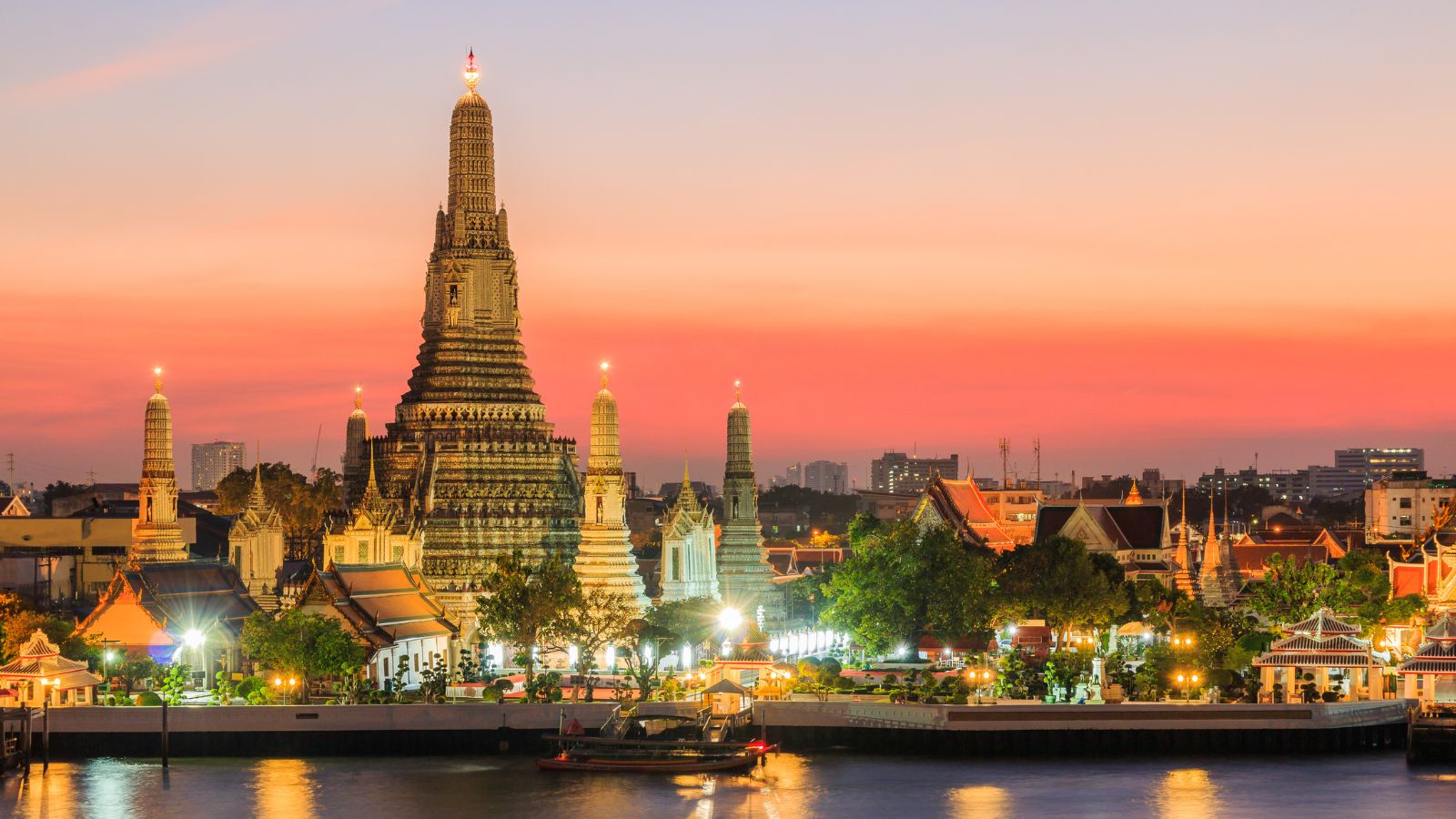
In my 34 years here, I’ve seen that Thailand’s strength lies in its “anchors.” Unlike many Western countries that have become untethered from their Christian roots, Thailand has stayed true to its core pillars: the Monarchy and Buddhism. This isn’t just about tradition; it provides a shared moral compass and a social stability that globalization hasn’t been able to wash away. While the country is welcoming to everyone, it has refused to lose its soul.
This cultural “tether” creates a groundedness that is becoming rare elsewhere. You see it in the fierce commitment to family and the deep-rooted duty to care for the elderly; values that remain non-negotiable here. In the West, many of these communal bonds have vanished into a cultural vacuum, but in Thailand, the family unit remains the bedrock of society.
This commitment to family inspired me in 2016 to bring my mother to live with me after my father passed away. The ability to find quality Thai people to help me care for my mother has been a key reason she has so far lived nine enjoyable years since arriving.
In business, this translates into a unique harmony. Values like Kreng Jai (consideration for others) and a genuine respect for seniority create an underlying sense of order. This respect for heritage fosters a level of mutual loyalty and “paternalistic” stability that keeps a business running smoothly, even when the rest of the world feels like it’s losing its way.
13. Deep social capital stabilizes society during periods of stress
Statistics cannot capture social resilience. Thai culture emphasizes harmony, patience, and emotional balance. Conflicts often diffuse rather than explode. Daily interactions reflect restraint and courtesy.
After 34 years here, I see this as Thailand’s deepest asset. People are generous, community-oriented, and persistent in the face of hardship. They are honest and loyal. That social capital stabilizes institutions when formal systems are strained.
When COVID hit in 2020, and jobs disappeared in Bangkok, many Thai migrant workers returned to their home villages, especially in Isaan, where family ties and low-cost living provided an informal safety net. The government’s light-touch approach allowed people to rely on these social networks and helped limit deeper distress.
In Manila, by contrast, stricter controls kept many workers in place, reflecting a more centralized response. The contrast shows how Thailand relied on social capital and flexibility, while the Philippines emphasized control, with consequences that later led to much higher excess mortality.
14. You can do business in Thailand without engaging in corruption
I’ve been running companies in Thailand for over 30 years, with 100 employees across the country, and I can tell you this: we have never once had to resort to corruption.
What I’ve realized from traveling across Asia is that Thailand is unique. In many neighboring countries, corruption isn’t a choice; it’s the only way to get a permit or keep the lights on. But here, the system is mature enough to run a clean shop.
Of course, corruption is everywhere, and people still use it as a shortcut, but it’s not a requirement for existence. That is a massive competitive advantage for Thailand that people don’t talk about enough.
Resilient foundations give Thailand enduring strength and a competitive advantage
After more than three decades in Thailand, I no longer judge this country by headlines, growth charts, or political drama. I judge it by how it stands when tested. I have lived through coups, financial crashes, pandemics, and global shocks that would have fractured other societies. Each time, Thailand bends, absorbs the pressure, and quietly finds its footing again.
The “Sick Man of Asia” label sees the symptoms but misses the immune system. It overlooks the rice fields that guarantee stability, the factories that keep humming, and the families and communities that step in when formal systems are strained. It ignores a society that may not move fast or impress on paper, but endures without losing its balance, its dignity, or its soul.
That is not weakness. That is quiet, unbreakable strength. And for those willing to look beyond the noise, it remains Thailand’s greatest competitive advantage and the foundation for its next chapter of opportunity.