
A. Stotz All Weather Strategies – August 2026
The All Weather Strategy is available in Thailand through FINNOMENA. Please note that this post is not investment advice and should not be seen as recommendations. Also, remember that backtested or past performance is not a reliable indicator of future performance.
Performance review: All Weather Inflation Guard
All Weather Inflation Guard gained 1.9%
Since inception, the strategy was up 26.2% and 13.0% above a 40/60 portfolio
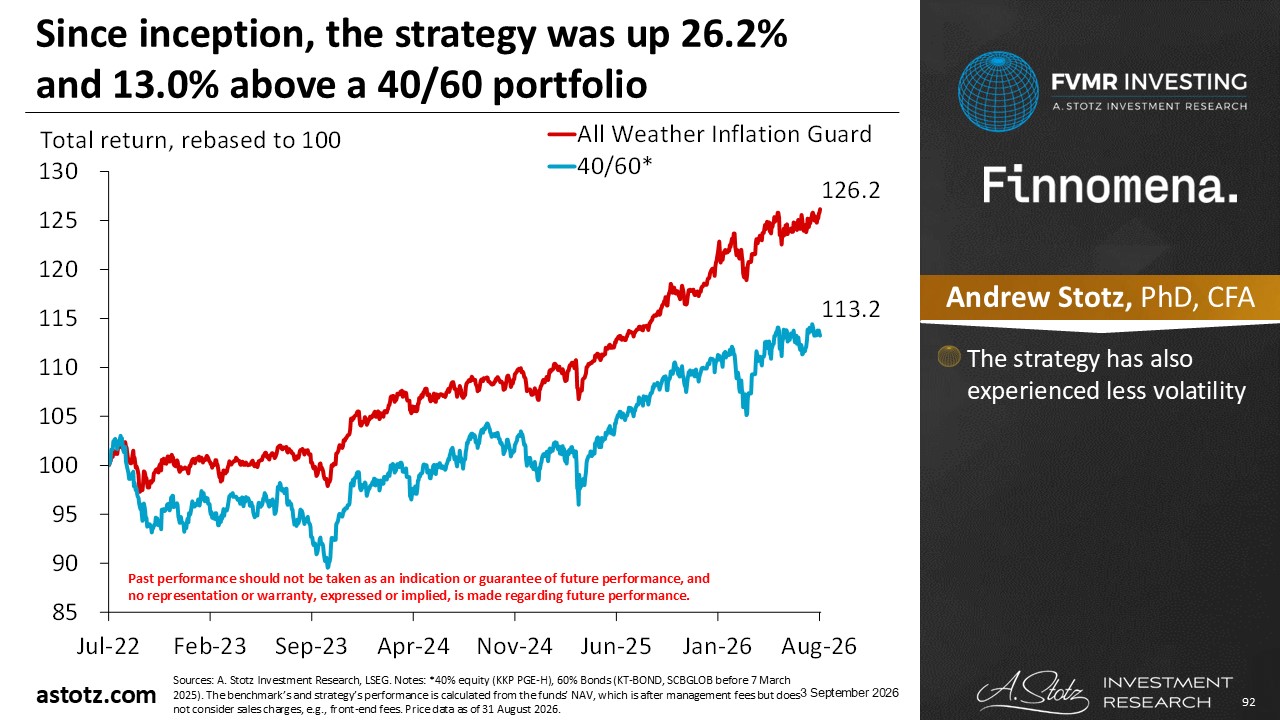
- The strategy has also experienced less volatility
In August 2026, the strategy was up 1.9%, which was 0.9% above the 40/60 portfolio
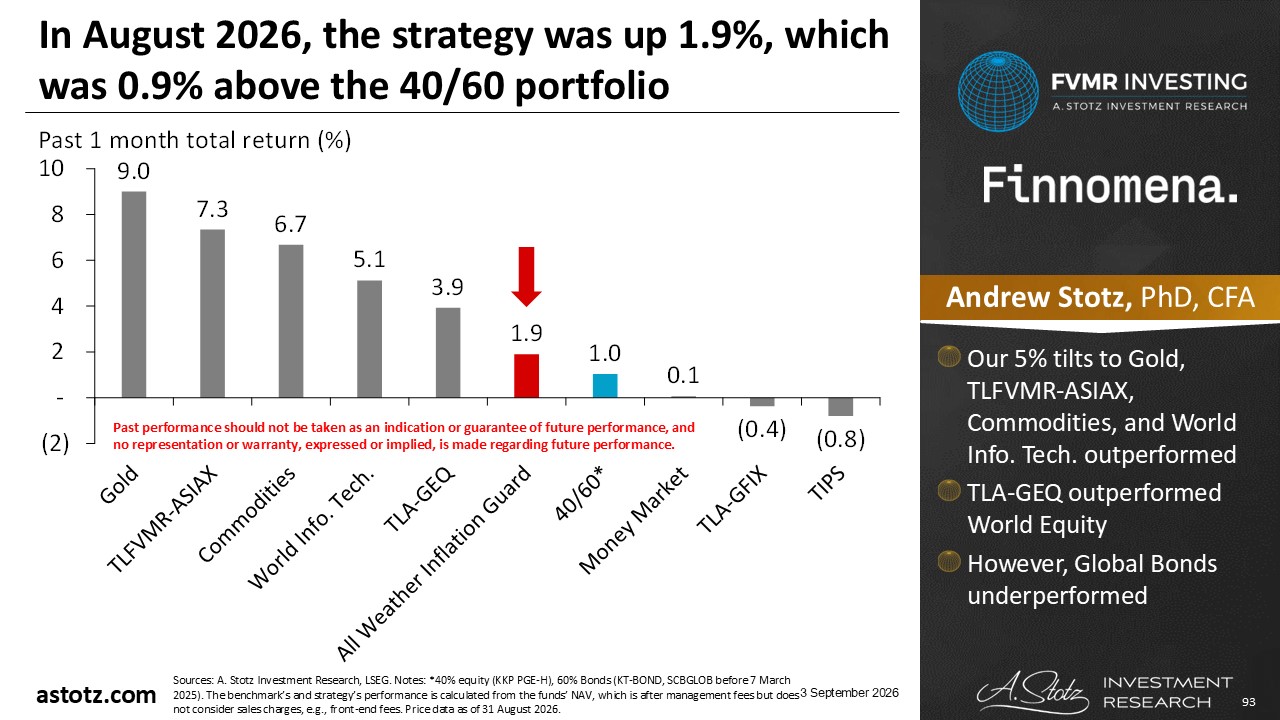
- Our 5% tilts to Gold, TLFVMR-ASIAX, Commodities, and World Info. Tech. outperformed
- TLA-GEQ outperformed World Equity
- However, Global Bonds underperformed
Since last revision, the strategy was up 2.3%, which was 1.2% above the 40/60 portfolio
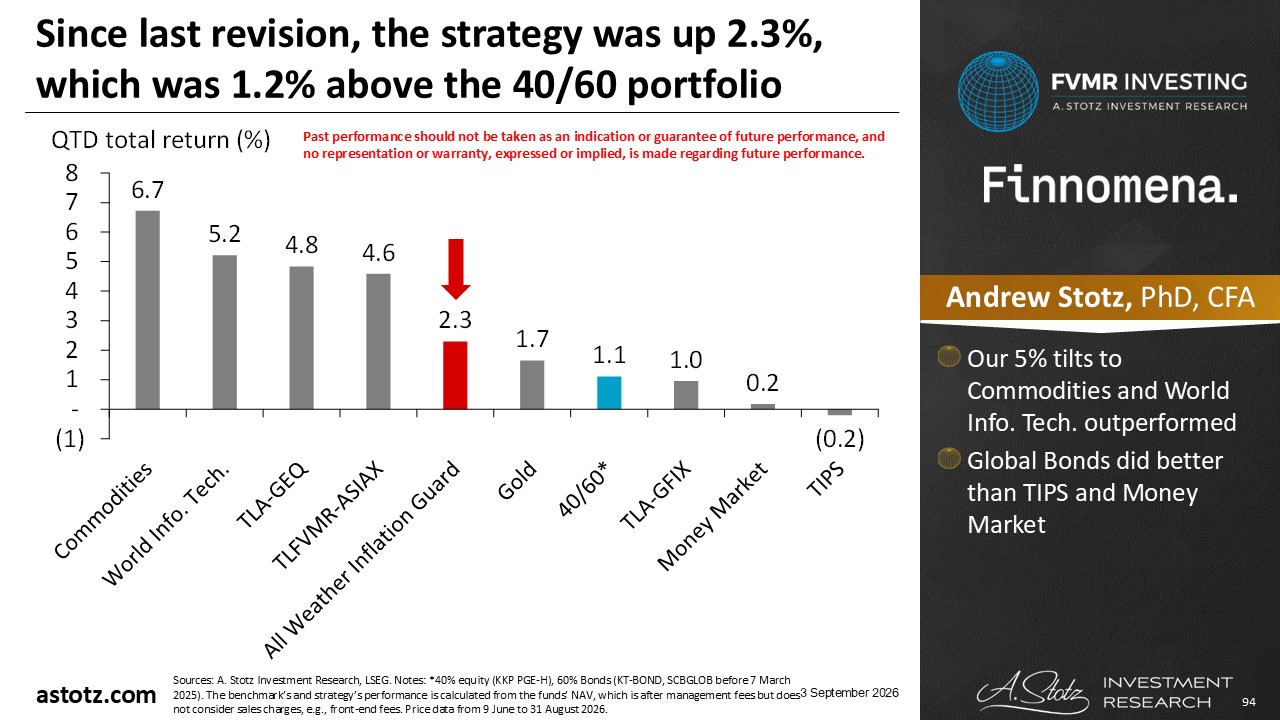
- Our 5% tilts to Commodities and World Info. Tech. outperformed
- Global Bonds did better than TIPS and Money Market
The strategy added 3.5% value compared to a 40/60 portfolio in 2026YTD
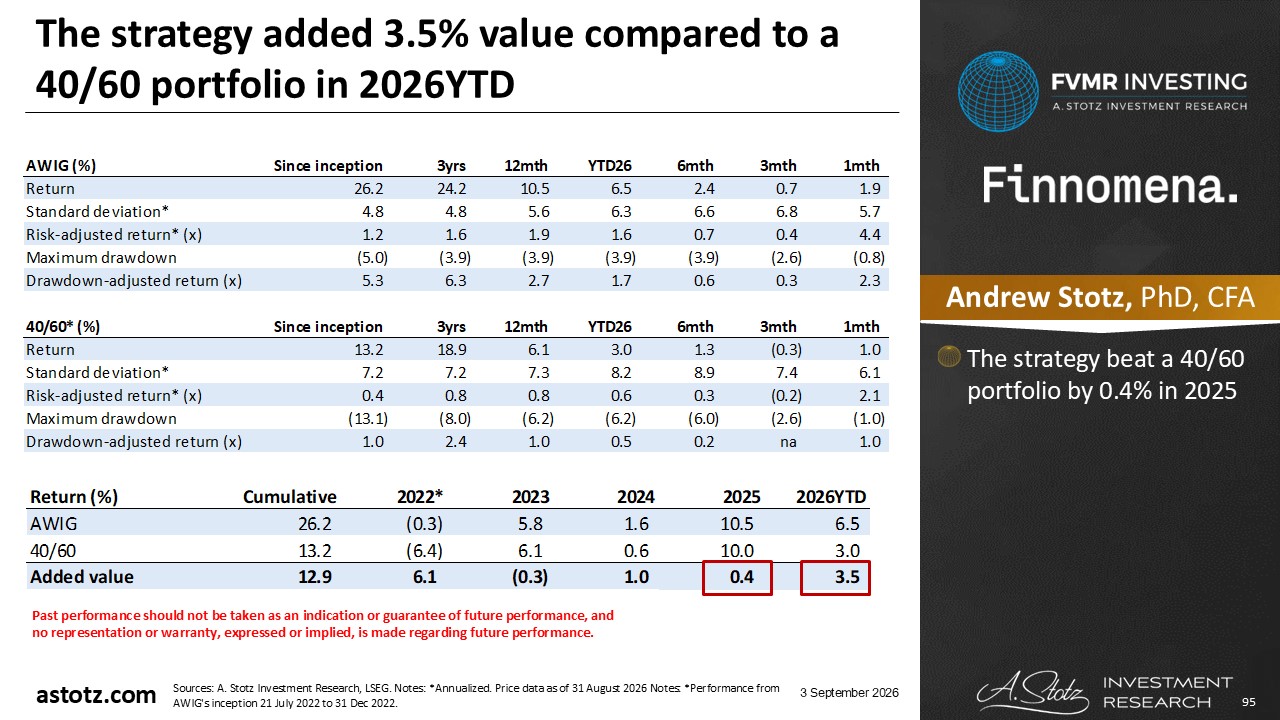
- The strategy beat a 40/60 portfolio by 0.4% in 2025
Performance review: All Weather Strategy
All Weather Strategy gained 5.1%
Since inception, the strategy was up 106.2% and 54.9% above a 60/40 portfolio
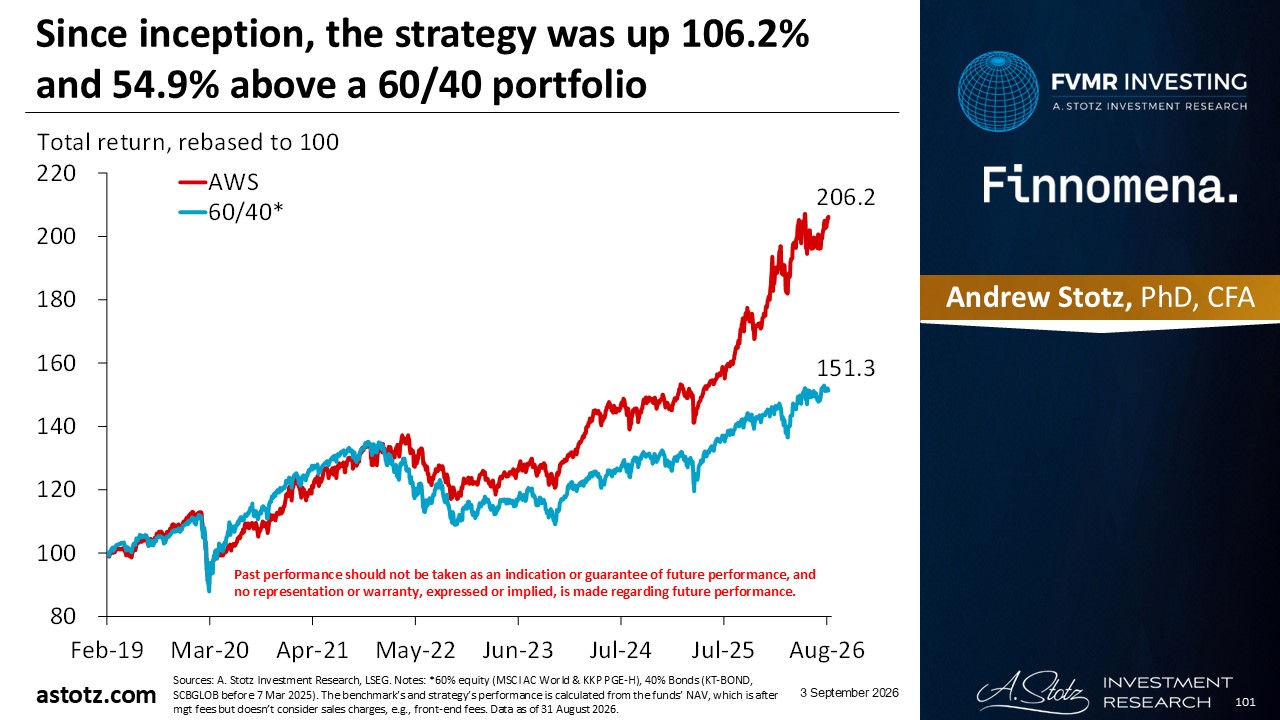
In August 2026, the strategy was up 5.1%, which was 3.6% above the 60/40 portfolio
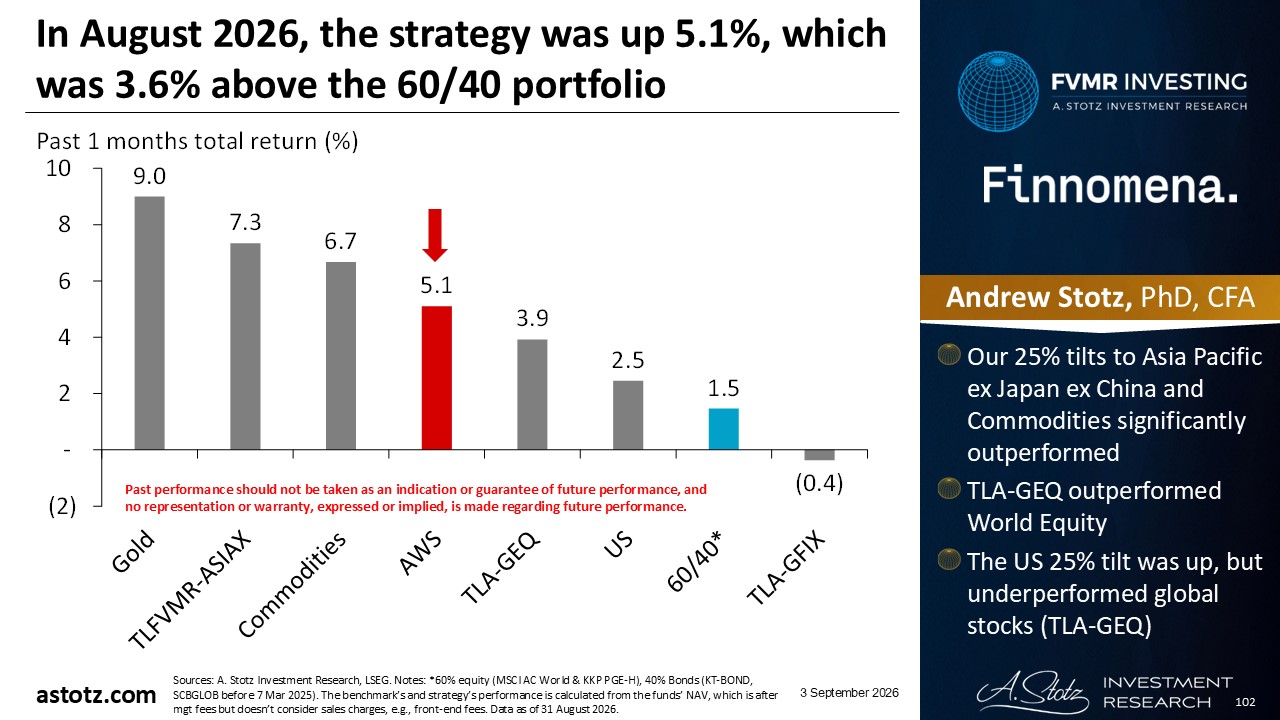
- Our 25% tilts to Asia Pacific ex Japan ex China and Commodities significantly outperformed
- TLA-GEQ outperformed World Equity
- The US 25% tilt was up, but underperformed global stocks (TLA-GEQ)
Since last revision, the strategy was up 4.6%, which was 2.7% above the 60/40 portfolio
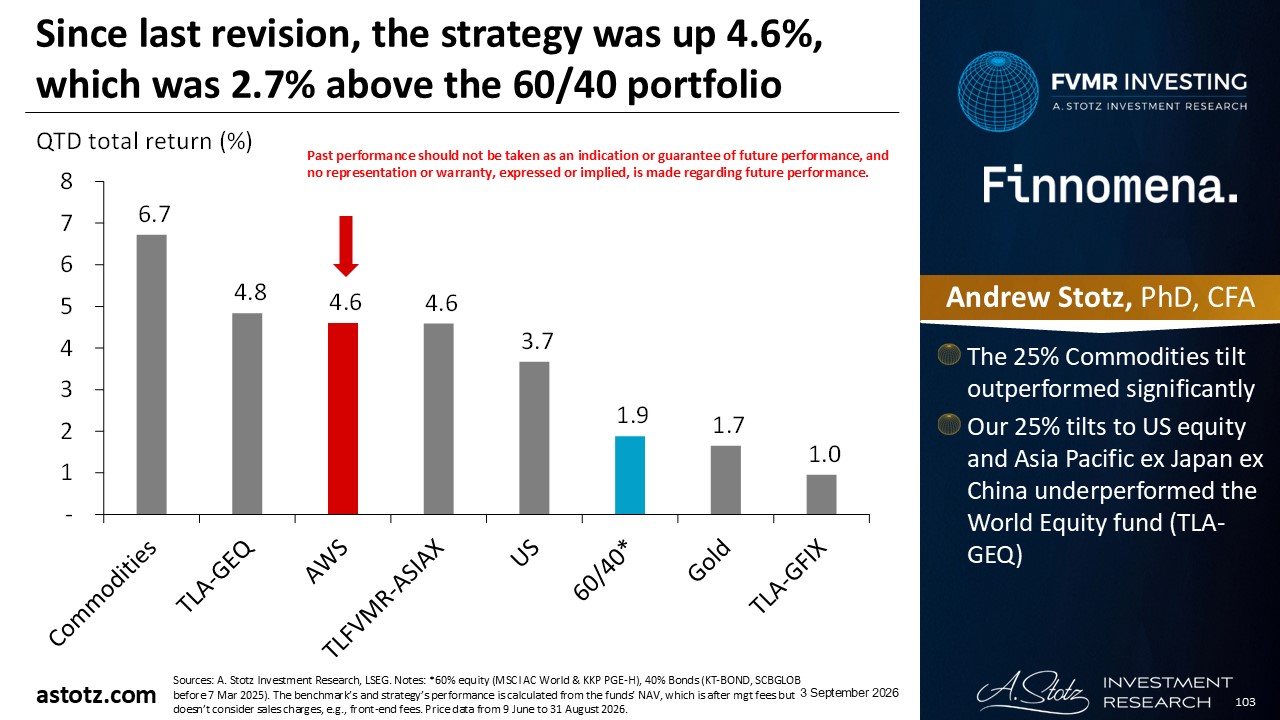
- The 25% Commodities tilt outperformed significantly
- Our 25% tilts to US equity and Asia Pacific ex Japan ex China underperformed the World Equity fund (TLA-GEQ)
The strategy has added 12.5% value compared to a 60/40 portfolio in 2026YTD
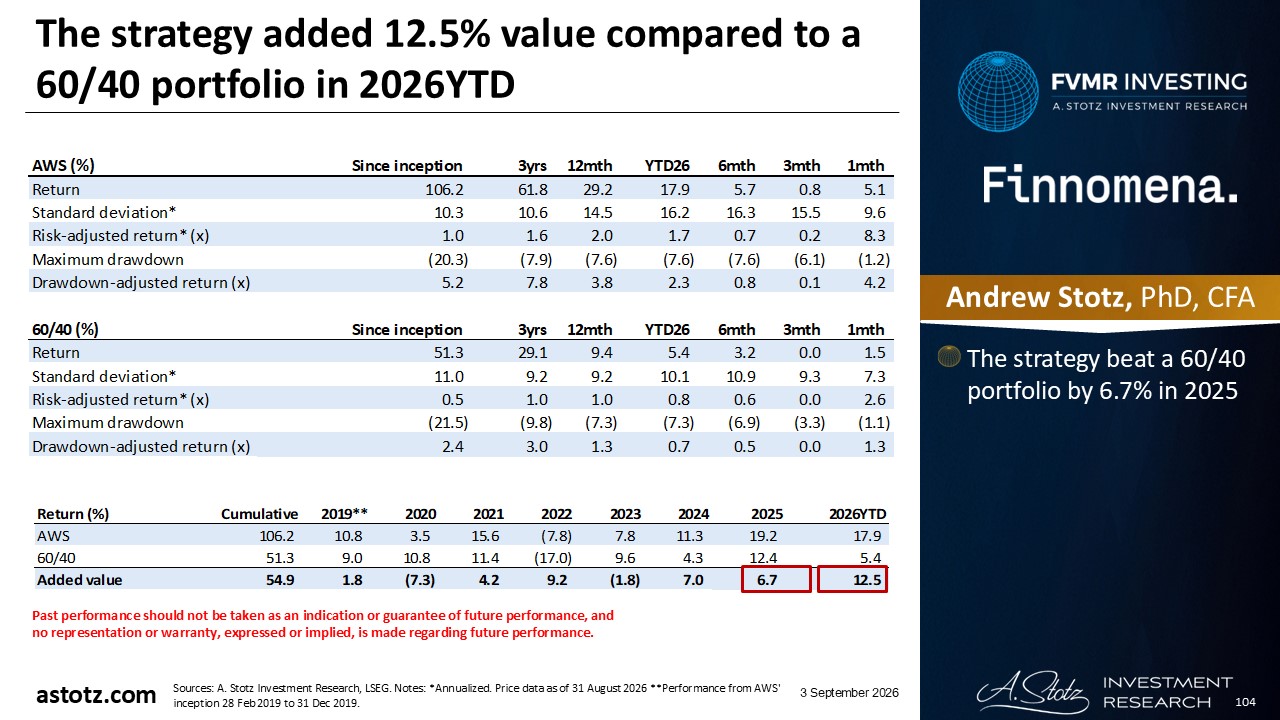
- The strategy beat a 60/40 portfolio by 6.7% in 2025
Performance review: All Weather Alpha Focus
All Weather Alpha Focus gained 3.9%
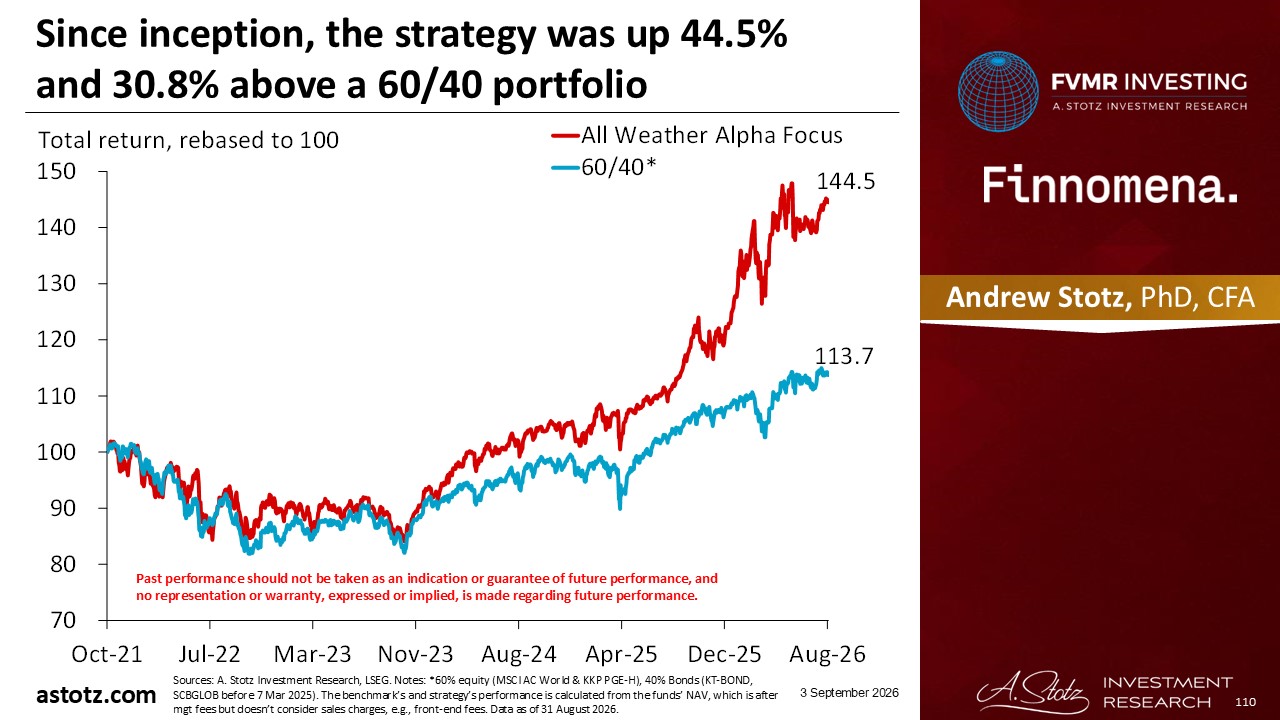
Since inception, the strategy was up 44.5% and 30.8% above a 60/40 portfolio
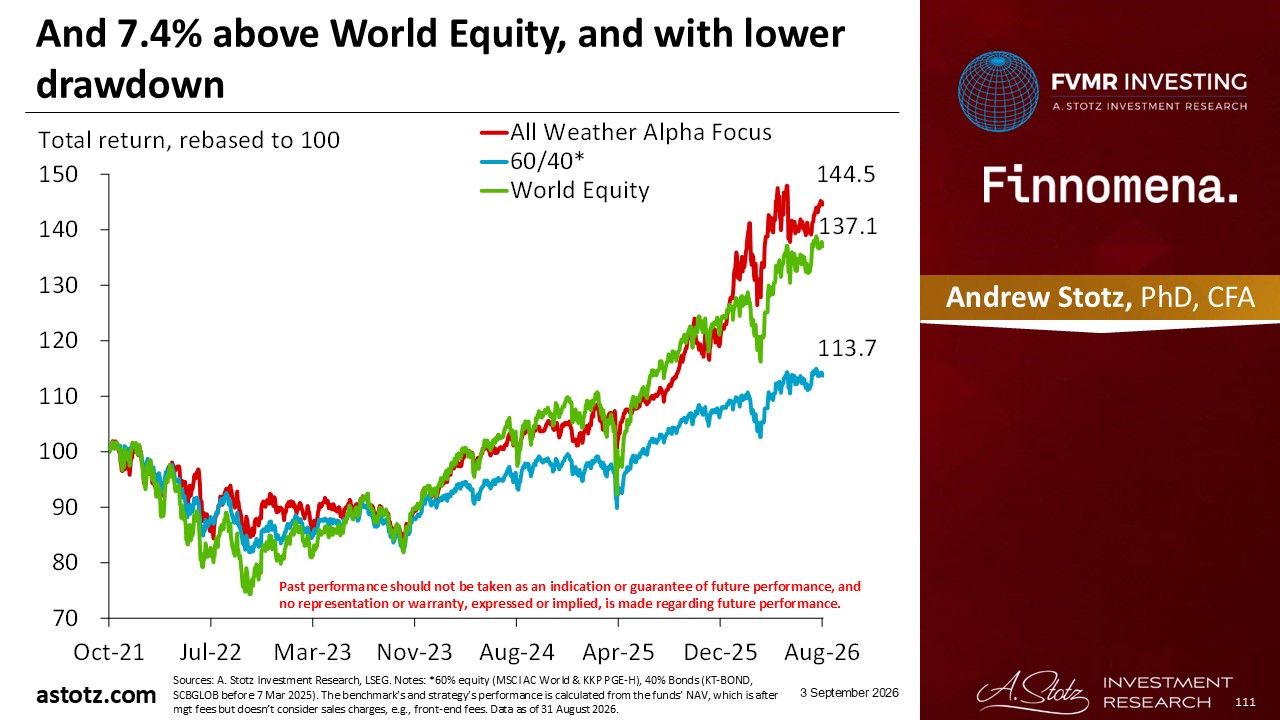
And 7.4% above World Equity, and with lower drawdown
In August 2026, the strategy was up 3.9%, which was 2.4% above the 60/40 portfolio
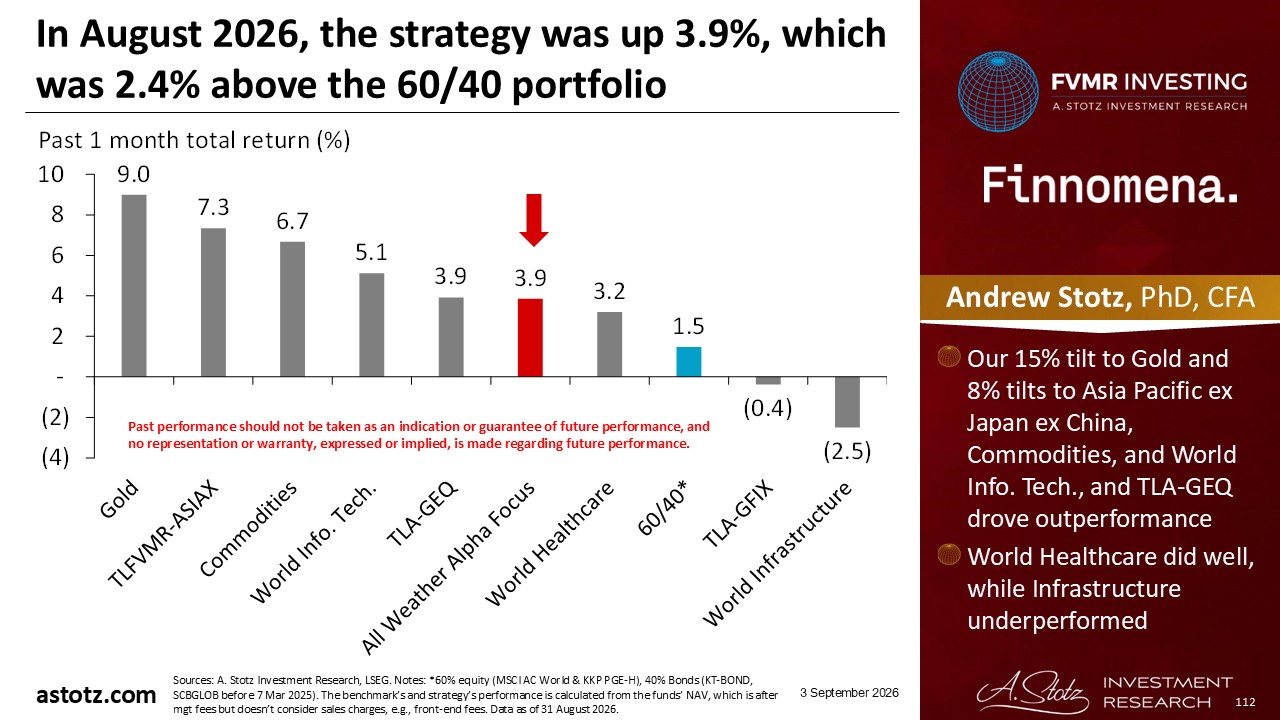
- Our 15% tilt to Gold and 8% tilts to Asia Pacific ex Japan ex China, Commodities, and World Info. Tech., and TLA-GEQ drove outperformance
- World Healthcare did well, while Infrastructure underperformed
Since last revision, the strategy was up 3.6%, which was 1.7% above the 60/40 portfolio
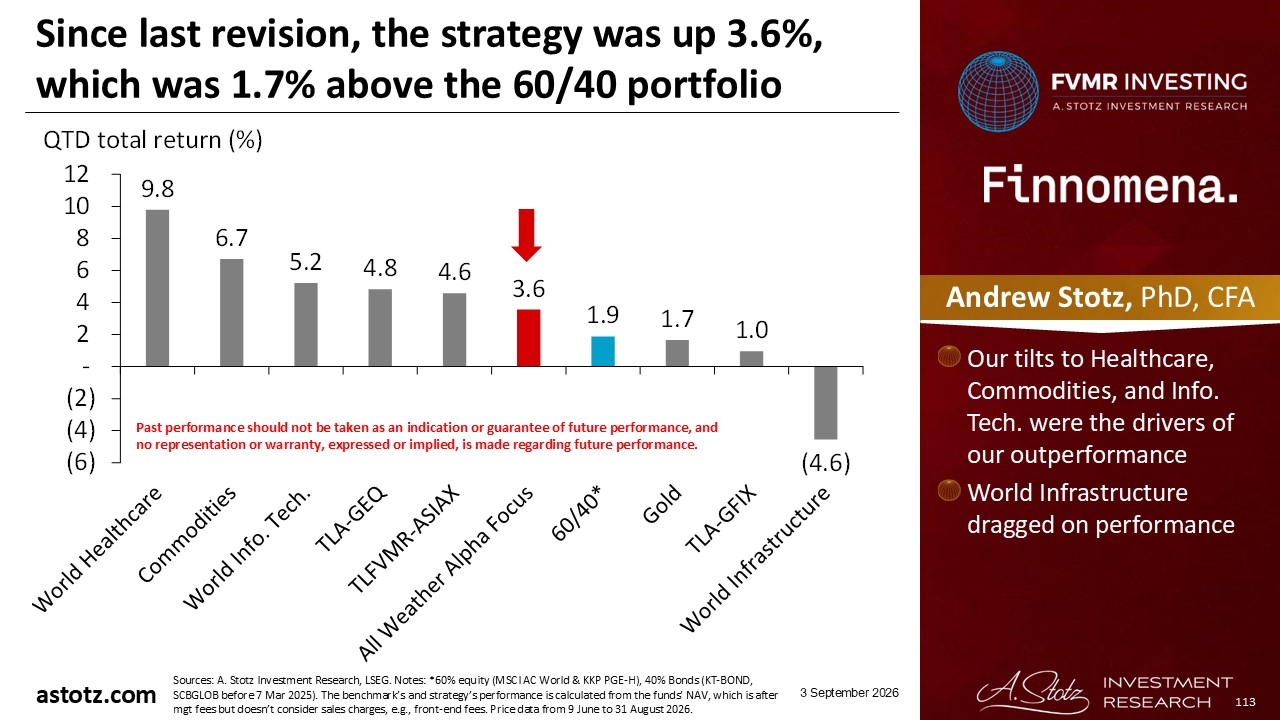
- Our tilts to Healthcare, Commodities, and Info. Tech. were the drivers of our outperformance
- World Infrastructure dragged on performance
The strategy has added 12.2% value compared to a 60/40 portfolio in 2026YTD
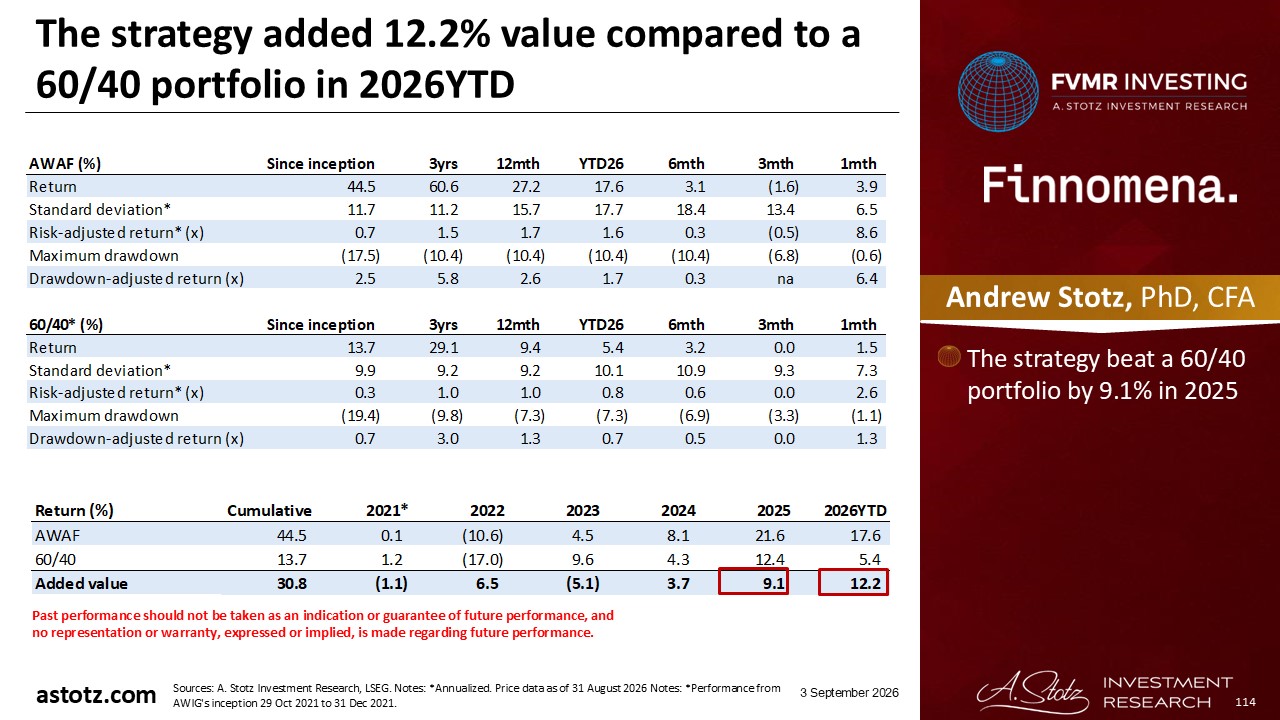
- The strategy beat a 60/40 portfolio by 9.1% in 2025
In August 2026, World Equity was up 2.7%
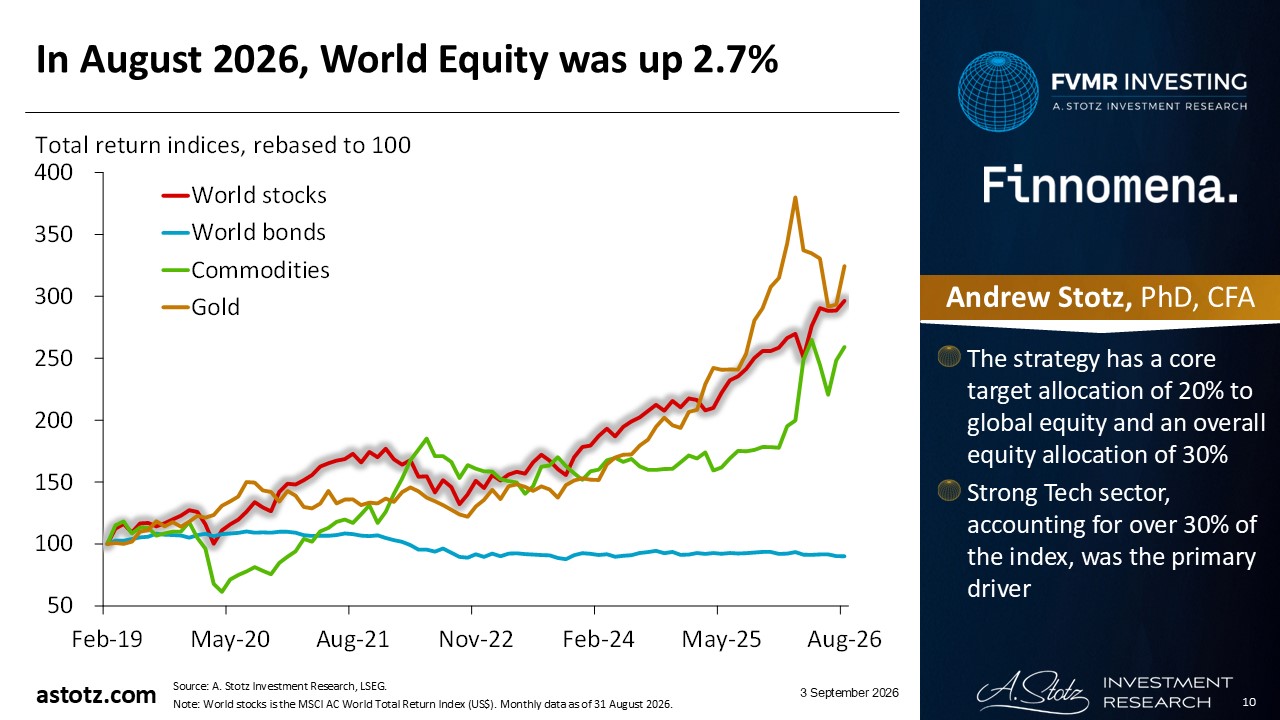
- The strategy has a core target allocation of 20% to global equity and an overall equity allocation of 30%
- Strong Tech sector, accounting for over 30% of the index, was the primary driver
Performance of the World stock markets
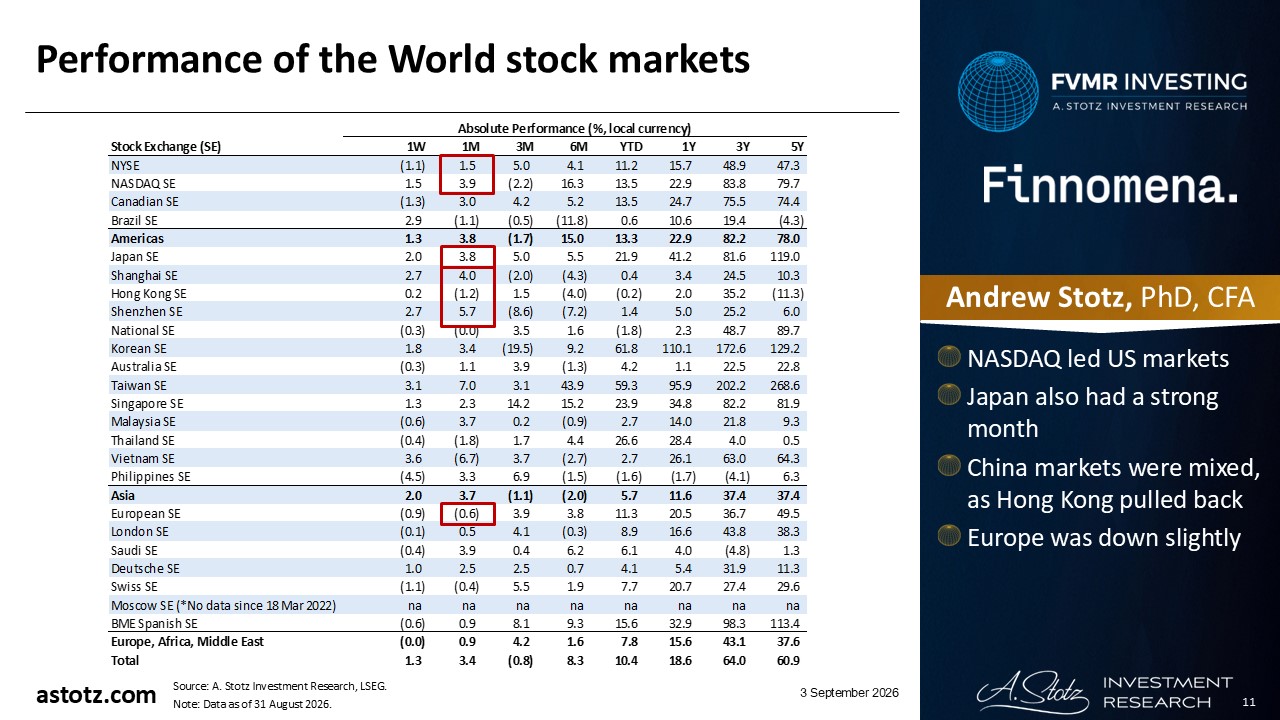
- NASDAQ led US markets
- Japan also had a strong month
- China markets were mixed, as Hong Kong pulled back
- Europe was down slightly
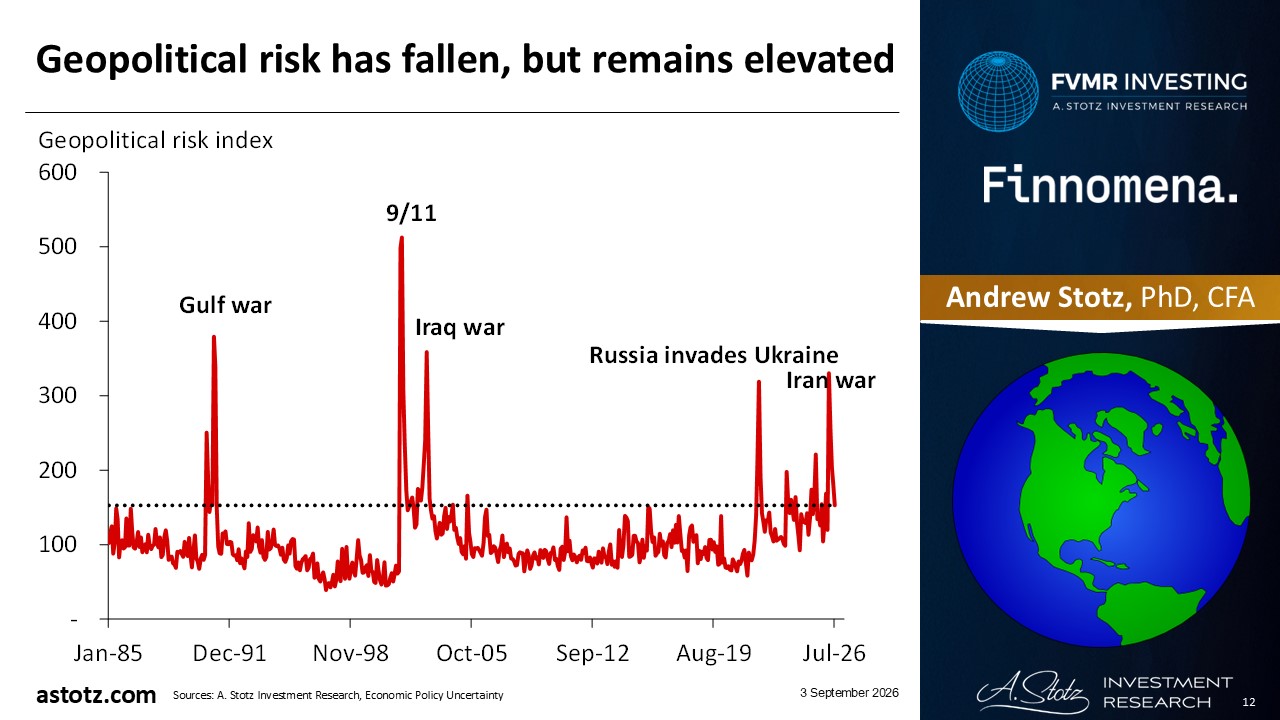
Geopolitical risk has fallen, but remains elevated
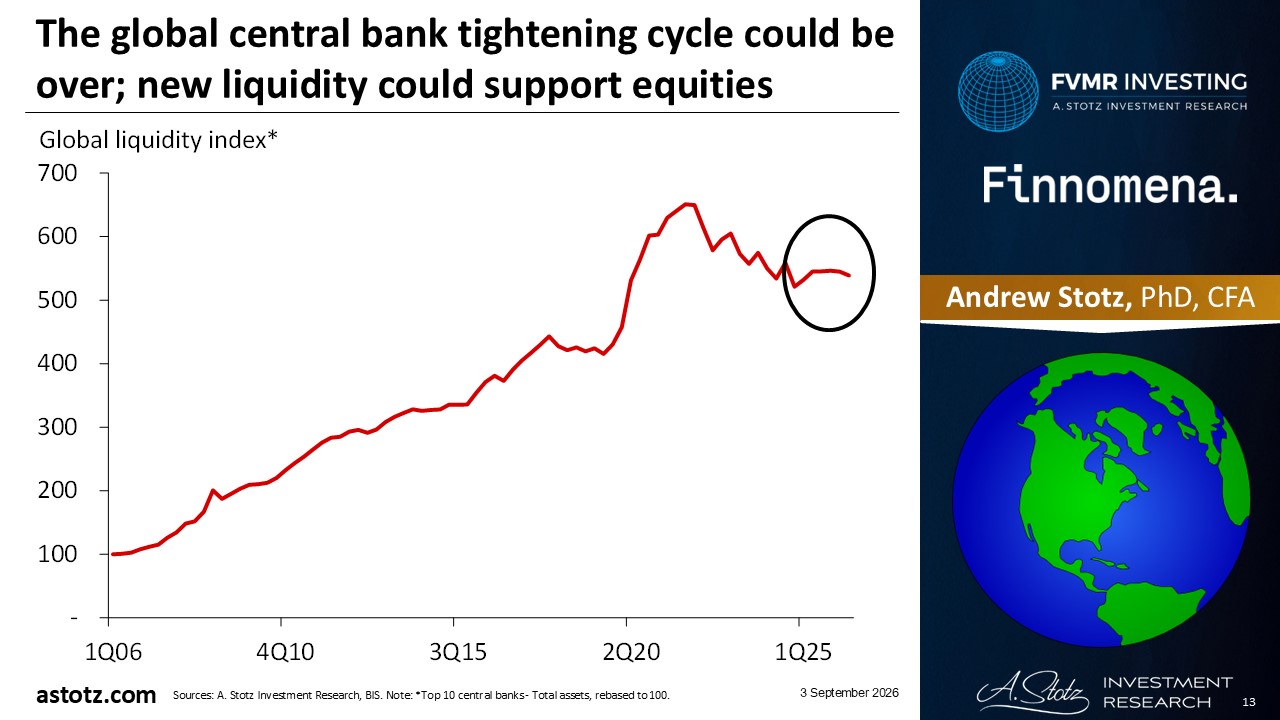
The global central bank tightening cycle could be over; new liquidity could support equities
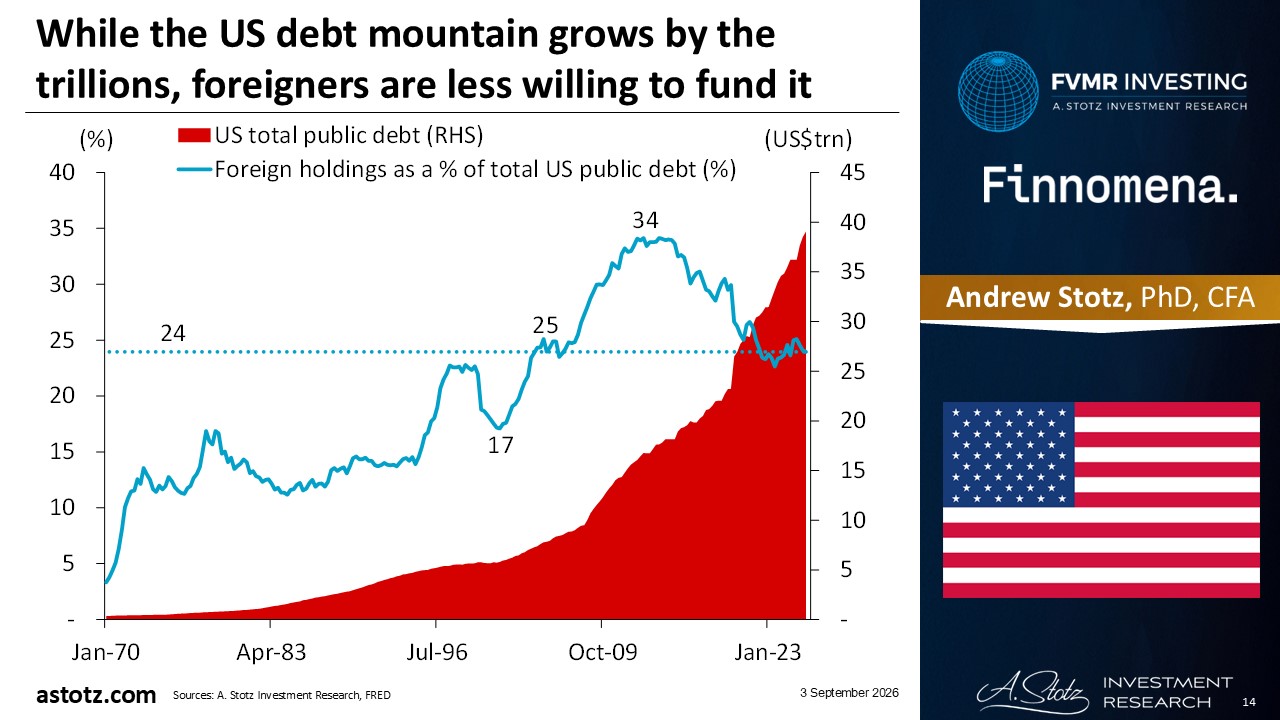
While the US debt mountain grows by the trillions, foreigners are less willing to fund it
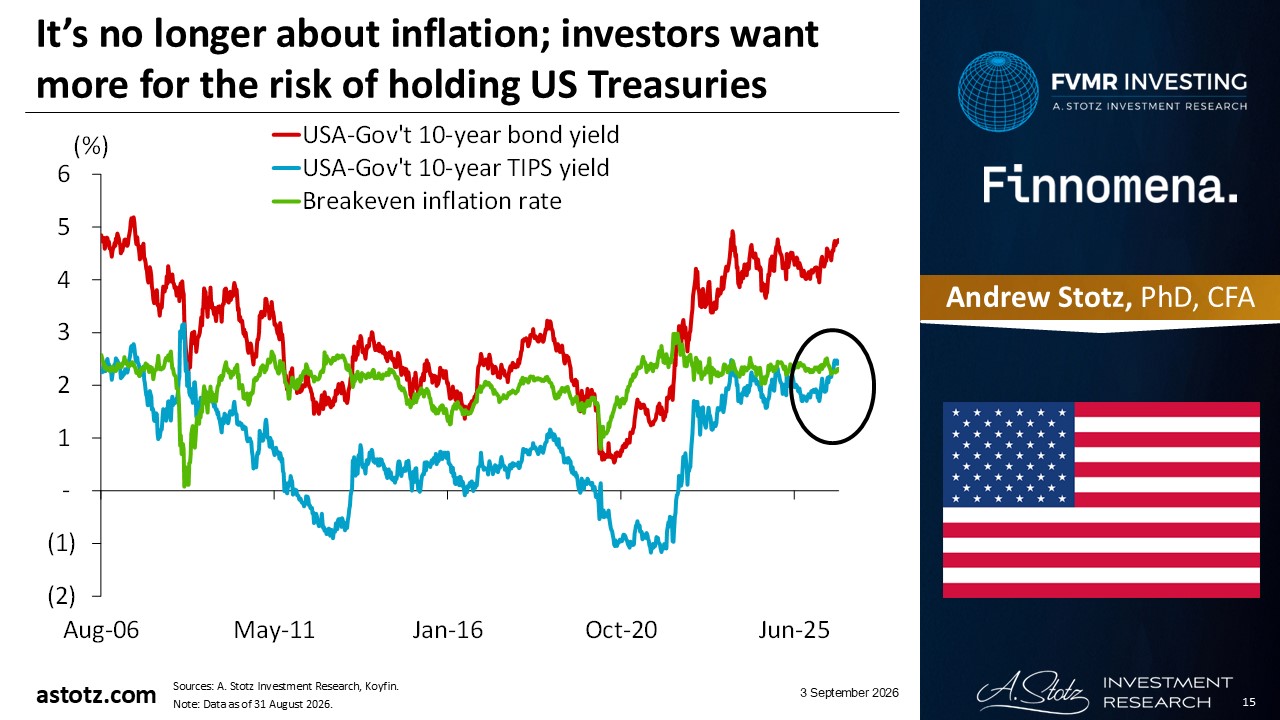
It’s no longer about inflation; investors want more for the risk of holding US Treasuries
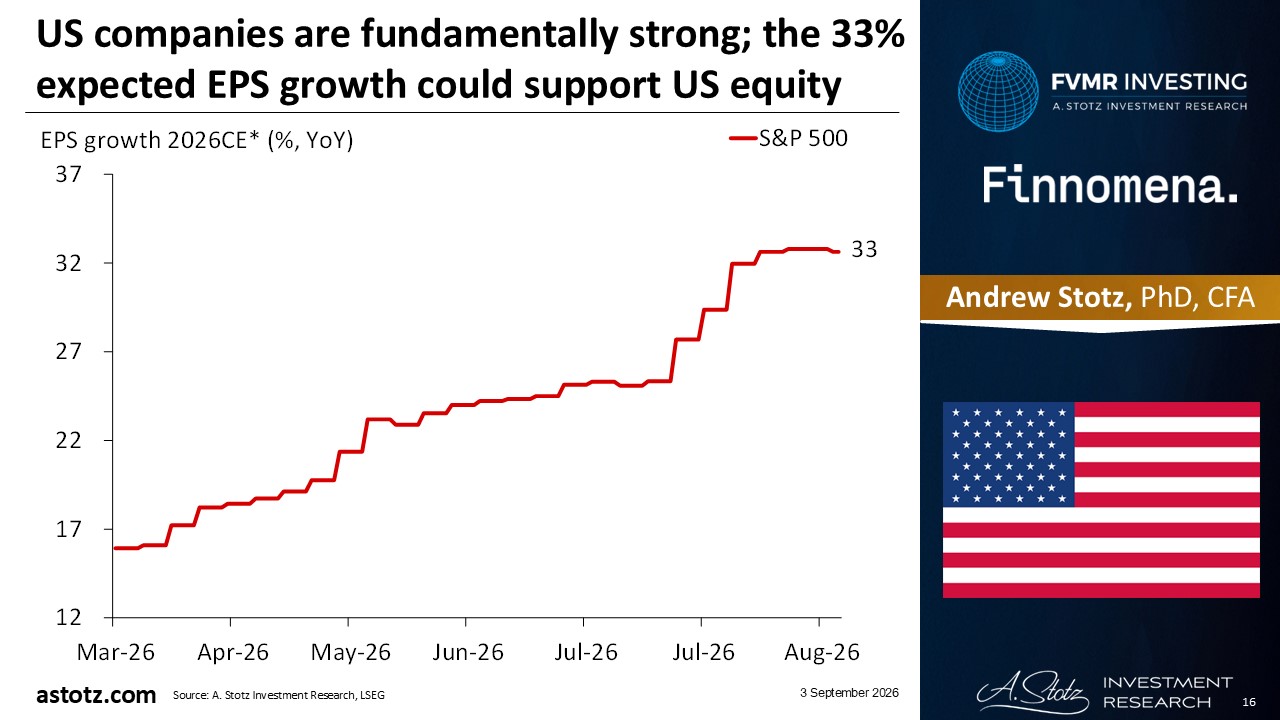
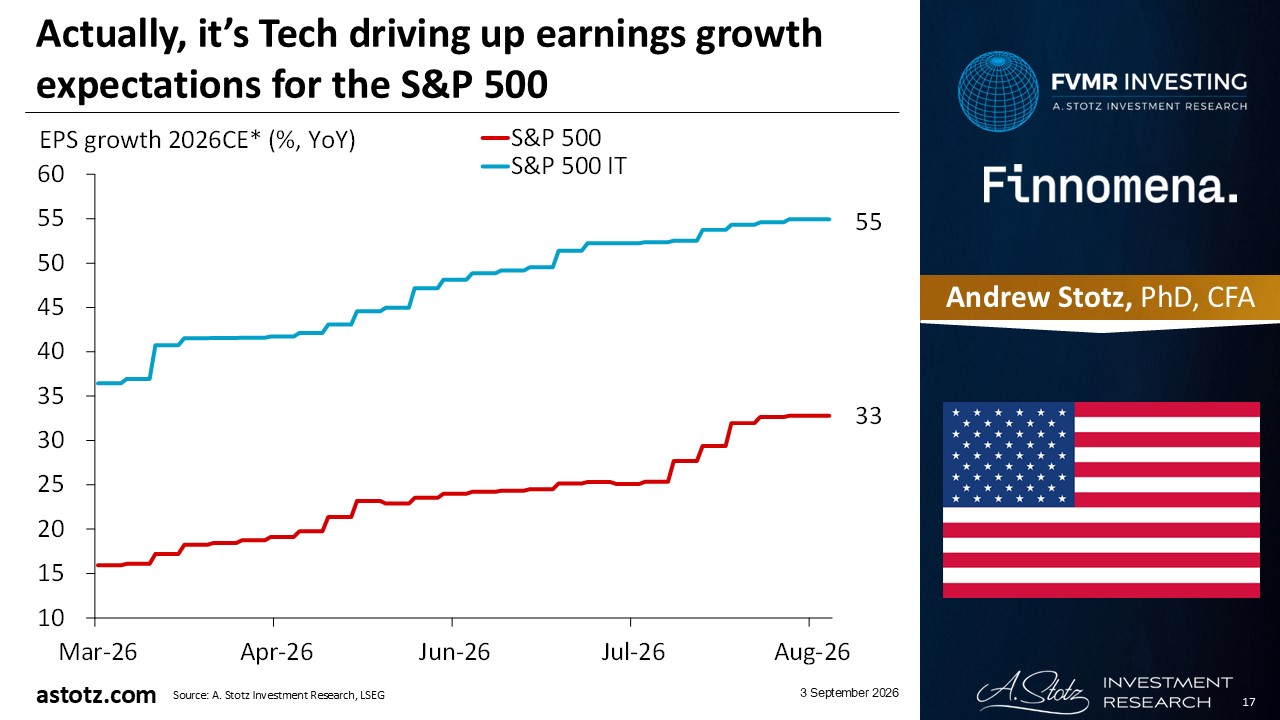
US companies are fundamentally strong; the 33% expected EPS growth could support US equity
Actually, it’s Tech driving up earnings growth expectations for the S&P 500
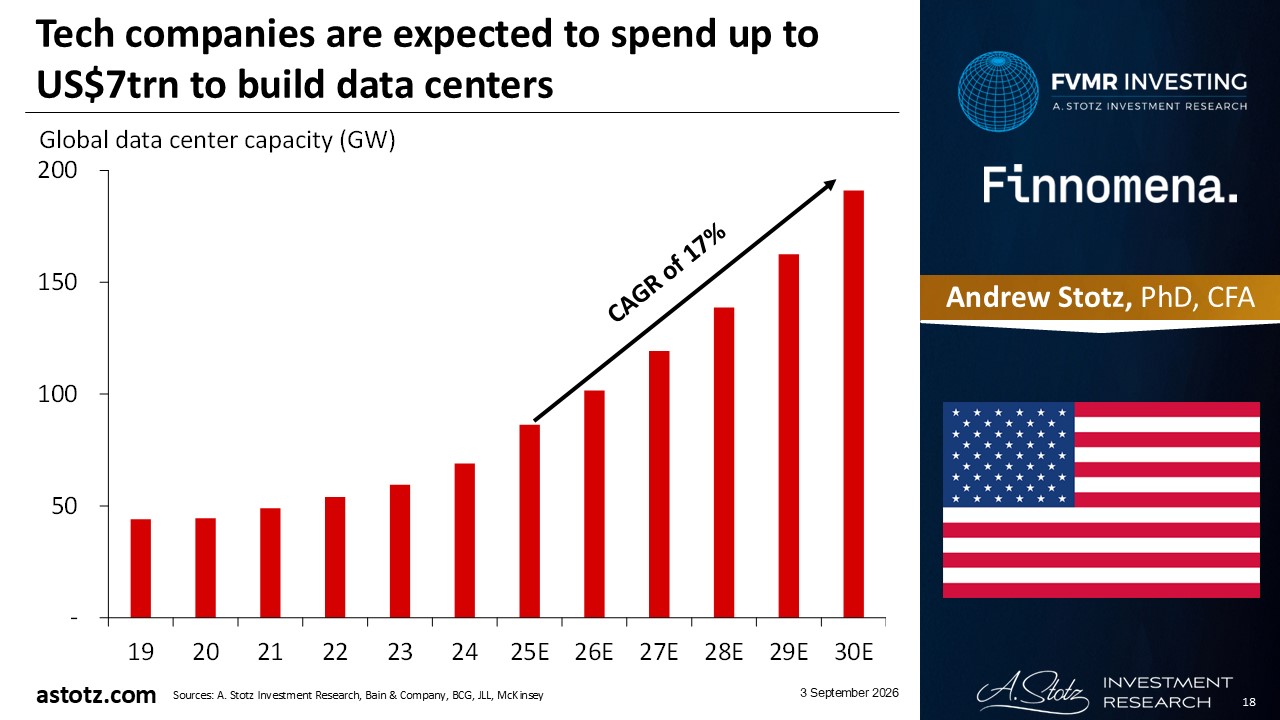
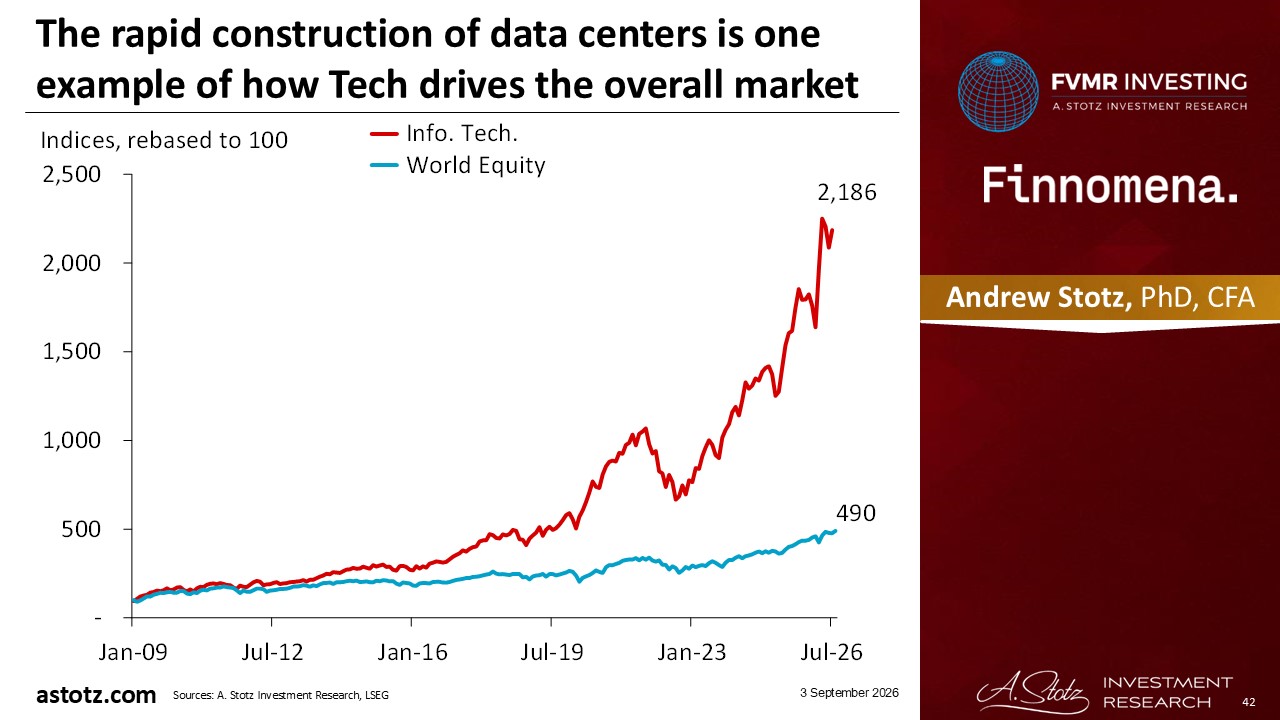
Tech companies are expected to spend up to US$7trn to build data centers
The AI boom is the biggest opportunity (and risk)
- AI infrastructure spending benefits companies like Nvidia, TSMC, Samsung Electronics, Broadcom, ASML, Micron, SK Hynix, and AMD
- Software companies like Microsoft, Oracle, and SAP stand to capitalize on AI adoption in businesses around the world
- The global fund we use (TLA-GEQ) has a tilt to Global Tech in its Alpha portion
- In addition, we keep an 8% tilt to World Info. Tech.
The US is facing many challenges
- The debt mountain has led investors to require higher compensation for holding USTs
- The war in Iran is still ongoing, as is the Russia-Ukraine war
- Trump does not seem to get the Fed support he wished for in the midterms
- We exit our 25% tilt to the US
- We have some exposure to US equity through the global equity core allocation
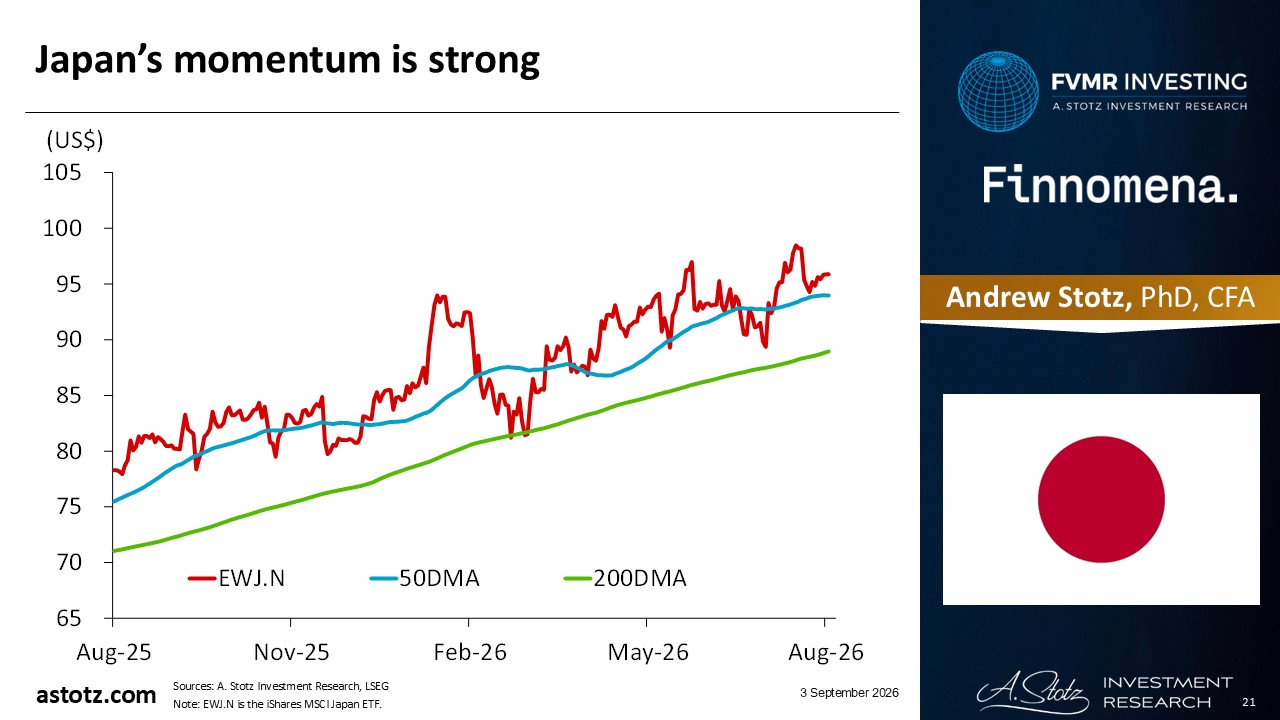
Japan’s momentum is strong
Inflation climbing back to 2% underscores Japan’s shift away from deflation
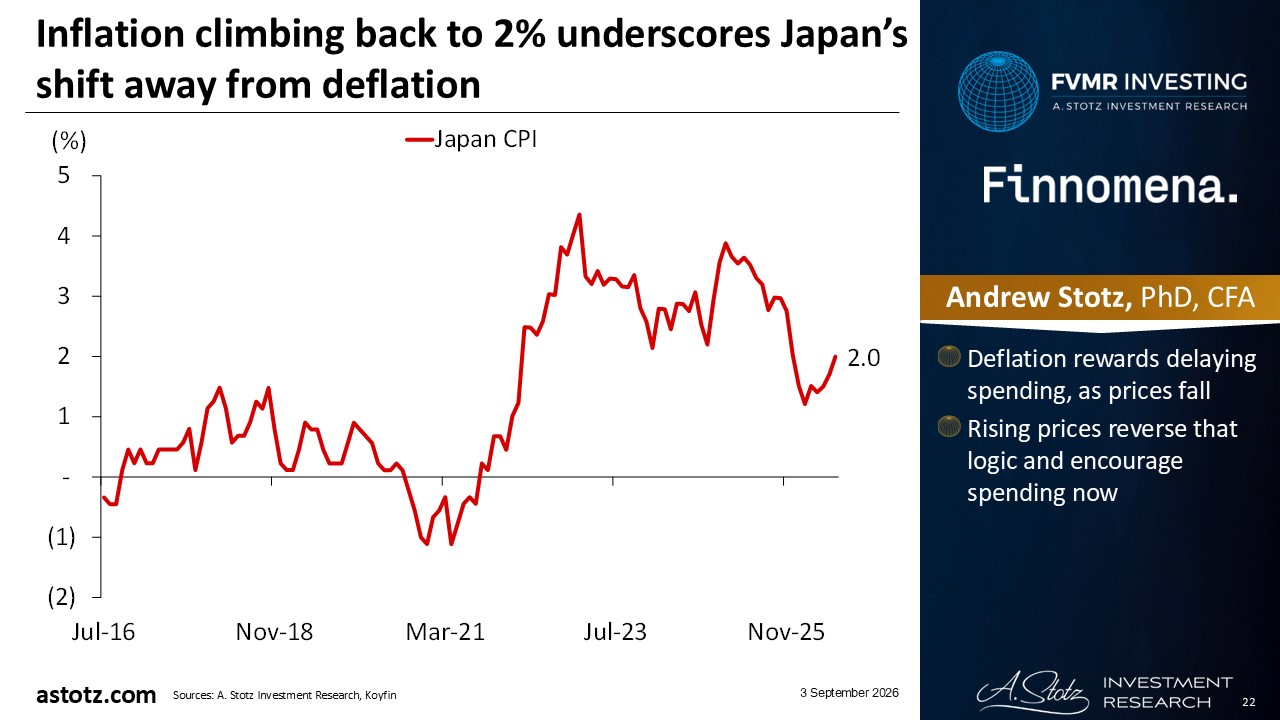
- Deflation rewards delaying spending, as prices fall
- Rising prices reverse that logic and encourage spending now
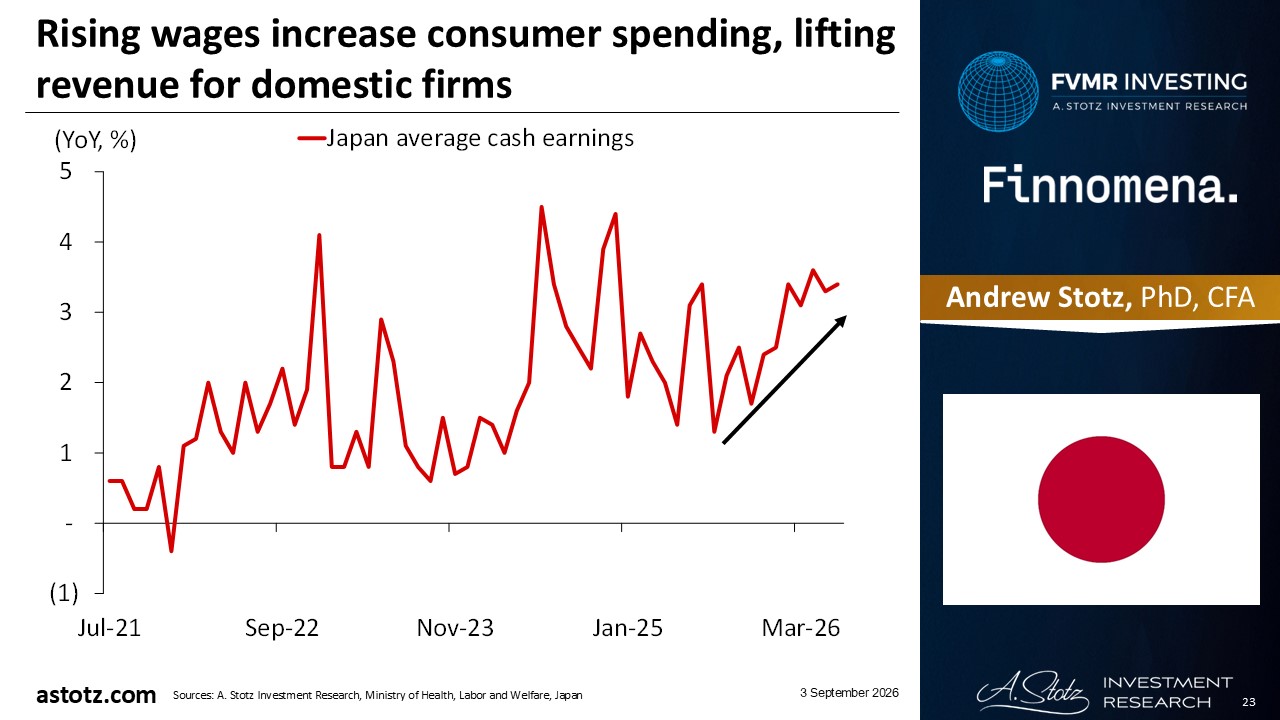
Rising wages increase consumer spending, lifting revenue for domestic firms
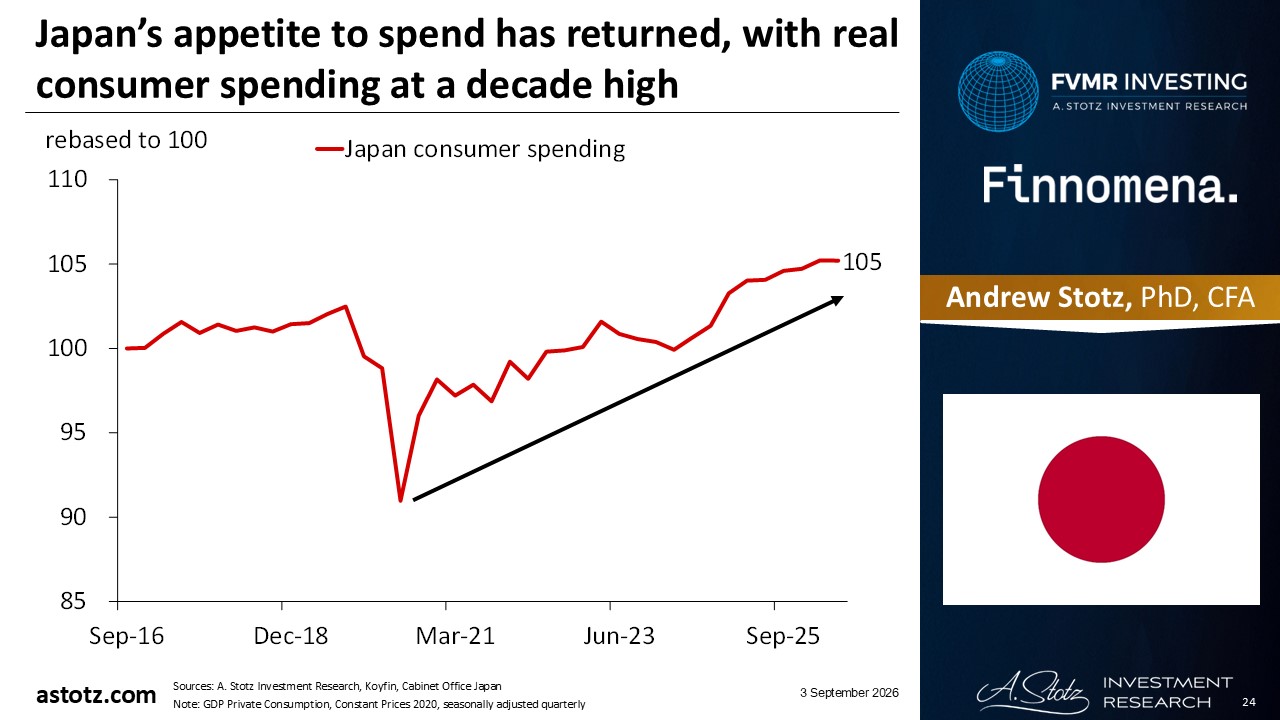
Japan’s appetite to spend has returned, with real consumer spending at a decade high
Japanese firms expect inflation to stay around 2.6% for the next 5 years, not just spike and fade
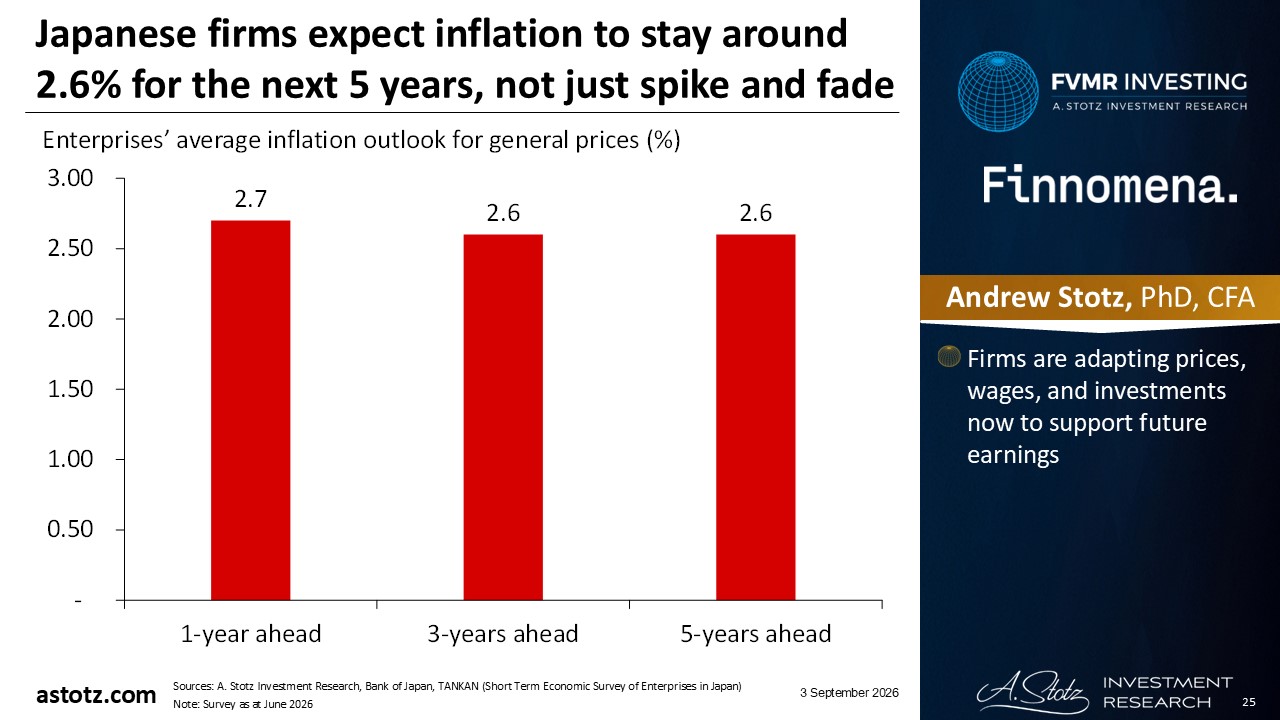
- Firms are adapting prices, wages, and investments now to support future earnings
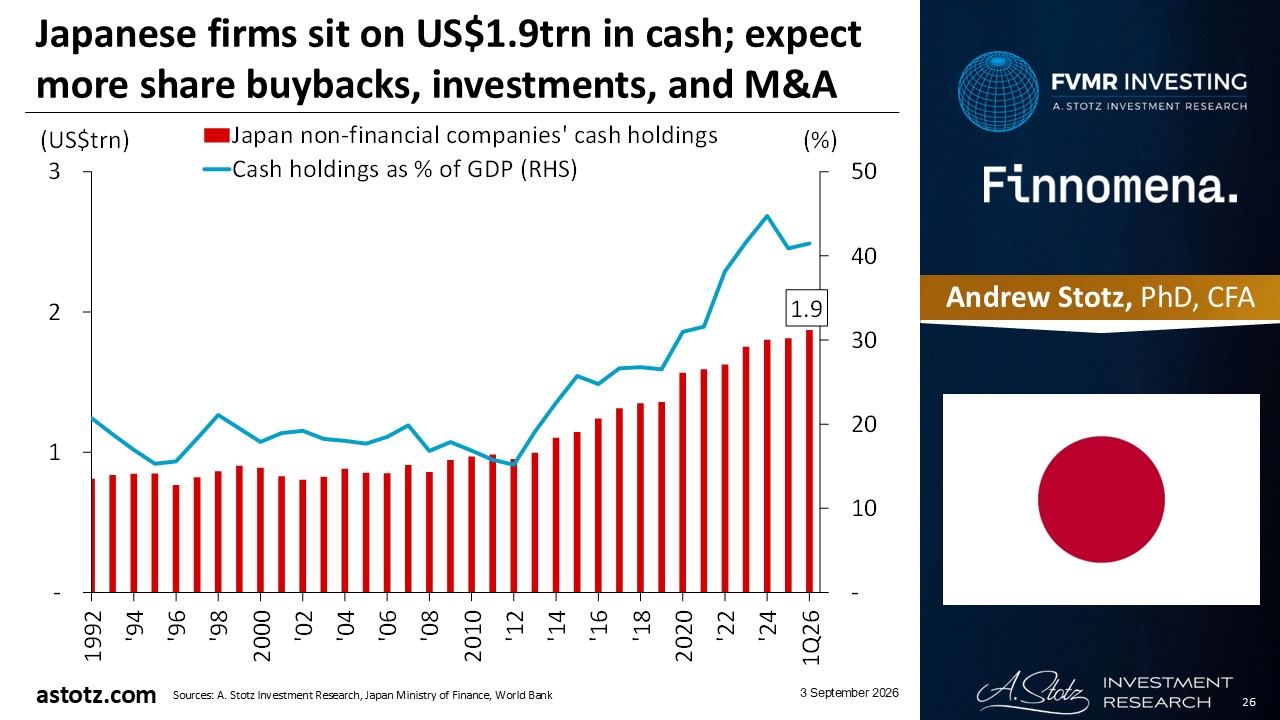
Japanese firms sit on US$1.9trn in cash; expect more share buybacks, investments, and M&A
Yen weakness is likely to be capped, supported by the Bank of Japan’s willingness to intervene
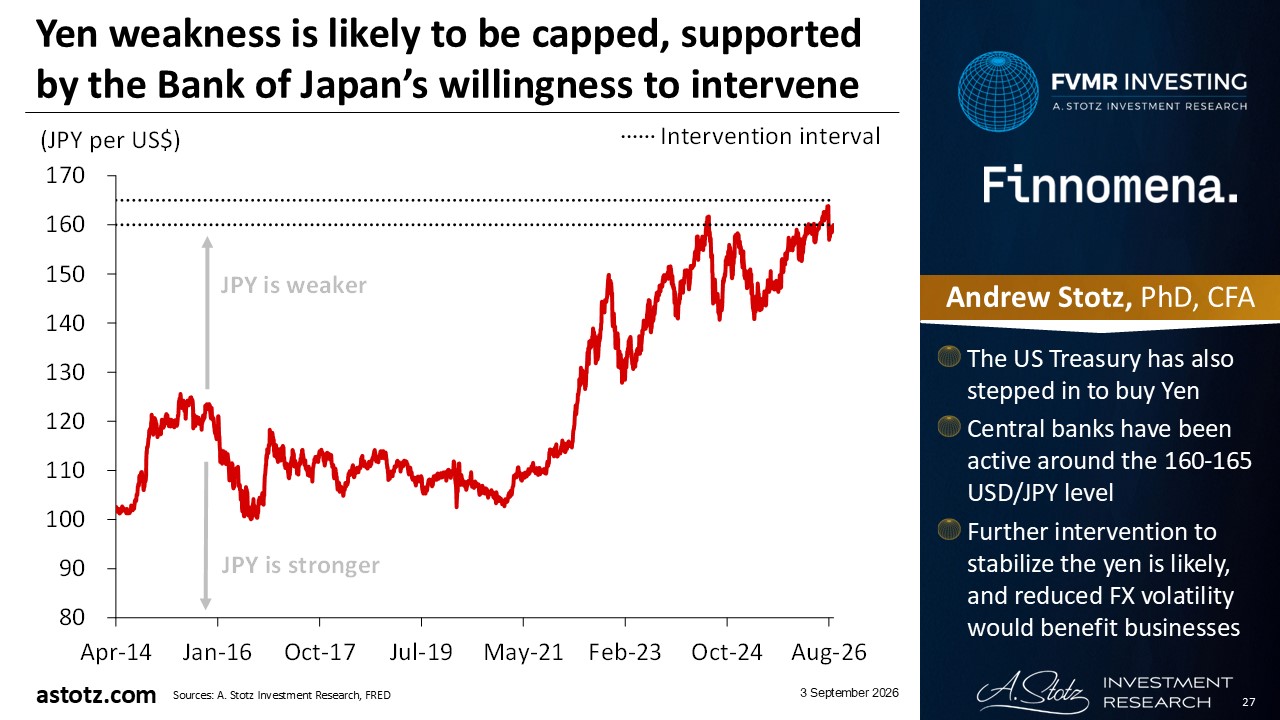
- The US Treasury has also stepped in to buy Yen
- Central banks have been active around the 160-165 USD/JPY level
- Further intervention to stabilize the yen is likely, and reduced FX volatility would benefit businesses
Japanese banks’ net interest margin should continue to improve as BOJ raises rates
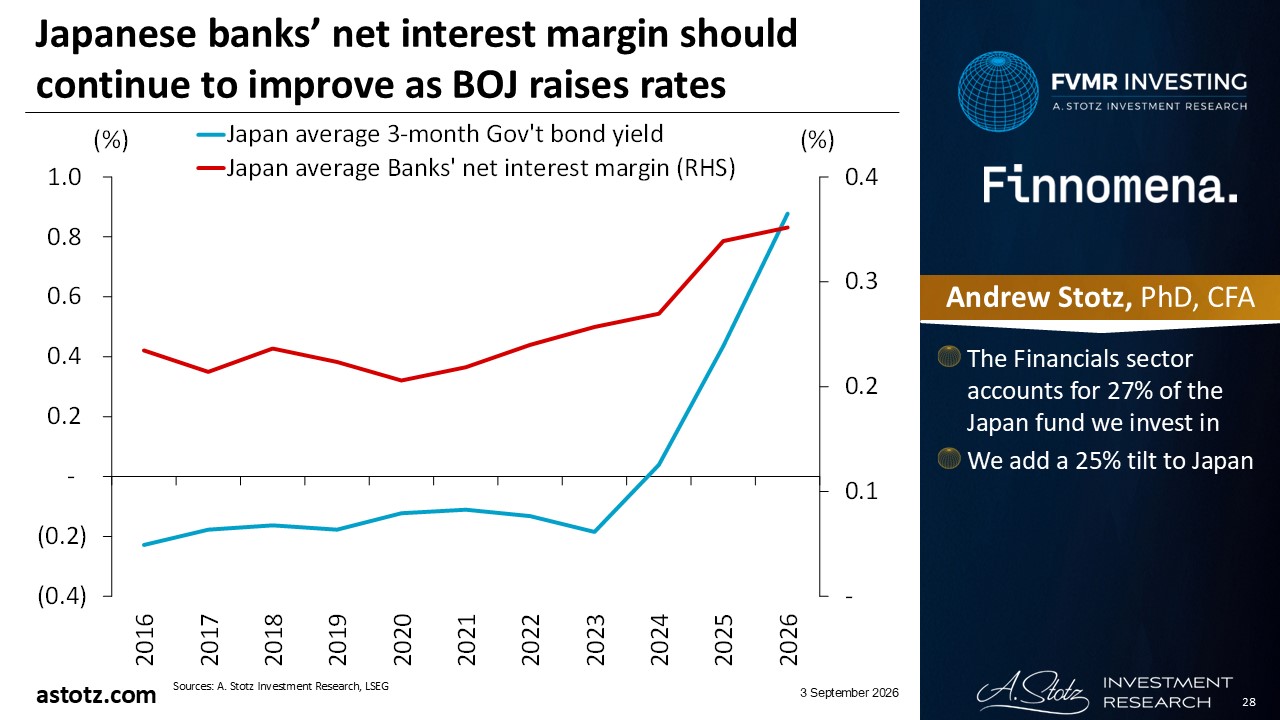
- The Financials sector accounts for 27% of the Japan fund we invest in
- We add a 25% tilt to Japan
Keep a 25% tilt to Asia Pacific ex Japan ex China, which benefits from AI, EV, and Tech optimism
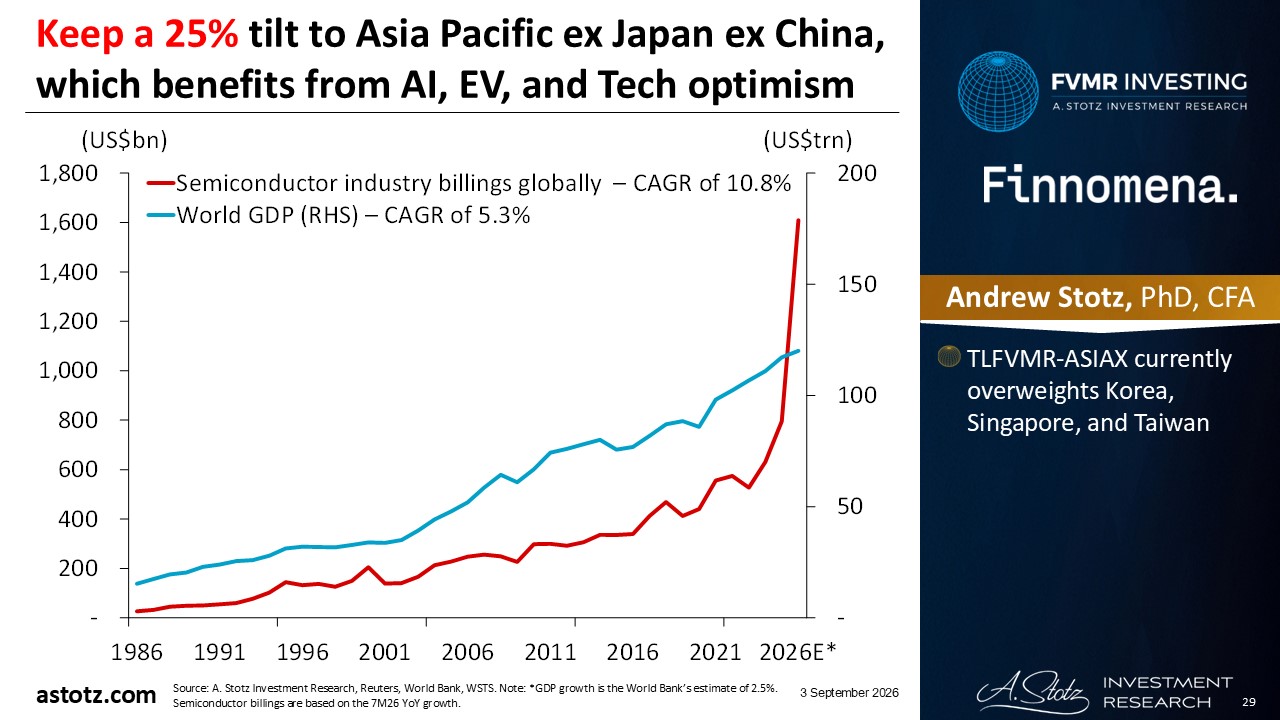
- TLFVMR-ASIAX currently overweights Korea, Singapore, and Taiwan
Samsung and SK Hynix dominate the DRAM market at a 65% global market share
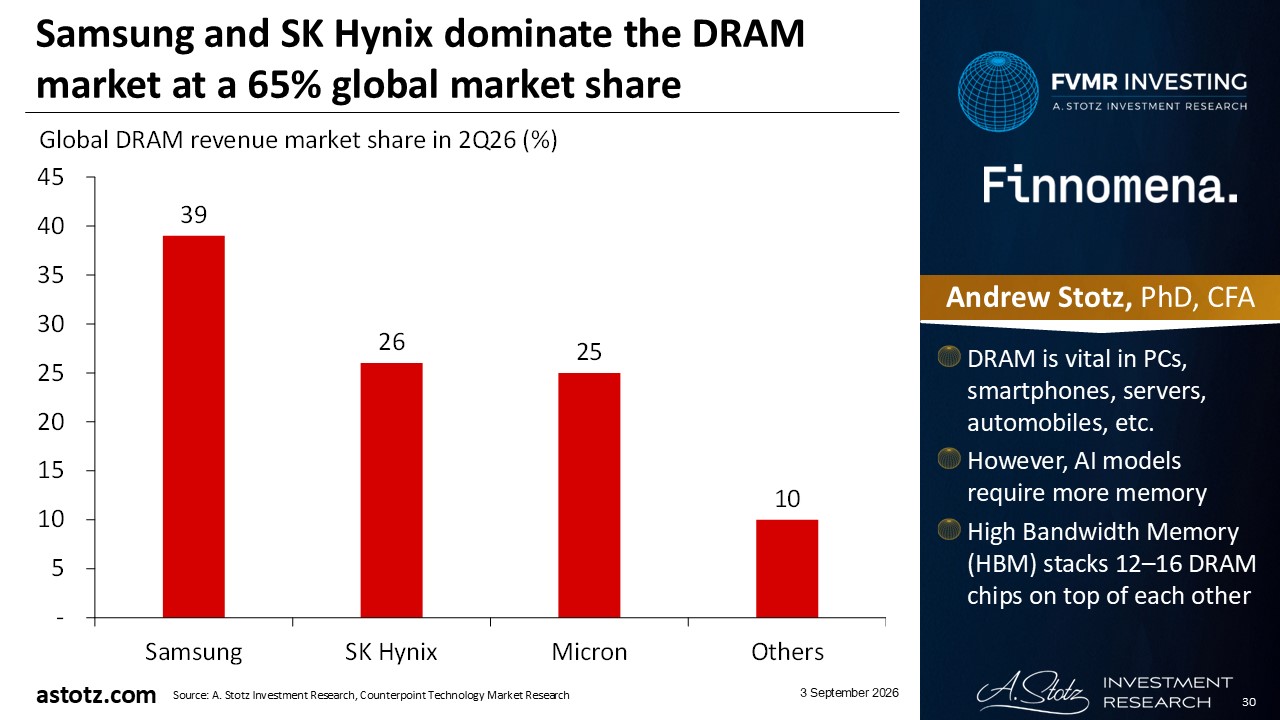
- DRAM is vital in PCs, smartphones, servers, automobiles, etc.
- However, AI models require more memory
- High Bandwidth Memory (HBM) stacks 12–16 DRAM chips on top of each other
SK Hynix and Samsung are even more dominant in the HBM market with a 79% market share
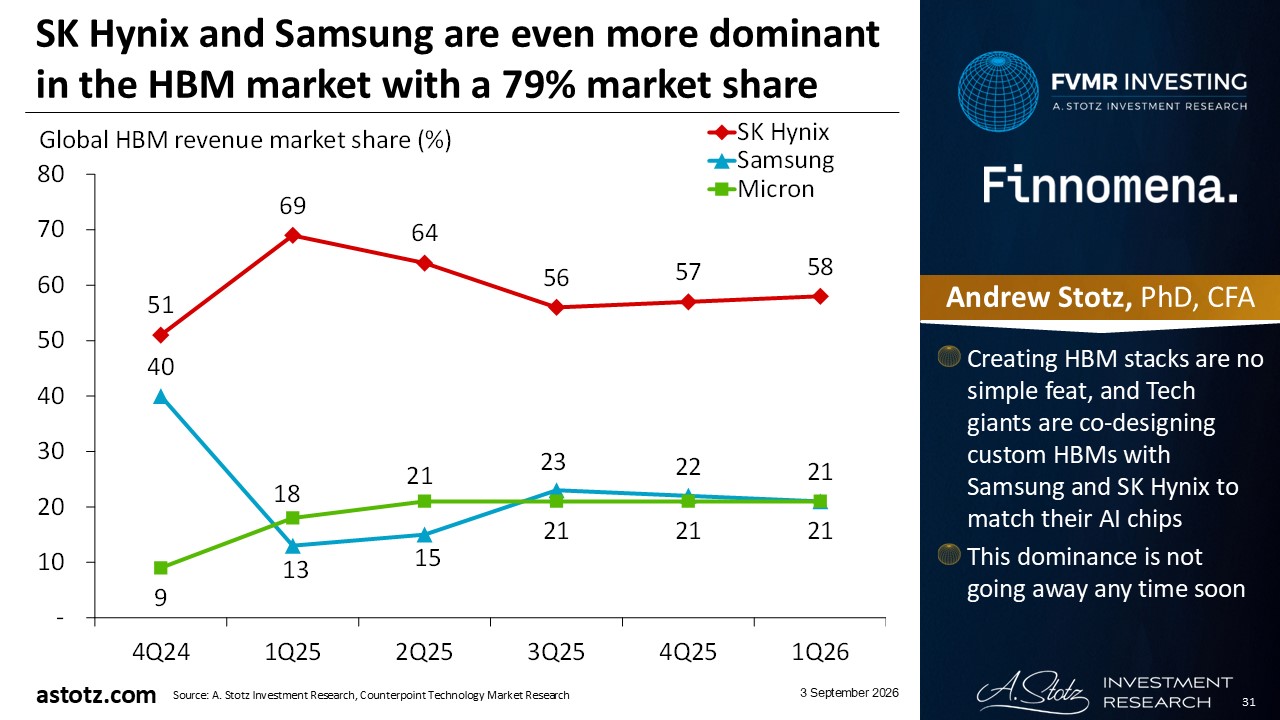
- Creating HBM stacks are no simple feat, and Tech giants are co-designing custom HBMs with Samsung and SK Hynix to match their AI chips
- This dominance is not going away any time soon
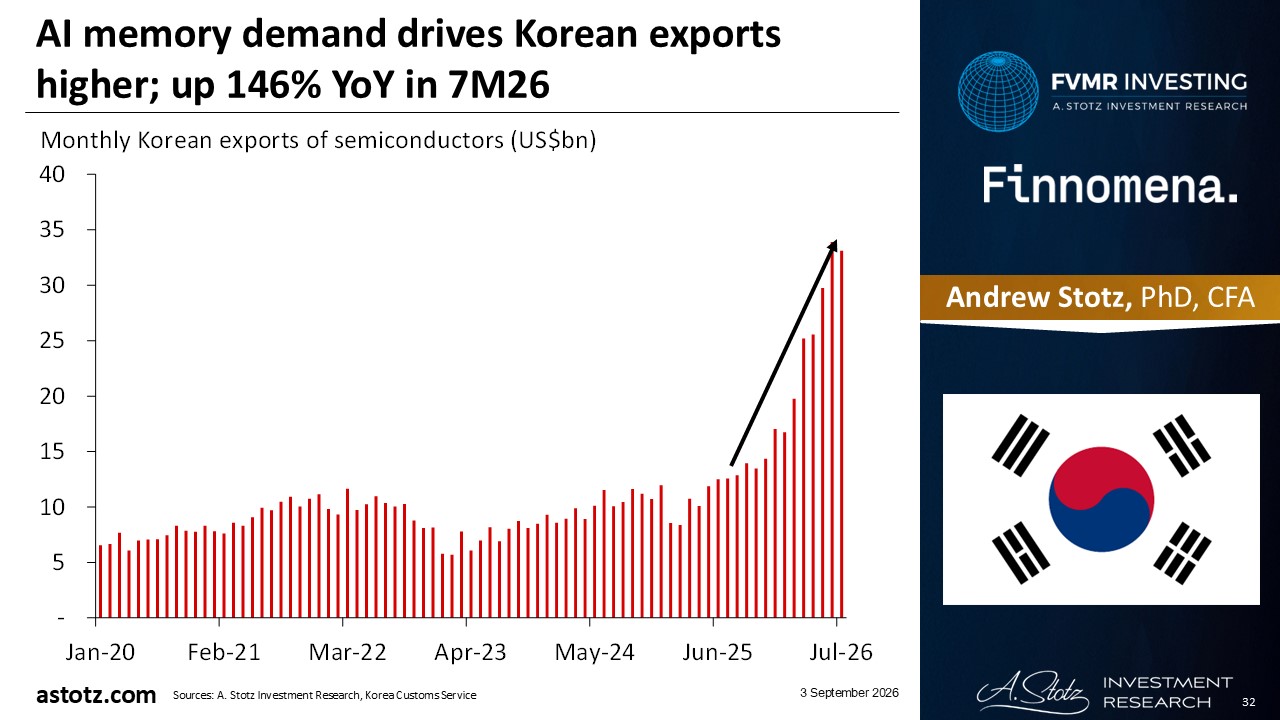
AI memory demand drives Korean exports higher; up 146% YoY in 7M26
The Corporate Value-up Program reduces the “Korea discount”
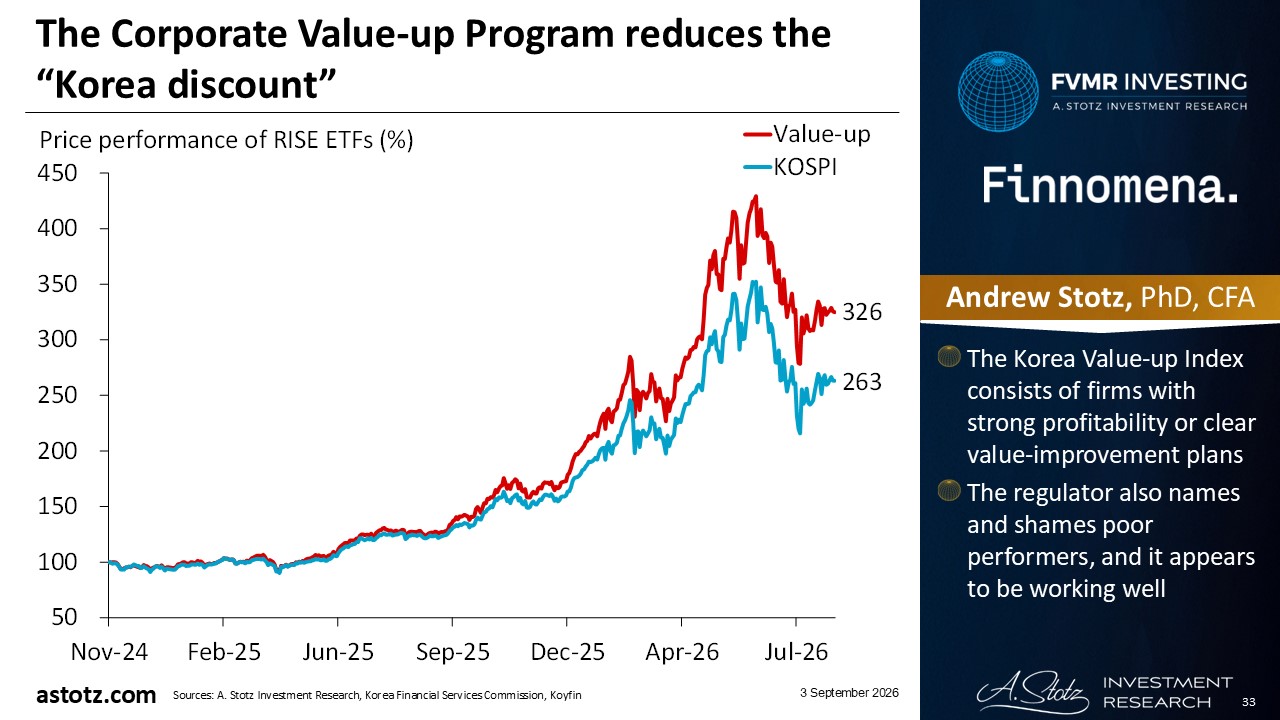
- The Korea Value-up Index consists of firms with strong profitability or clear value-improvement plans
- The regulator also names and shames poor performers, and it appears to be working well
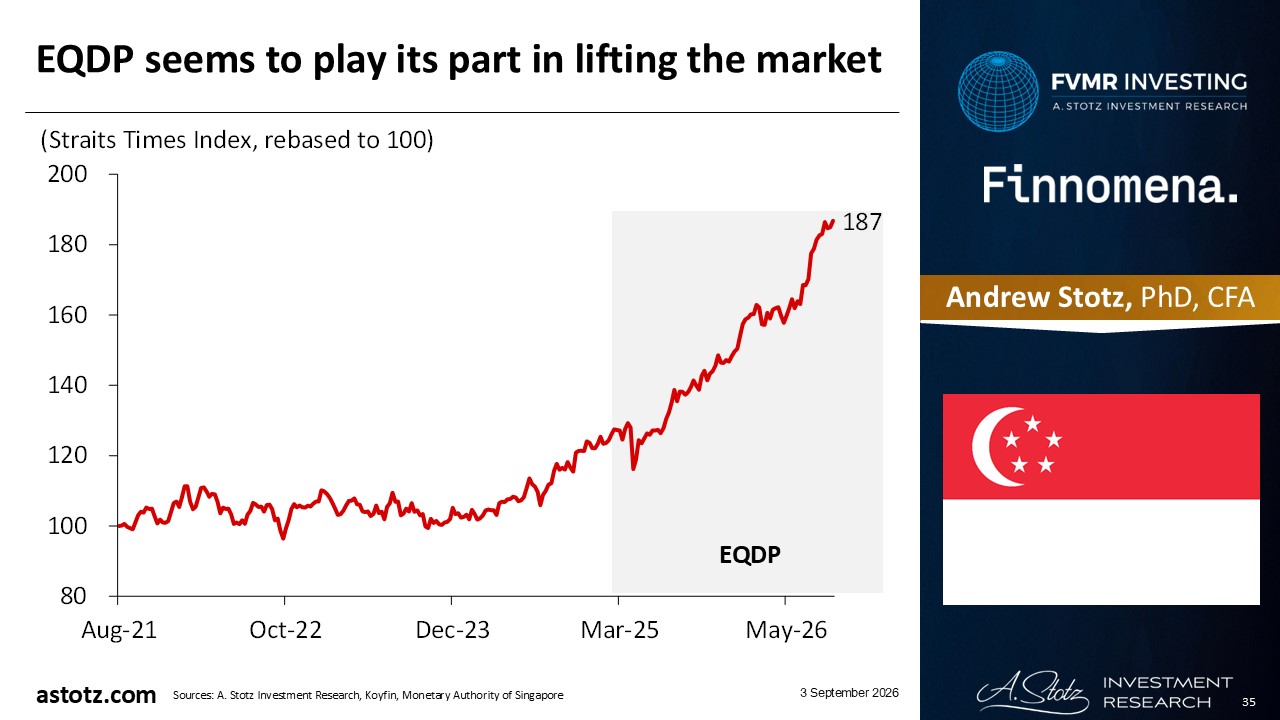
The Singaporean government boosts liquidity and broadens investor participation
- The Monetary Authority of Singapore (MAS) set up the Equity Market Development Program (EQDP) in February 2025
- Initially sized at US$3.9bn, expanding to US$5.1bn in February 2026
- MAS provides capital to approved asset managers who actively invest in Singapore stocks, particularly small and mid-cap stocks
EQDP seems to play its part in lifting the market
Singapore’s wealth hub is giving Hong Kong a run for its money
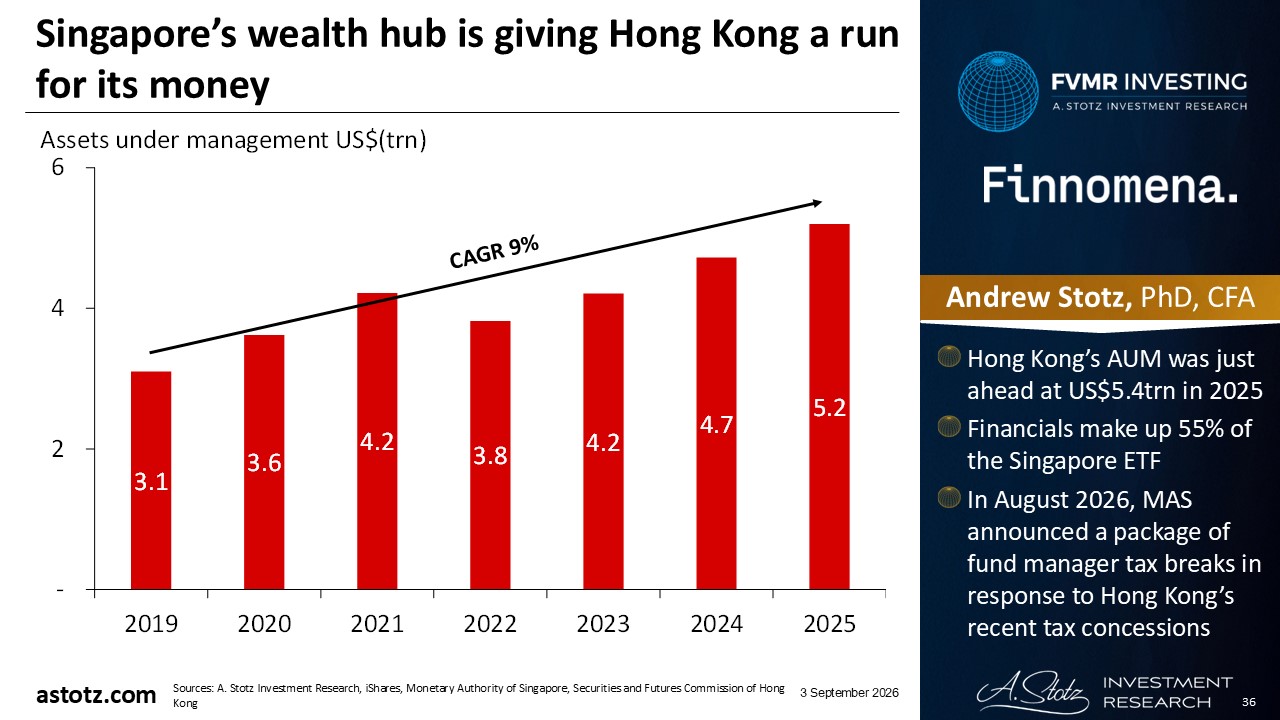
- Hong Kong’s AUM was just ahead at US$5.4trn in 2025
- Financials make up 55% of the Singapore ETF
- In August 2026, MAS announced a package of fund manager tax breaks in response to Hong Kong’s recent tax concessions
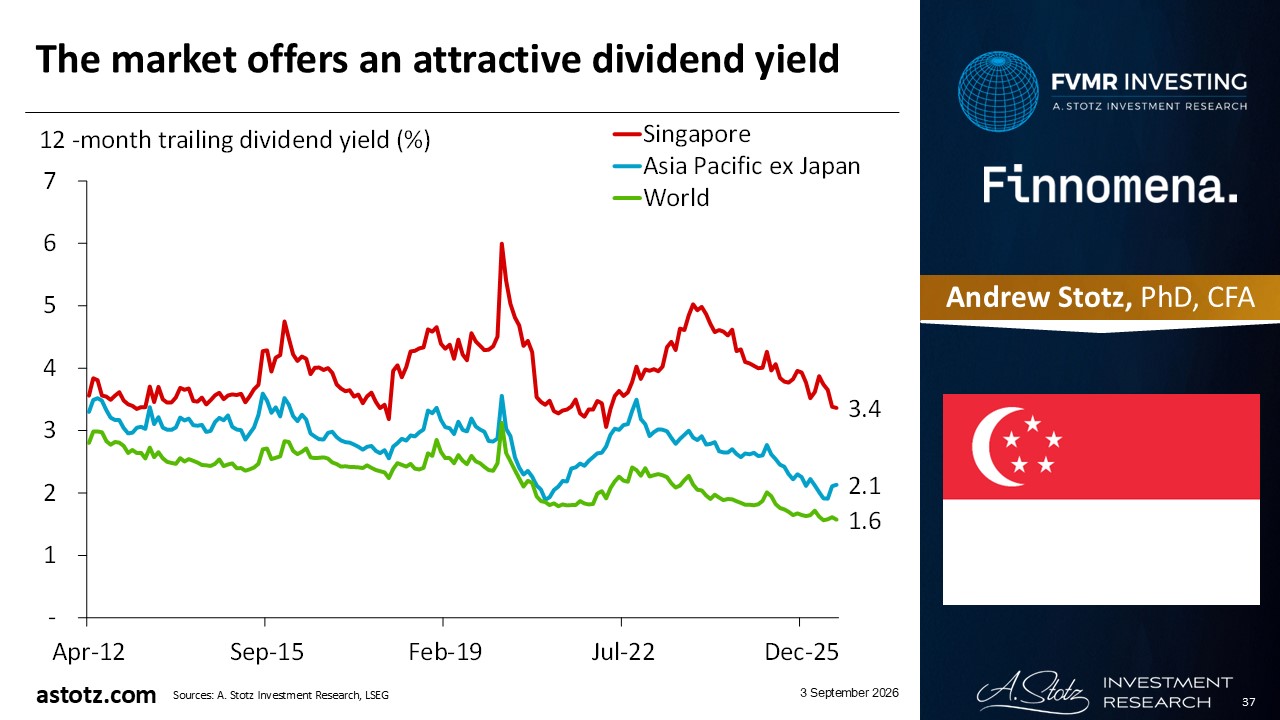
The market offers an attractive dividend yield
Taiwan dominates processors and servers for the AI boom
- While Korean firms dominate memory, Taiwanese firms like TSMC put the pieces together and builds processors
- Tech giants are increasingly designing their own custom AI chips, and Taiwan is the leader in producing those custom designs
- It’s not only the chips, Taiwanese firms also produce about 90% of the world’s AI servers
Taiwanese TSMC holds 73% of the global market share for advanced nodes (≤16nm)
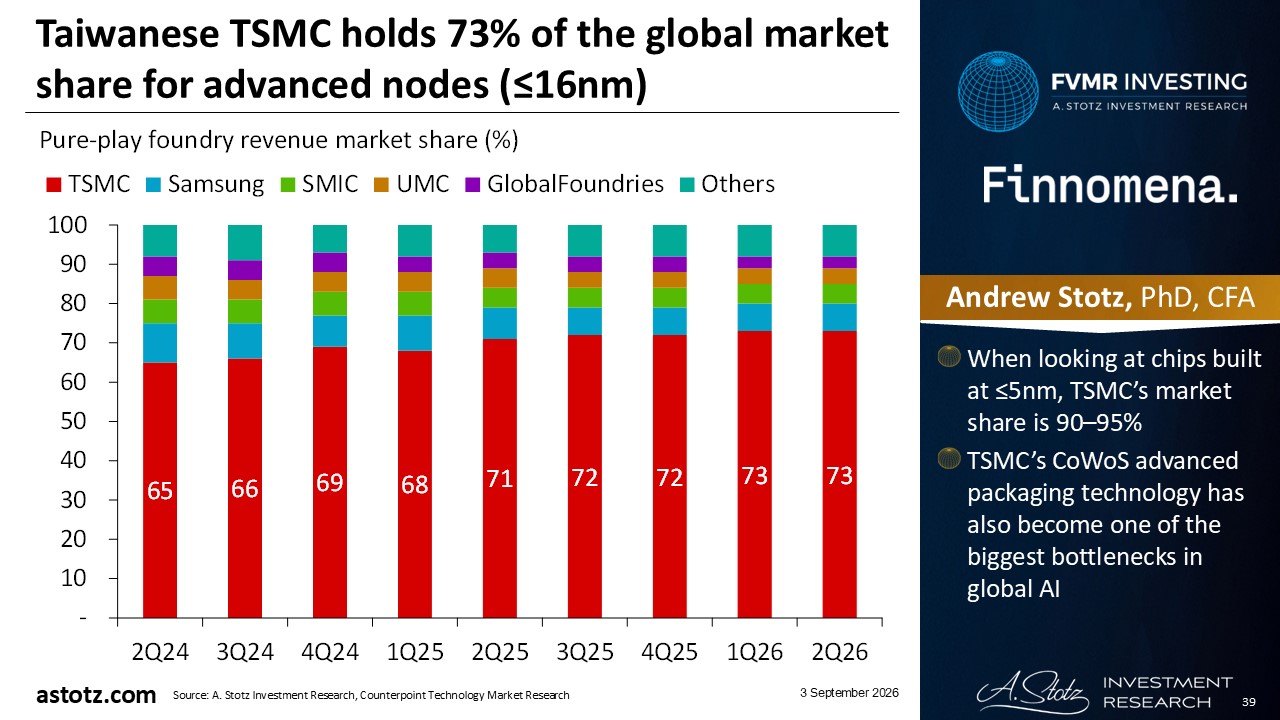
- When looking at chips built at ≤5nm, TSMC’s market share is 90–95%
- TSMC’s CoWoS advanced packaging technology has also become one of the biggest bottlenecks in global AI
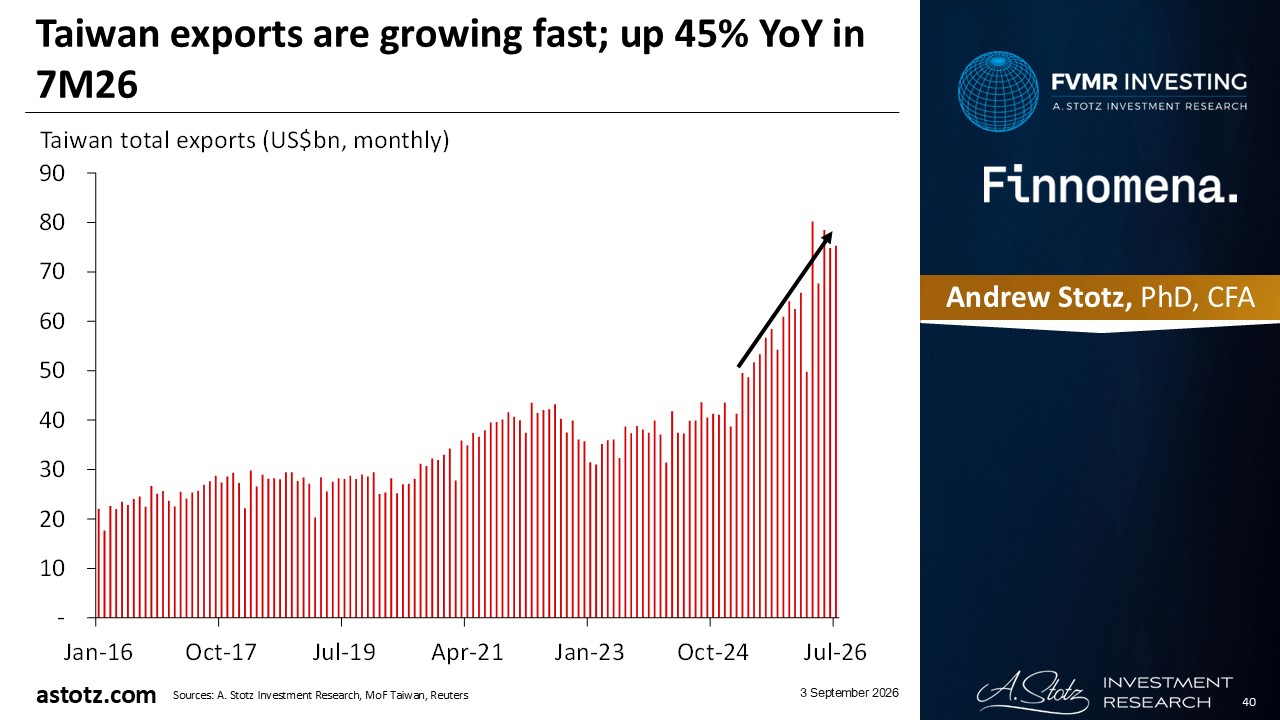
Taiwan exports are growing fast; up 45% YoY in 7M26
As AI-related stocks hit new highs, there’s a risk of a reversion; we take a more defensive stance
- We keep the overall equity allocation at 67%
- Our tilt to Asia Pacific ex Japan ex China and World Info. Tech. still give us AI exposure
- At the same time, we keep high weights in the defensive sectors, World Health Care, and World Infrastructure
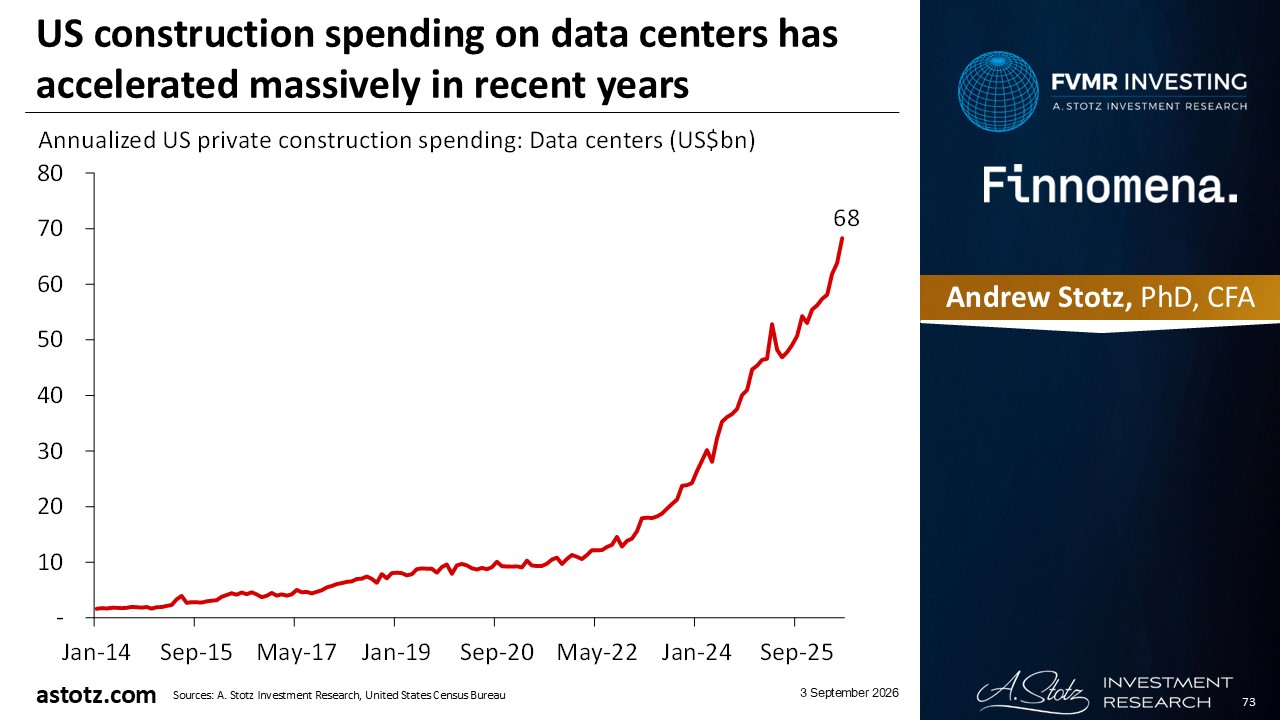
The rapid construction of data centers is one example of how Tech drives the overall market
Investing in healthcare where demand is fueled by the long-term trend of an ageing population
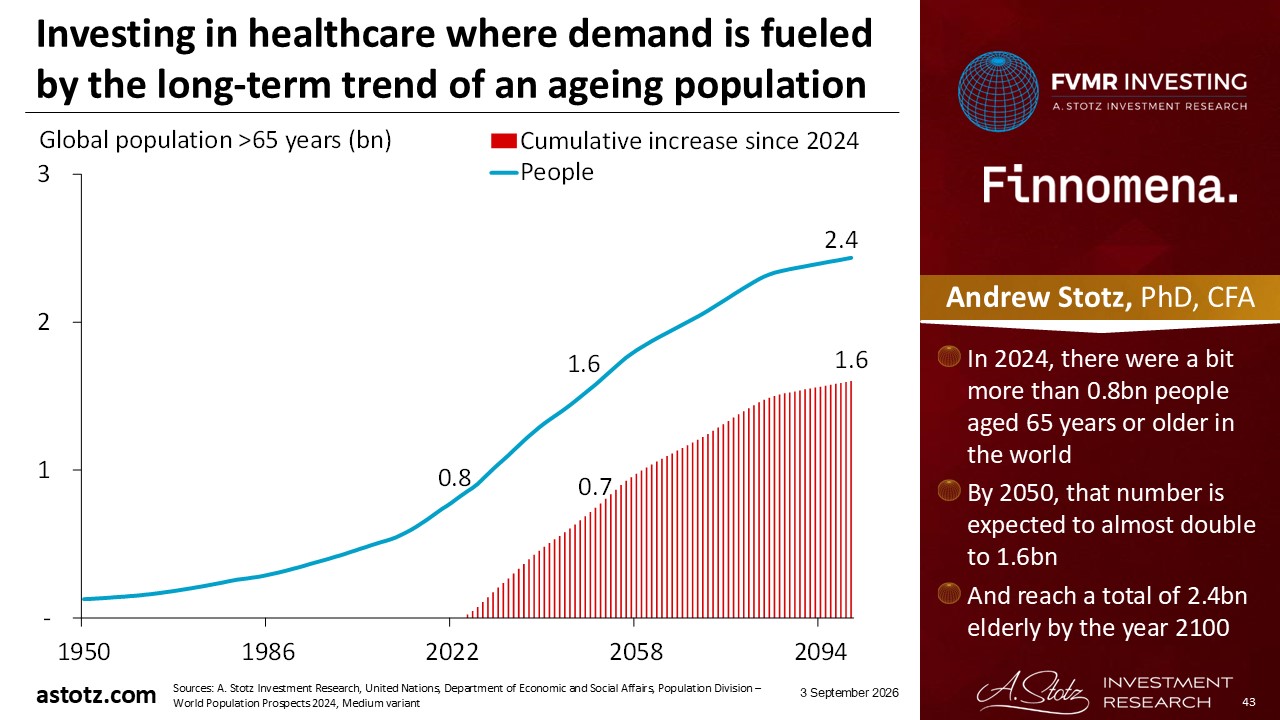
- In 2024, there were a bit more than 0.8bn people aged 65 years or older in the world
- By 2050, that number is expected to almost double to 1.6bn
- And reach a total of 2.4bn elderly by the year 2100
Steady Health Care demand helps revenue hold up better during downturns
- Aging populations need more healthcare, making it a structural growth theme
- We keep our 13% target allocation
Infrastructure has been defensive, and 49% of the fund* is invested in various Utilities
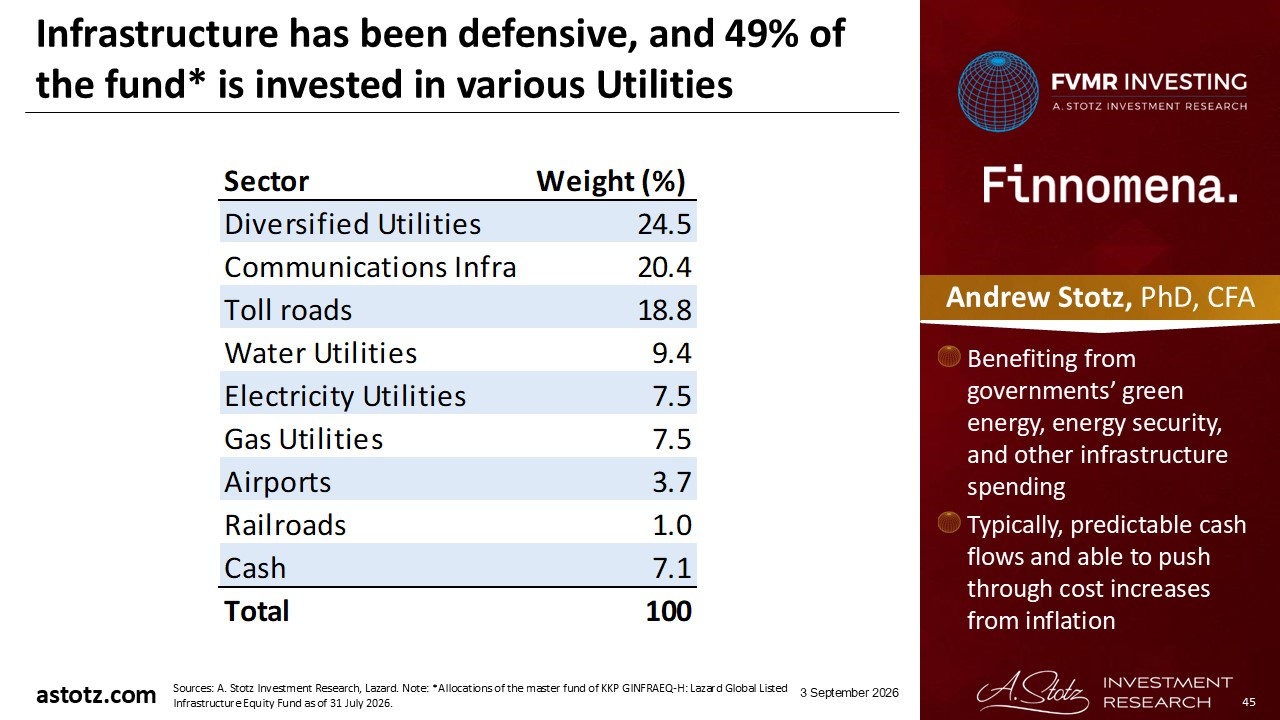
- Benefiting from governments’ green energy, energy security, and other infrastructure spending
- Typically, predictable cash flows and able to push through cost increases from inflation
Utilities are defensive because they provide essentials like electricity, natural gas, and water
- Demand stays stable because households and businesses continue using these services in any economy
- Many utilities also operate under regulated monopoly models, which support predictable cash flows and dividends
- Toll roads, railroads, airports, and communication infrastructure can share similar defensive traits
- We keep our 13% target allocation to World Infrastructure
In the Dotcom Crash, the defensive sectors saw 12 and 26 ppts lower drawdowns
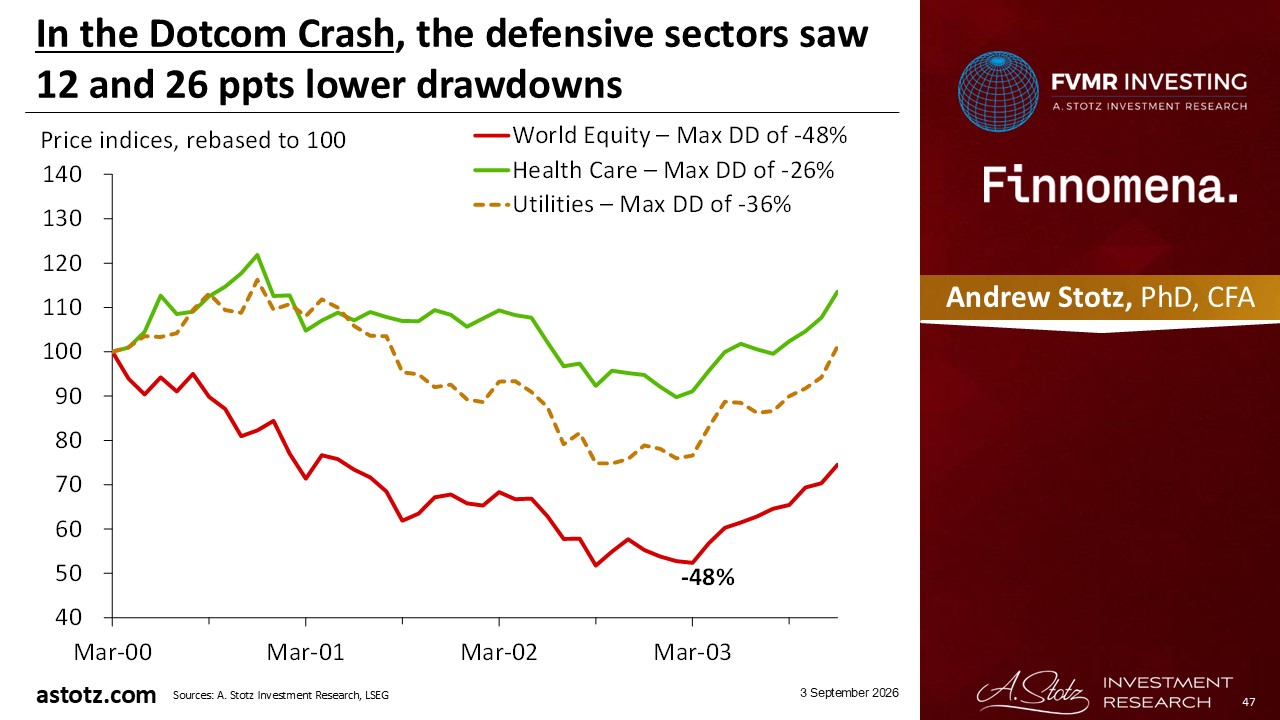
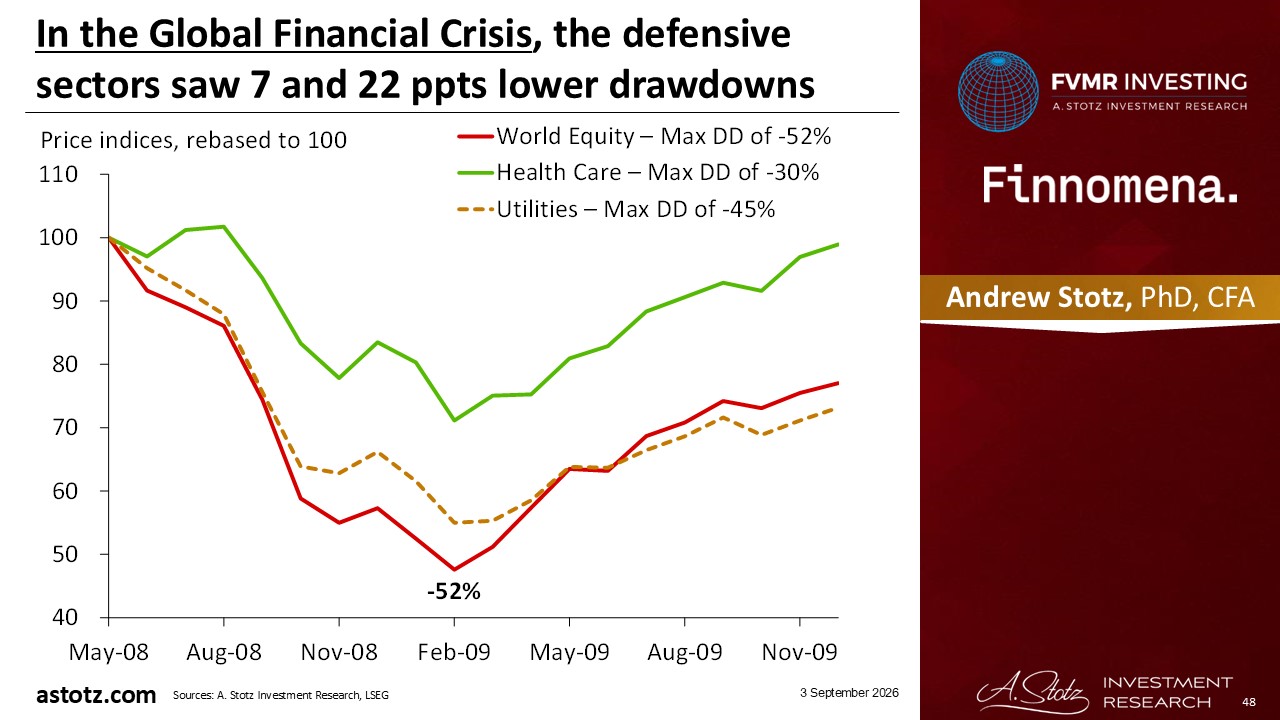
In the Global Financial Crisis, the defensive sectors saw 7 and 22 ppts lower drawdowns
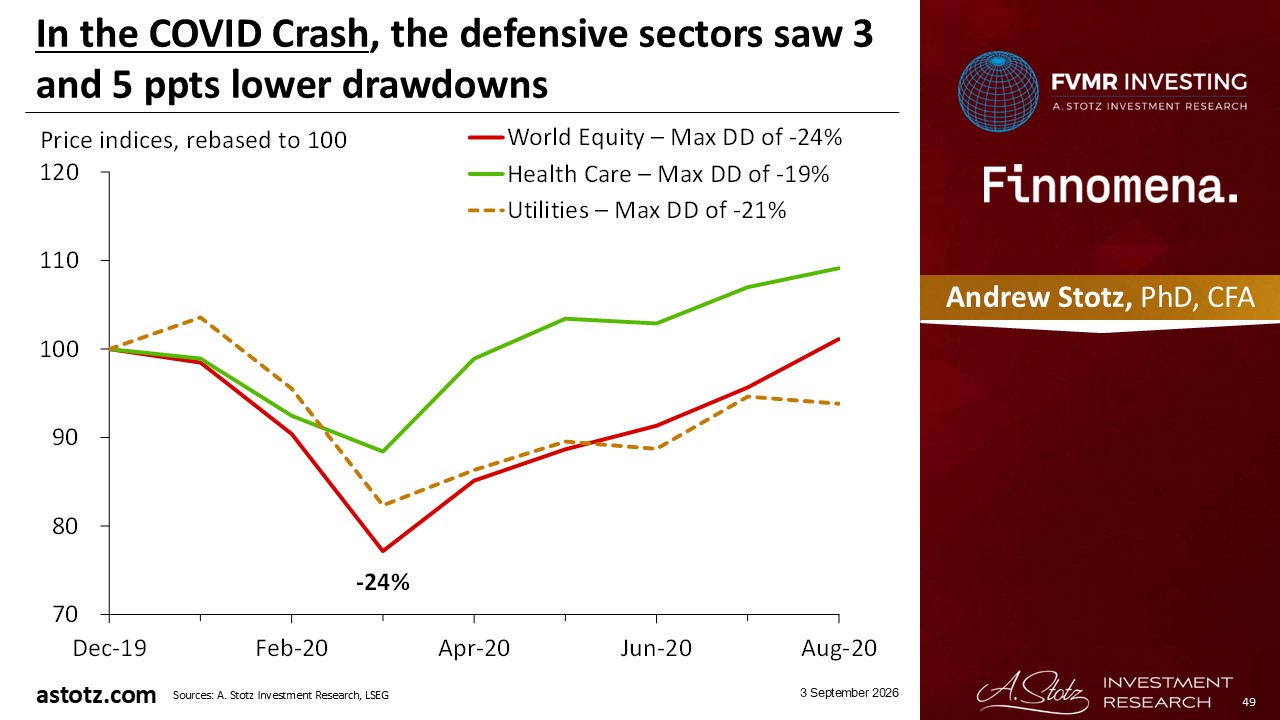
In the COVID Crash, the defensive sectors saw 3 and 5 ppts lower drawdowns
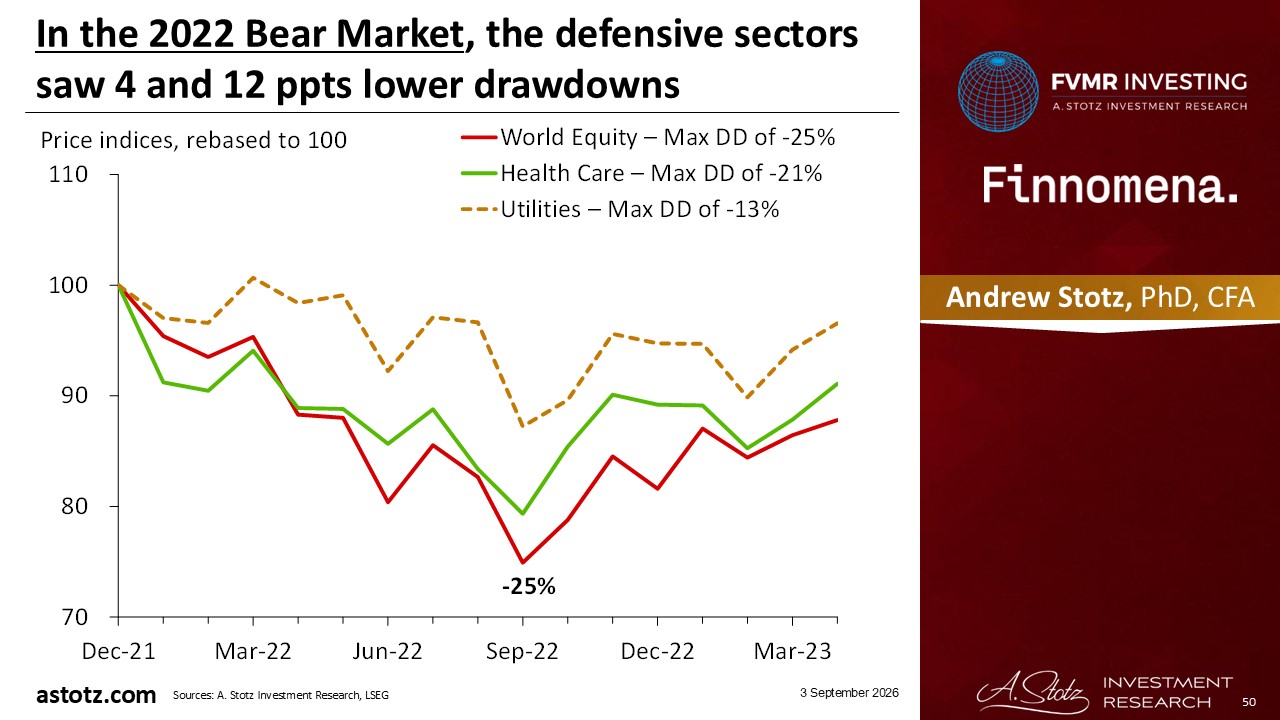
In the 2022 Bear Market, the defensive sectors saw 4 and 12 ppts lower drawdowns
In August 2026, Global Bonds lost 0.2%, hardly visible due to the asset class’s low volatility
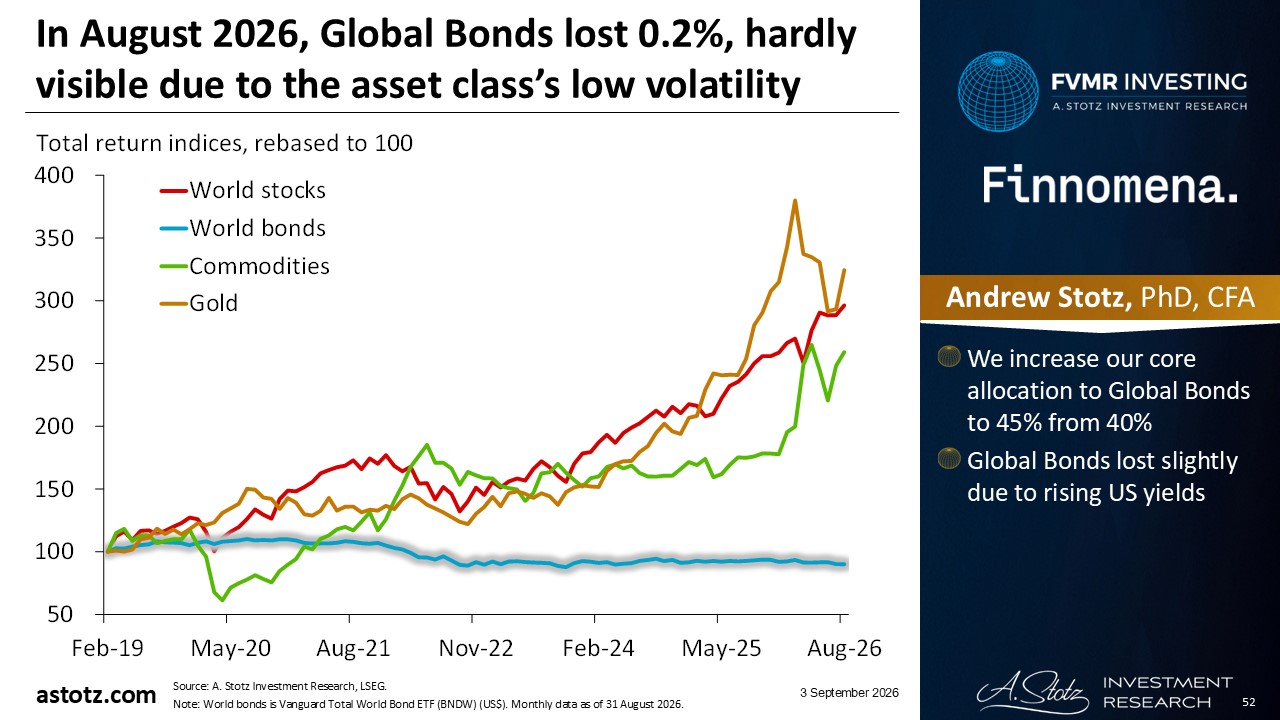
- We increase our core allocation to Global Bonds to 45% from 40%
- Global Bonds lost slightly due to rising US yields
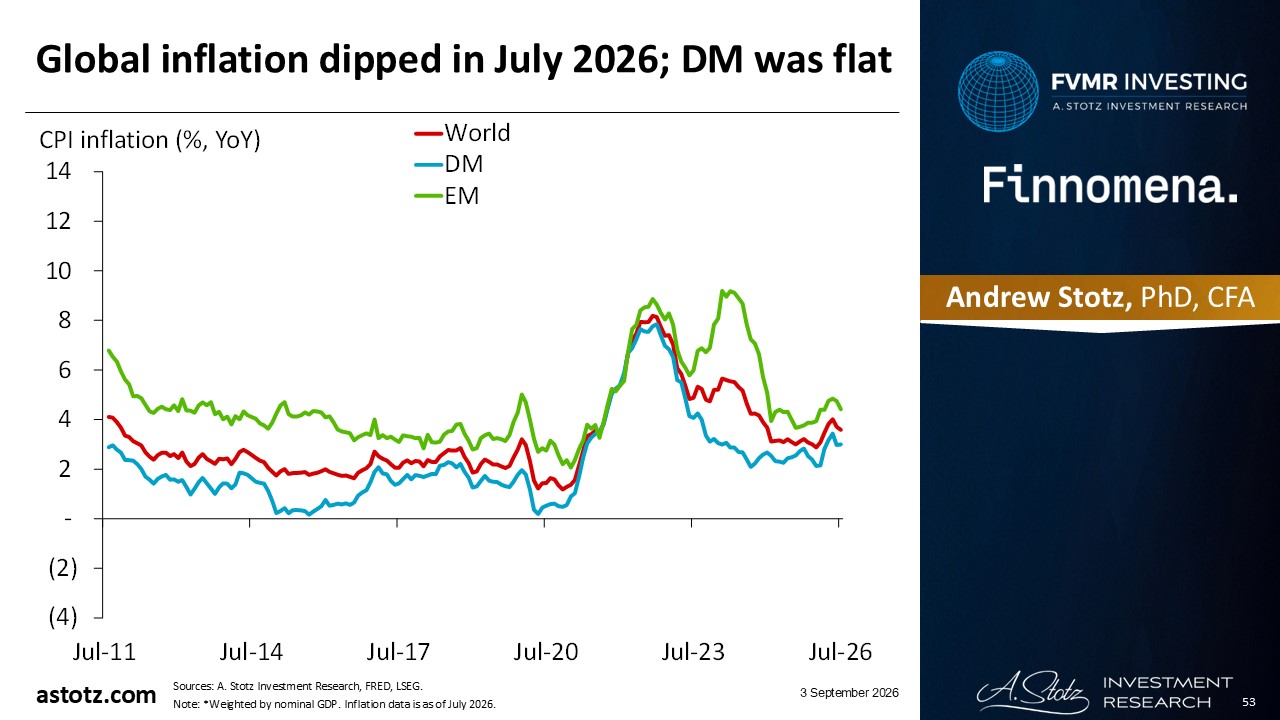
Global inflation dipped in July 2026; DM was flat
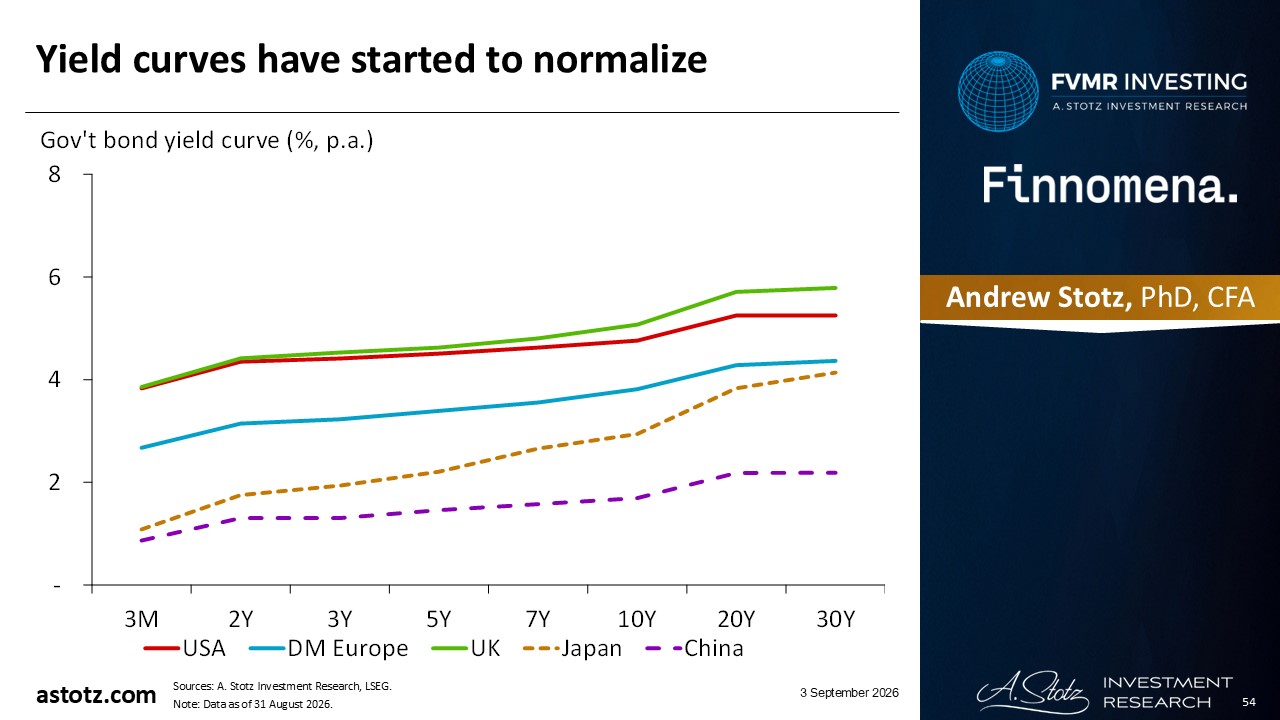
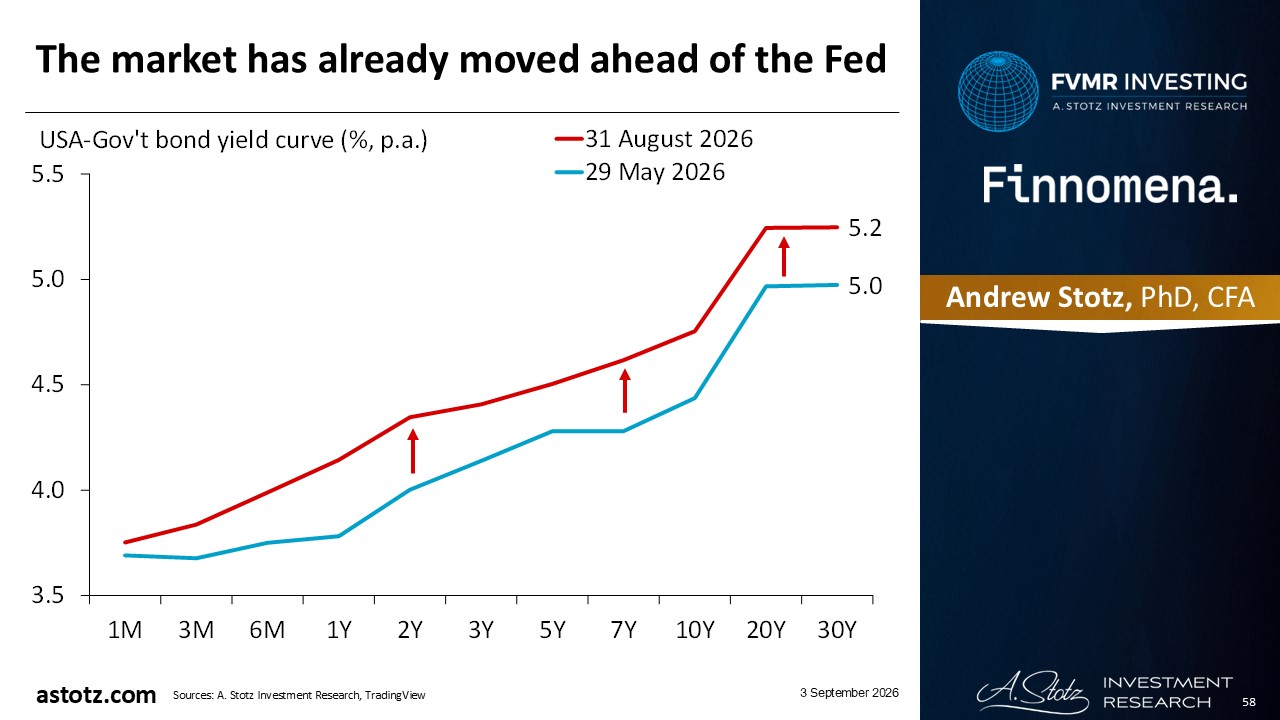
Yield curves have started to normalize
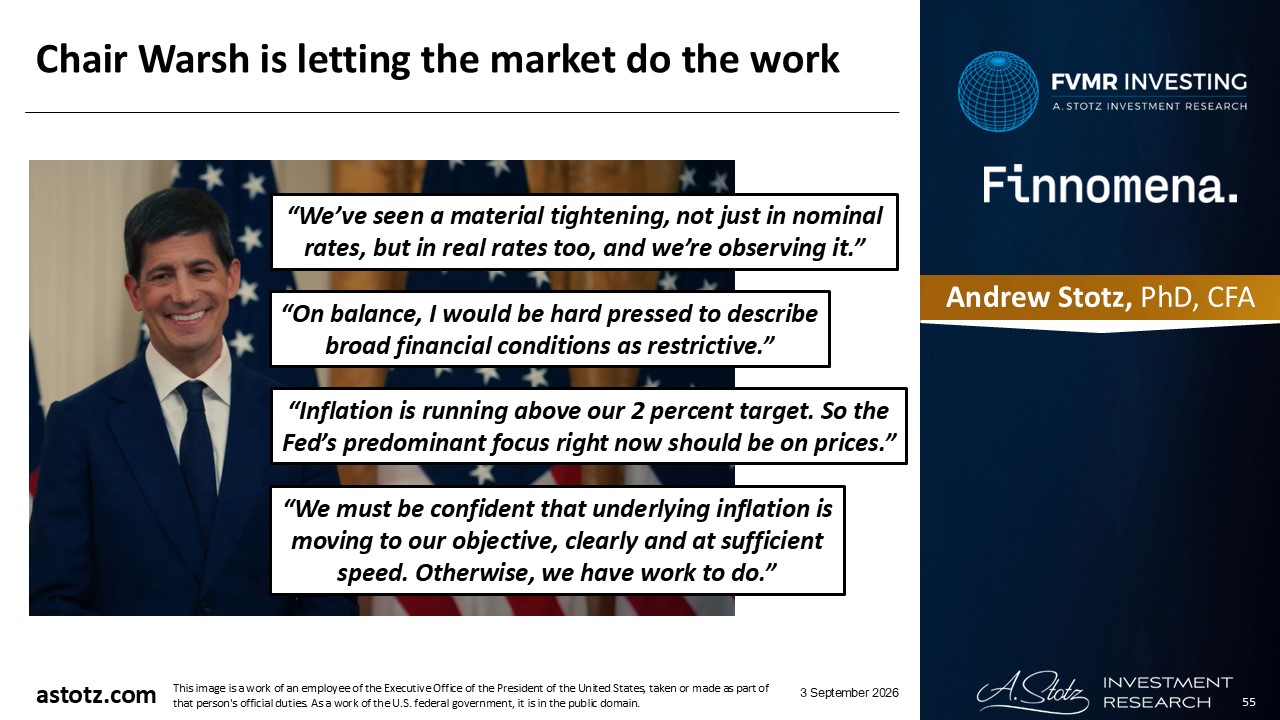
Chair Warsh is letting the market do the work
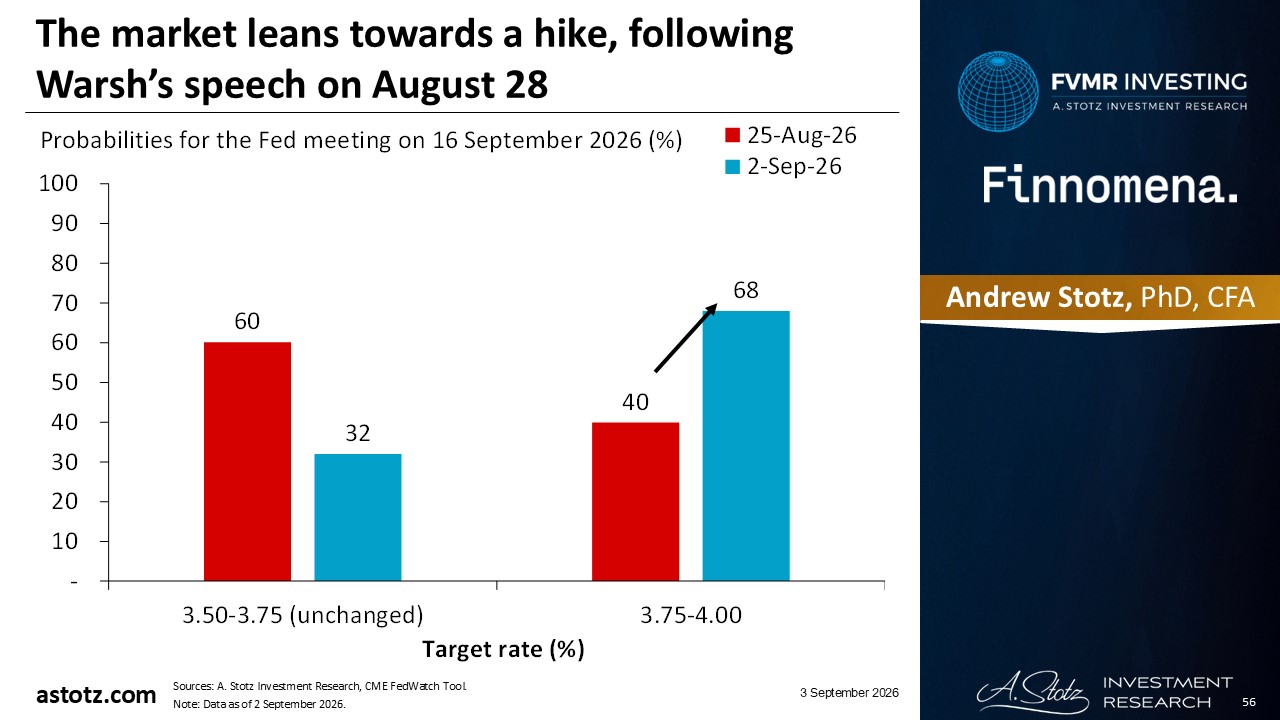
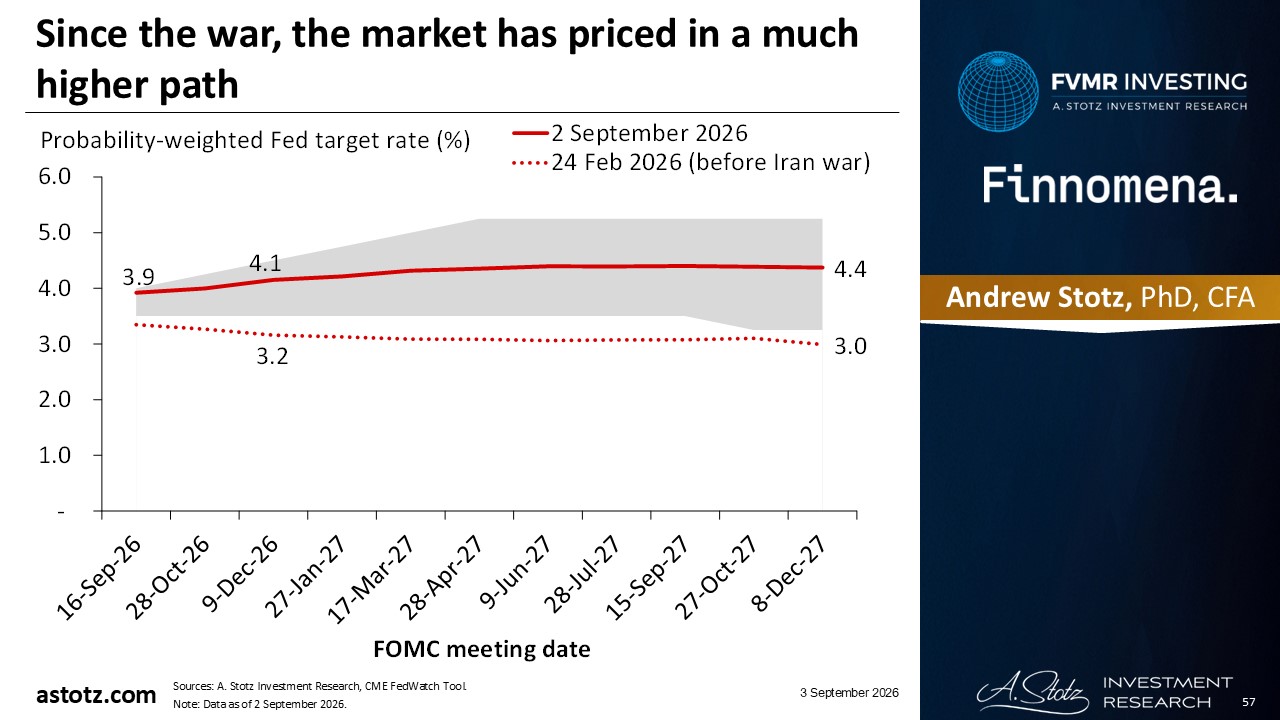
The market leans towards a hike, following Warsh’s speech on August 28
Since the war, the market has priced in a much higher path
The market has already moved ahead of the Fed
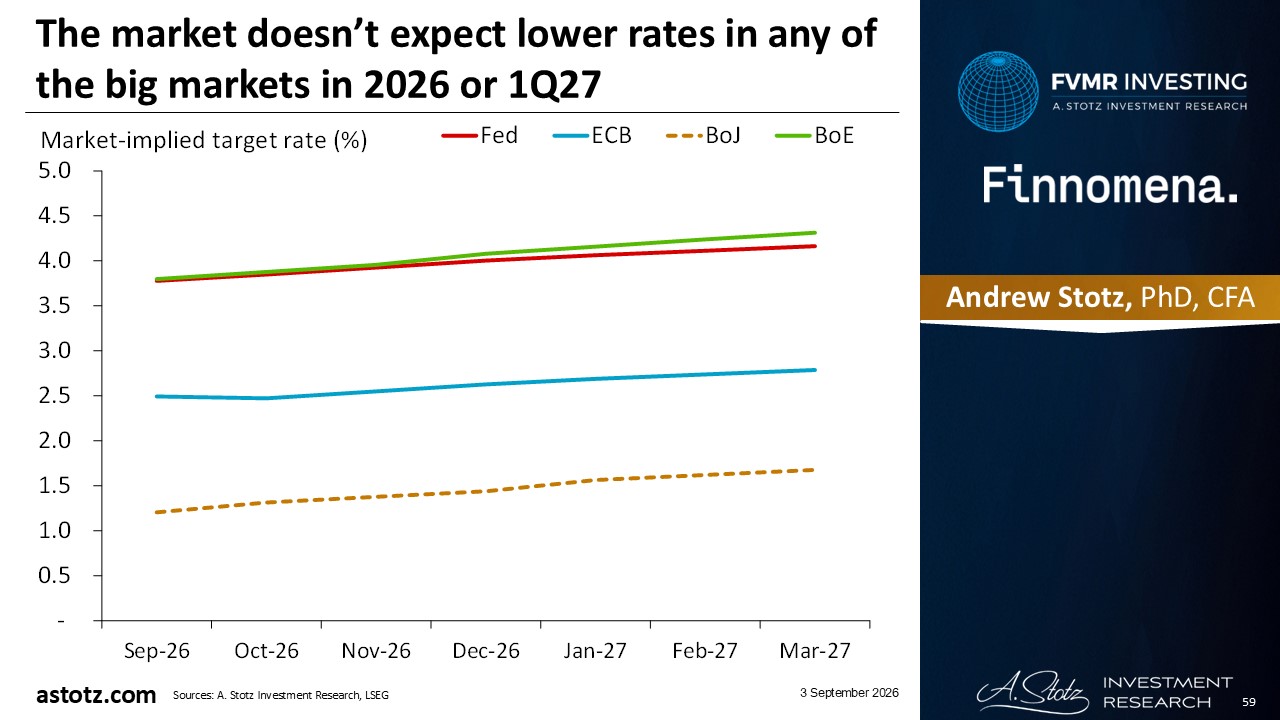
The market doesn’t expect lower rates in any of the big markets in 2026 or 1Q27
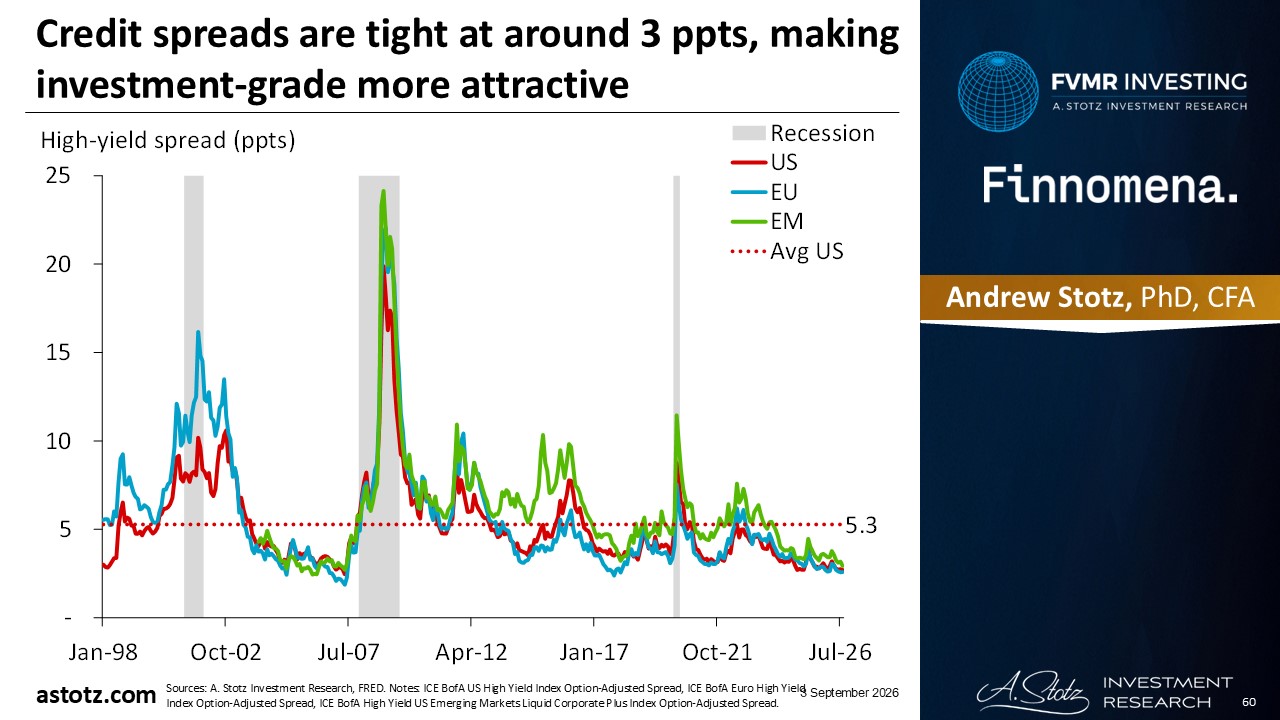
Credit spreads are tight at around 3 ppts, making investment-grade more attractive
In August 2026, Commodities gained 4.4%
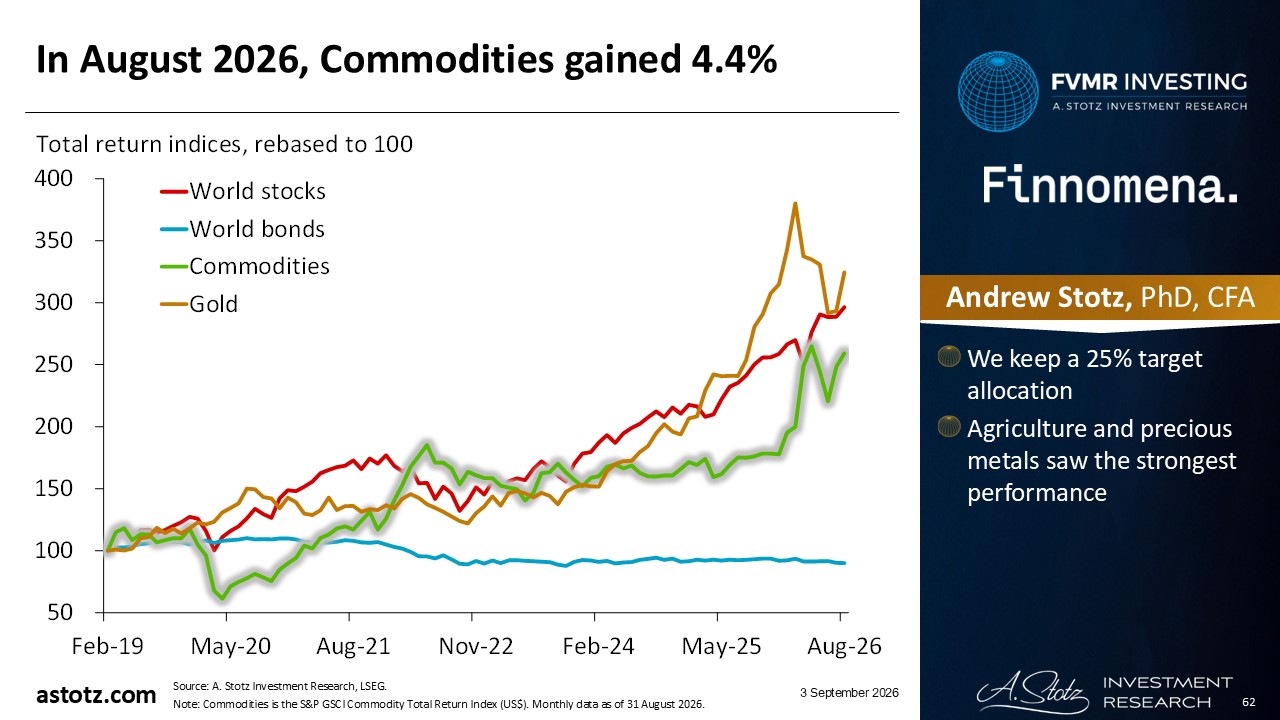
- We keep a 25% target allocation
- Agriculture and precious metals saw the strongest performance
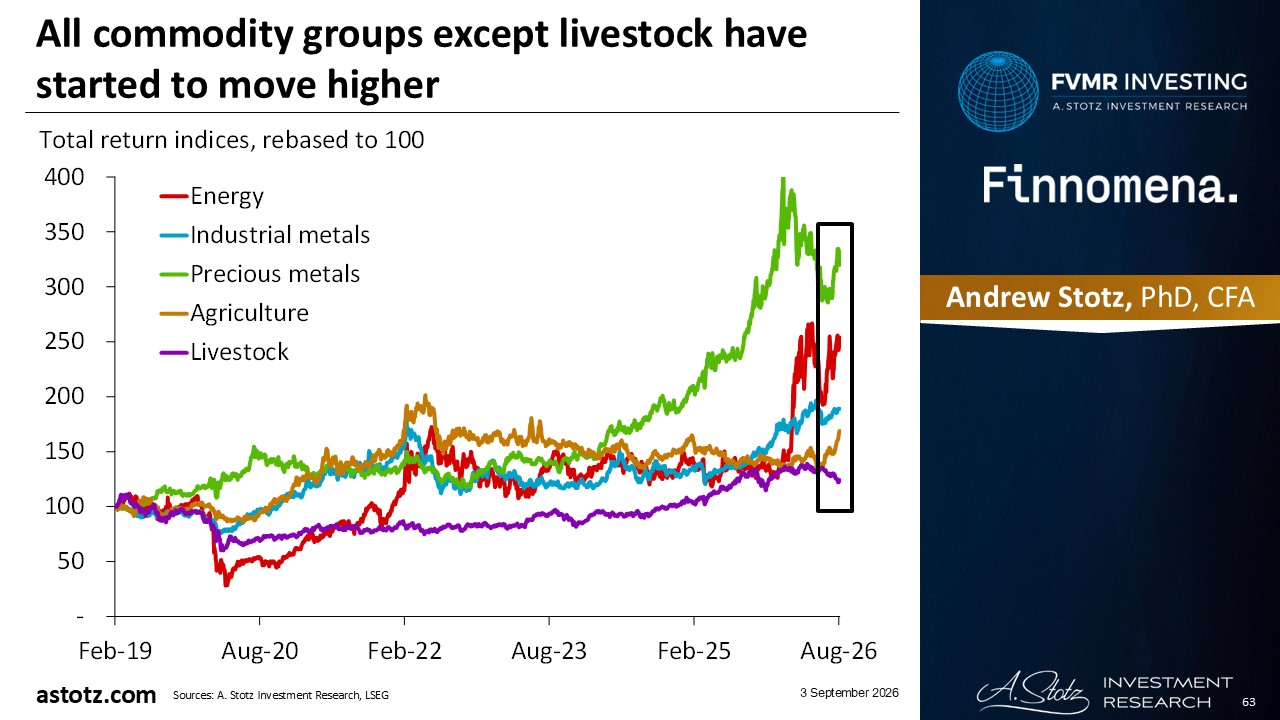
All commodity groups except livestock have started to move higher
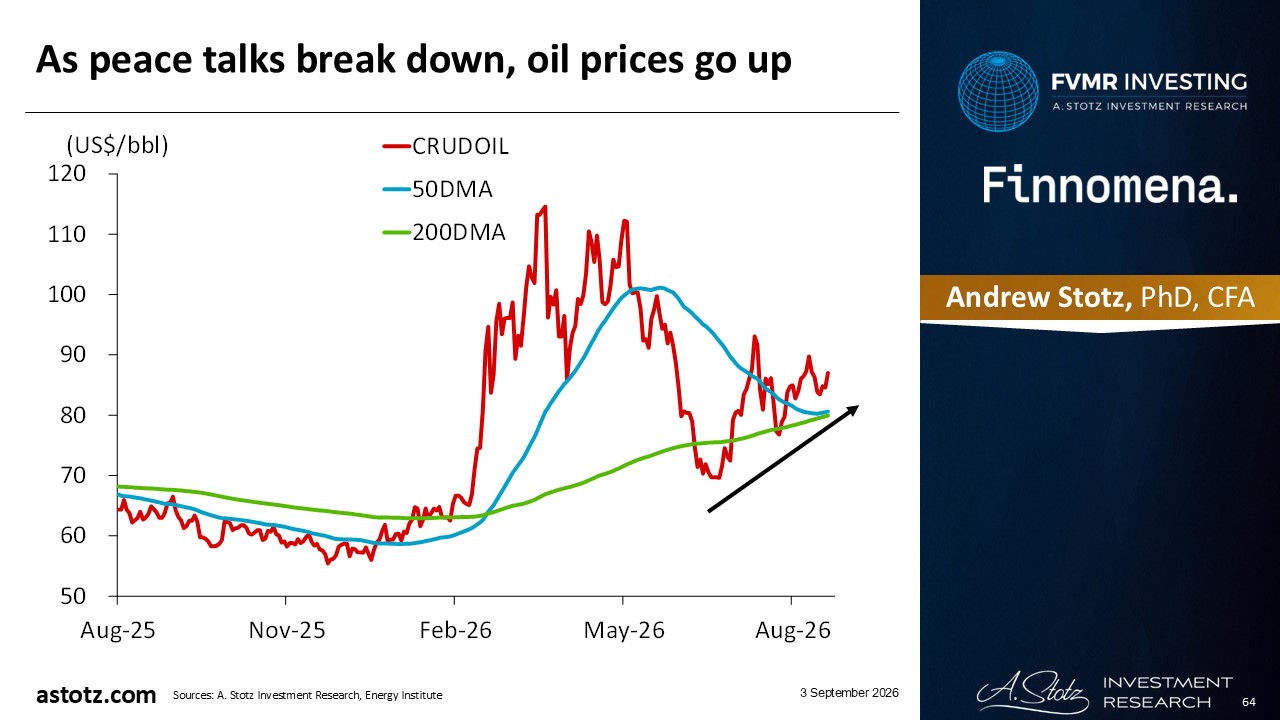
As peace talks break down, oil prices go up
EIA estimates that global inventories will not start building up again until 2027
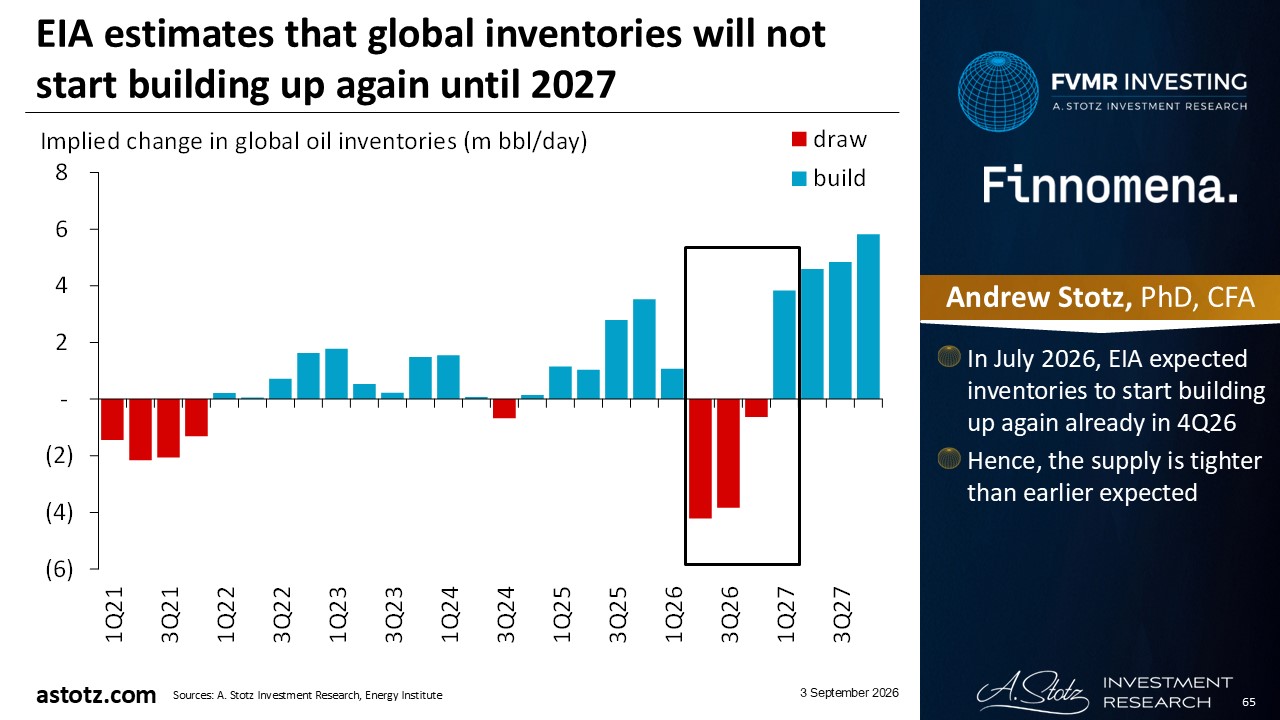
- In July 2026, EIA expected inventories to start building up again already in 4Q26
- Hence, the supply is tighter than earlier expected
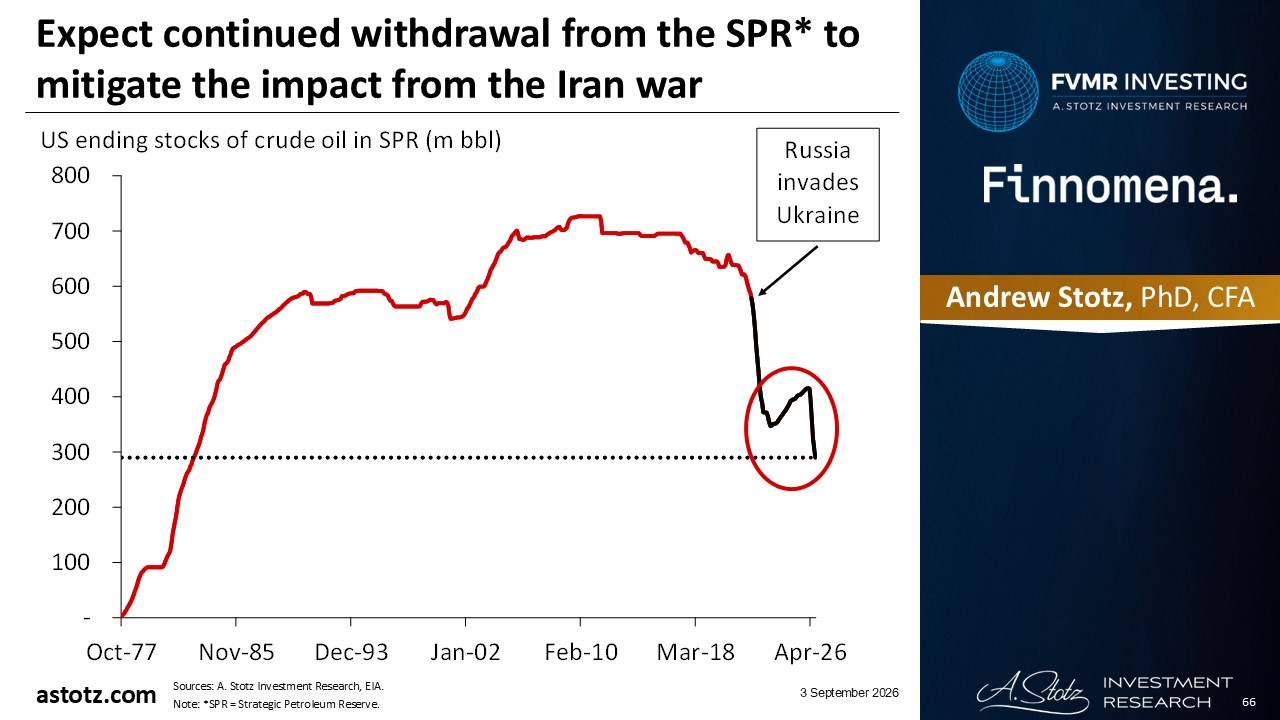
Expect continued withdrawal from the SPR* to mitigate the impact from the Iran war
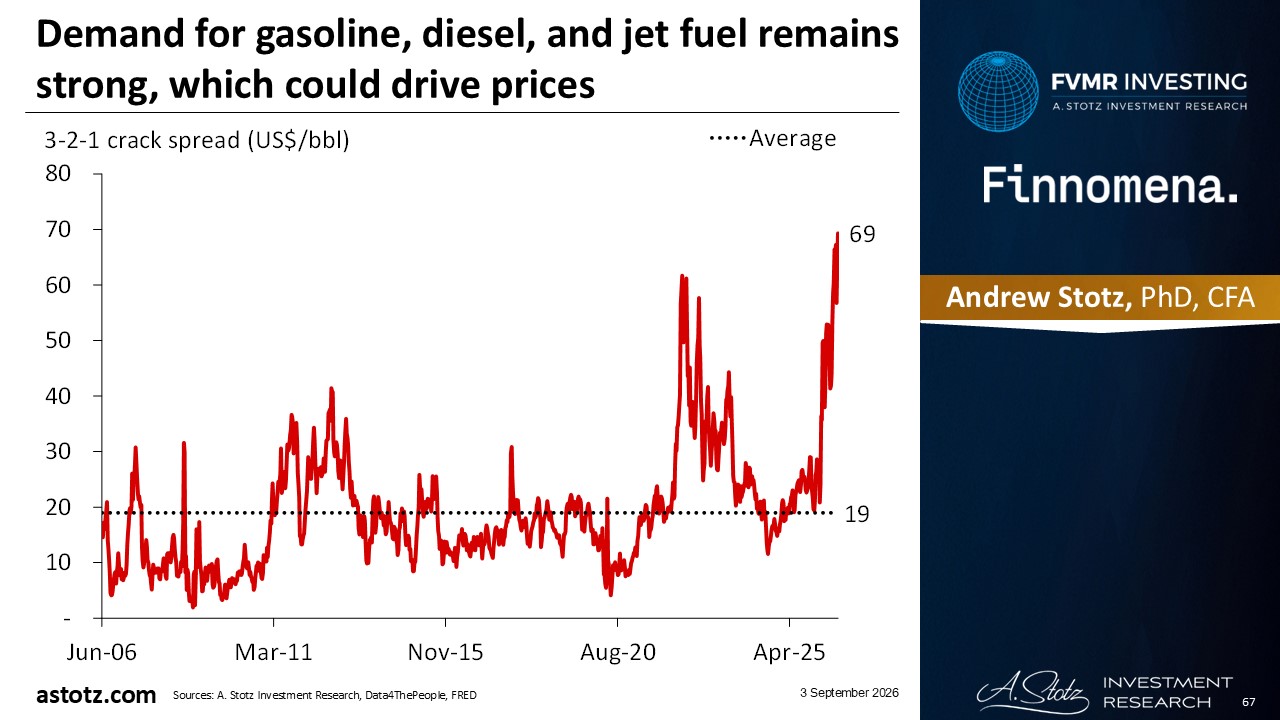
Demand for gasoline, diesel, and jet fuel remains strong, which could drive prices
When oil goes up, expect food prices to follow
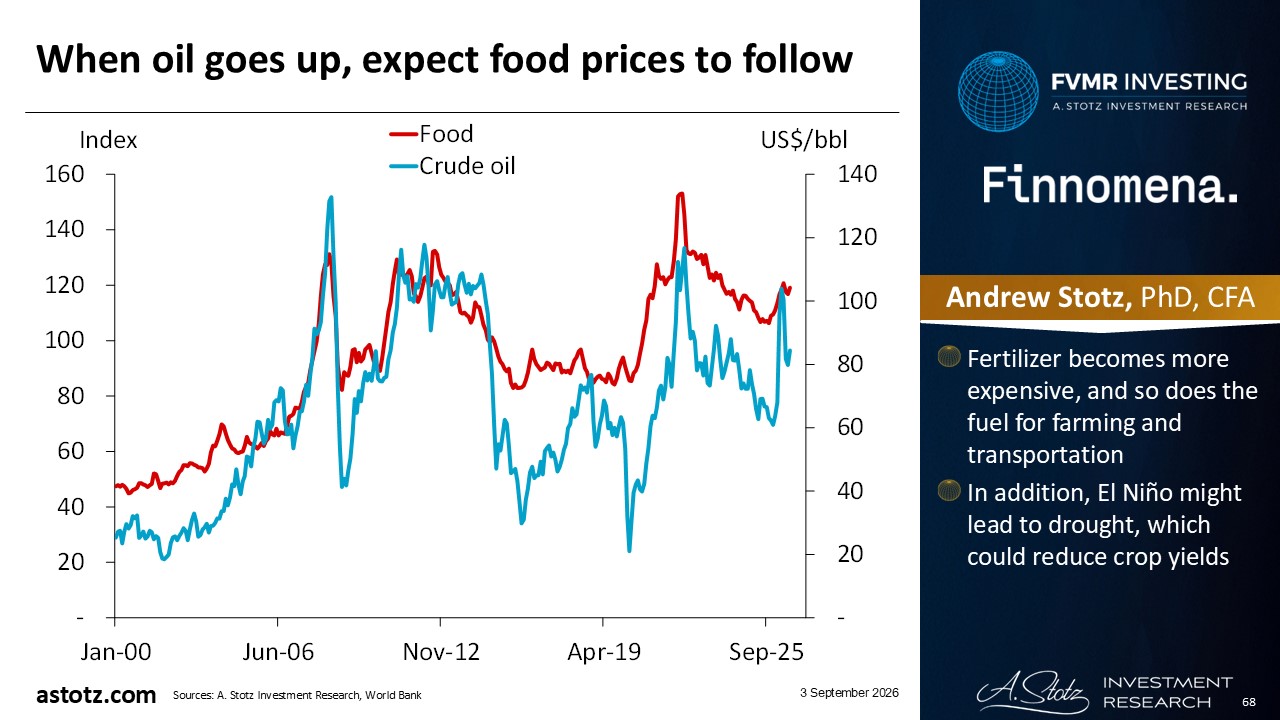
- Fertilizer becomes more expensive, and so does the fuel for farming and transportation
- In addition, El Niño might lead to drought, which could reduce crop yields
El Niño conditions have developed in the tropical Pacific and are forecast to strengthen
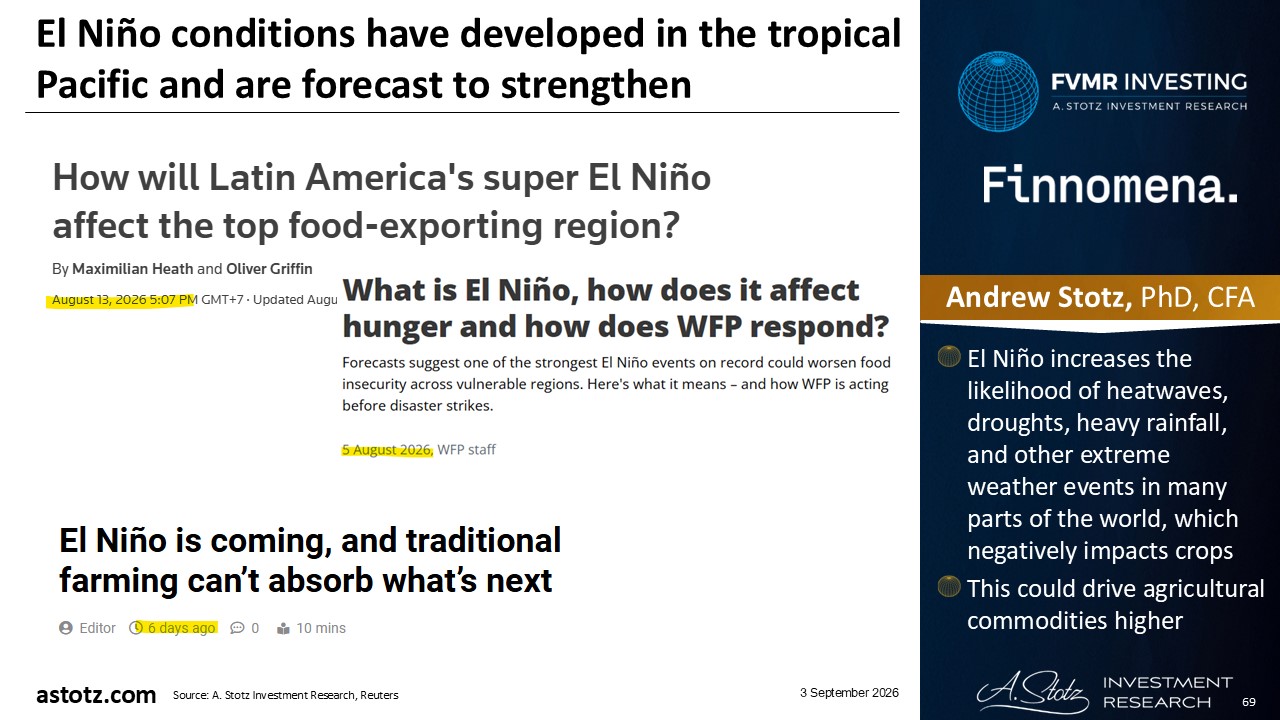
- El Niño increases the likelihood of heatwaves, droughts, heavy rainfall, and other extreme weather events in many parts of the world, which negatively impacts crops
- This could drive agricultural commodities higher
Soybean price is rising, and the corn price might recover; animal feed and biofuels drive demand
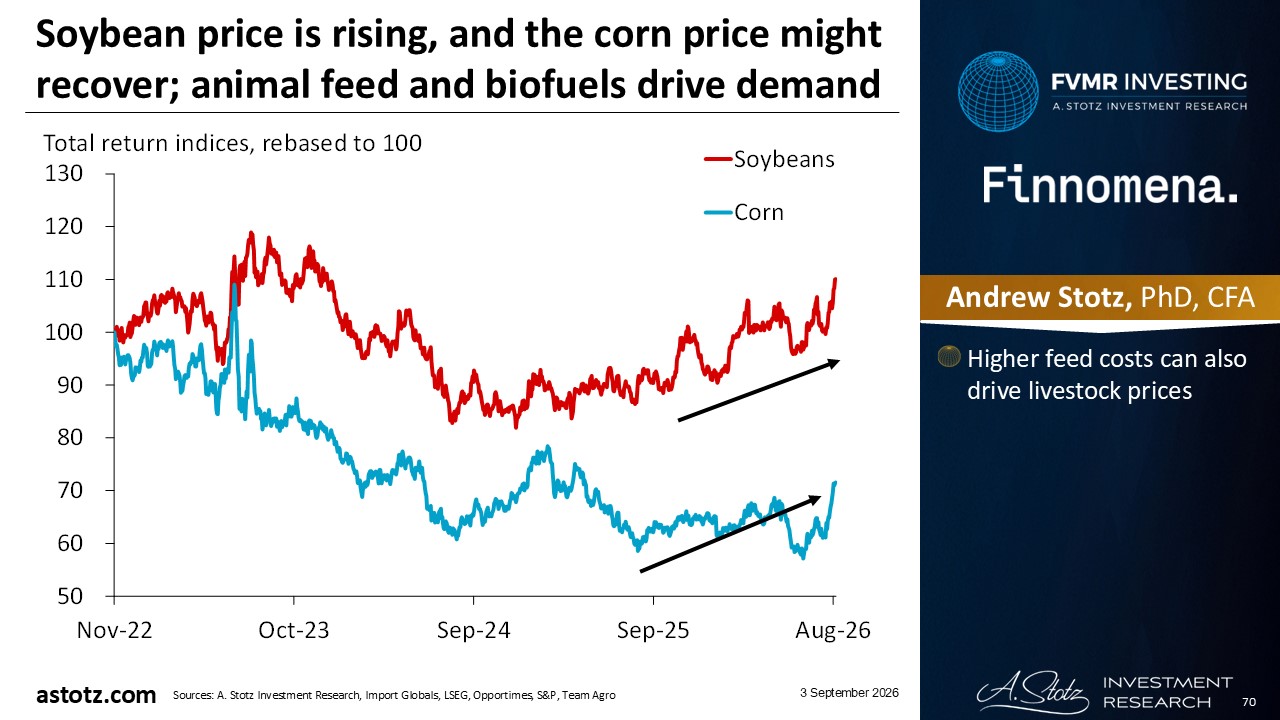
- Higher feed costs can also drive livestock prices
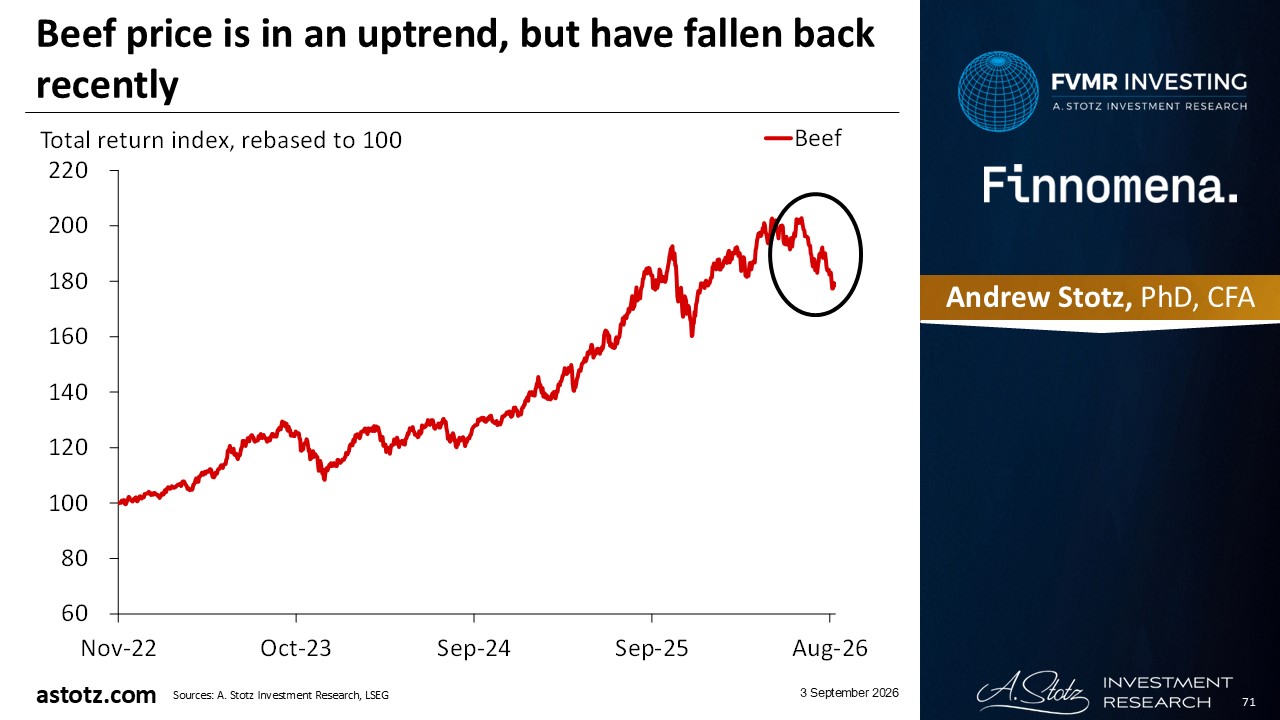
Beef price is in an uptrend, but have fallen back recently
Data centers, energy storage, and power grids drive demand for industrial metals
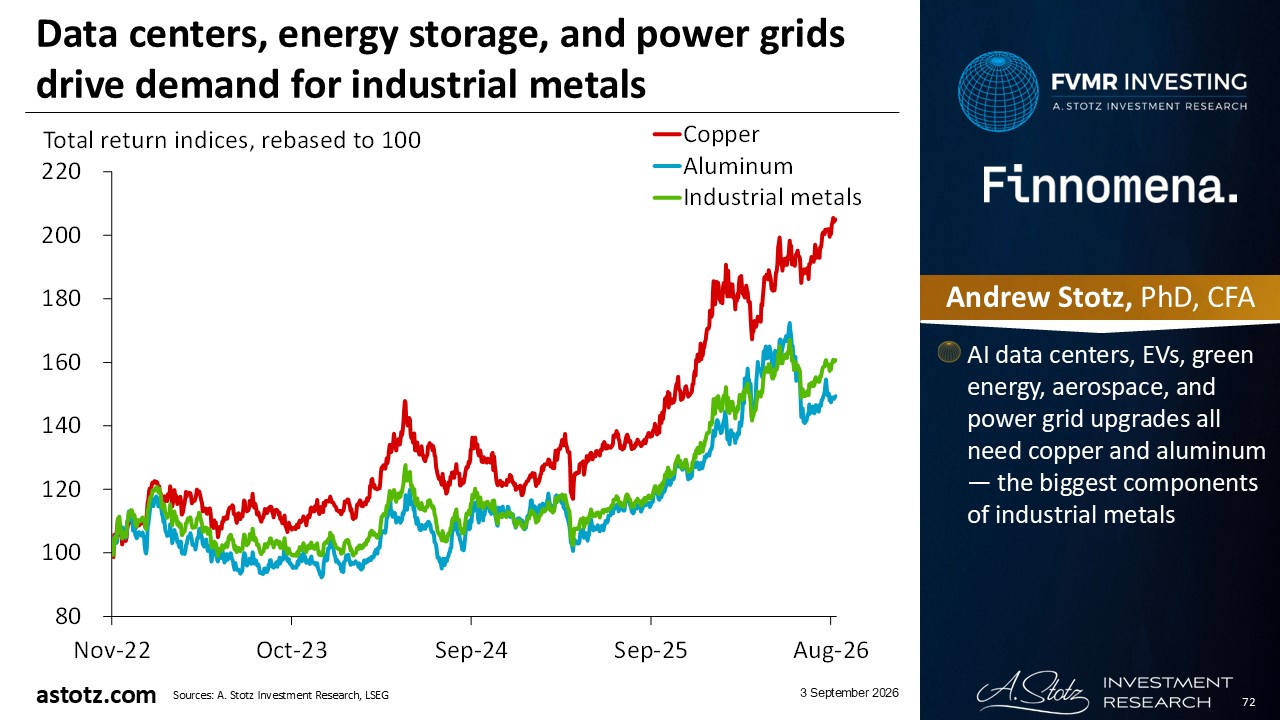
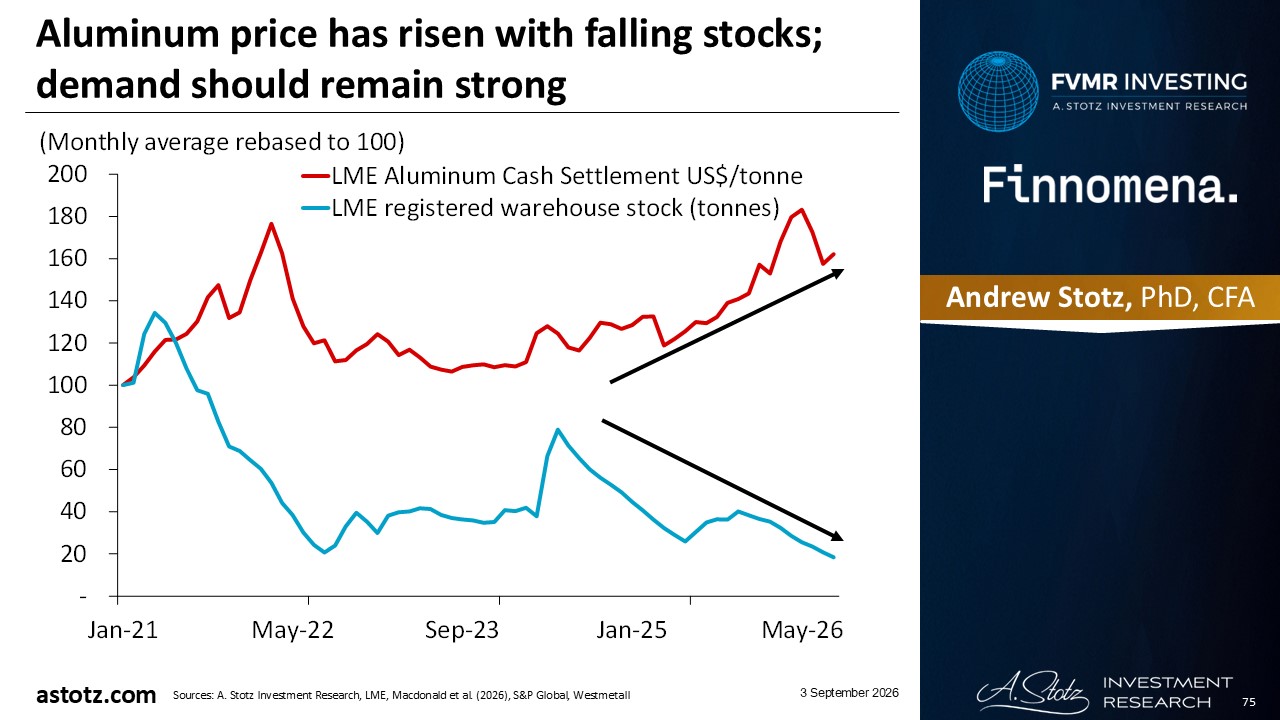
- AI data centers, EVs, green energy, aerospace, and power grid upgrades all need copper and aluminum — the biggest components of industrial metals
US construction spending on data centers has accelerated massively in recent years
Existing copper projects won’t meet future demand from AI and energy transition
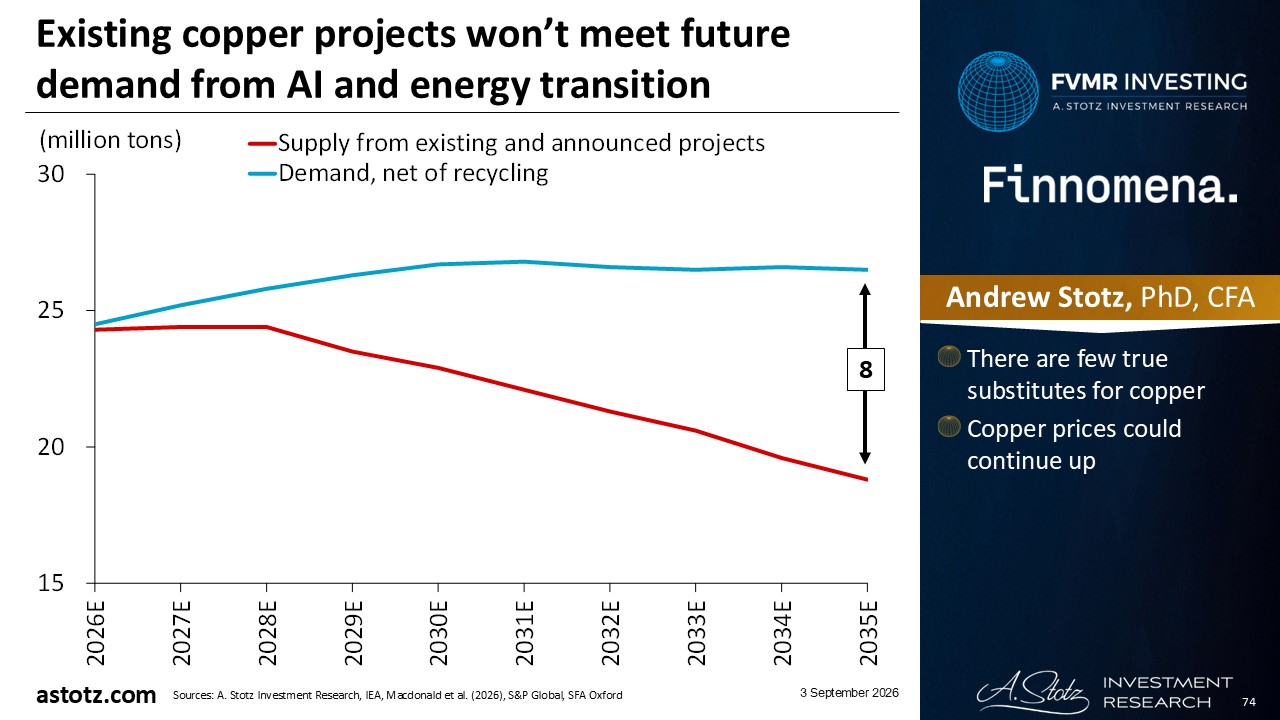
- There are few true substitutes for copper
- Copper prices could continue up
Aluminum price has risen with falling stocks; demand should remain strong
In August 2026, Gold shot up 10.6%
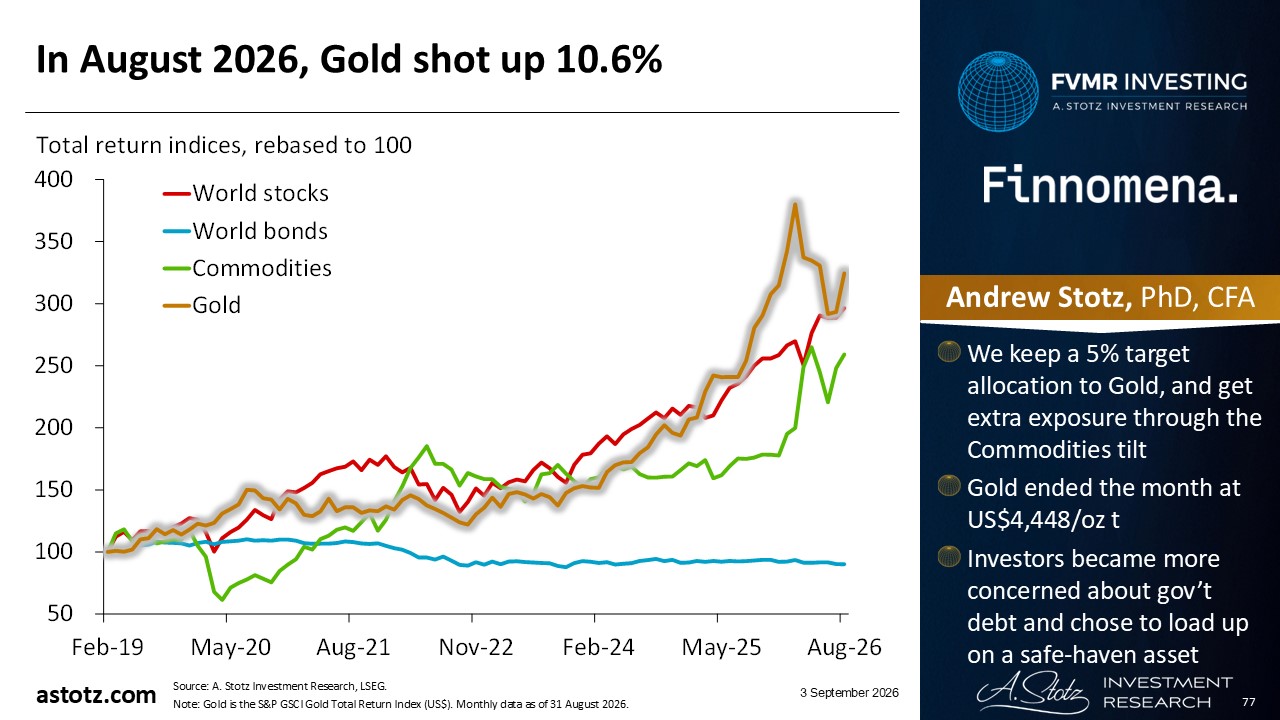
- We keep a 5% target allocation to Gold, and get extra exposure through the Commodities tilt
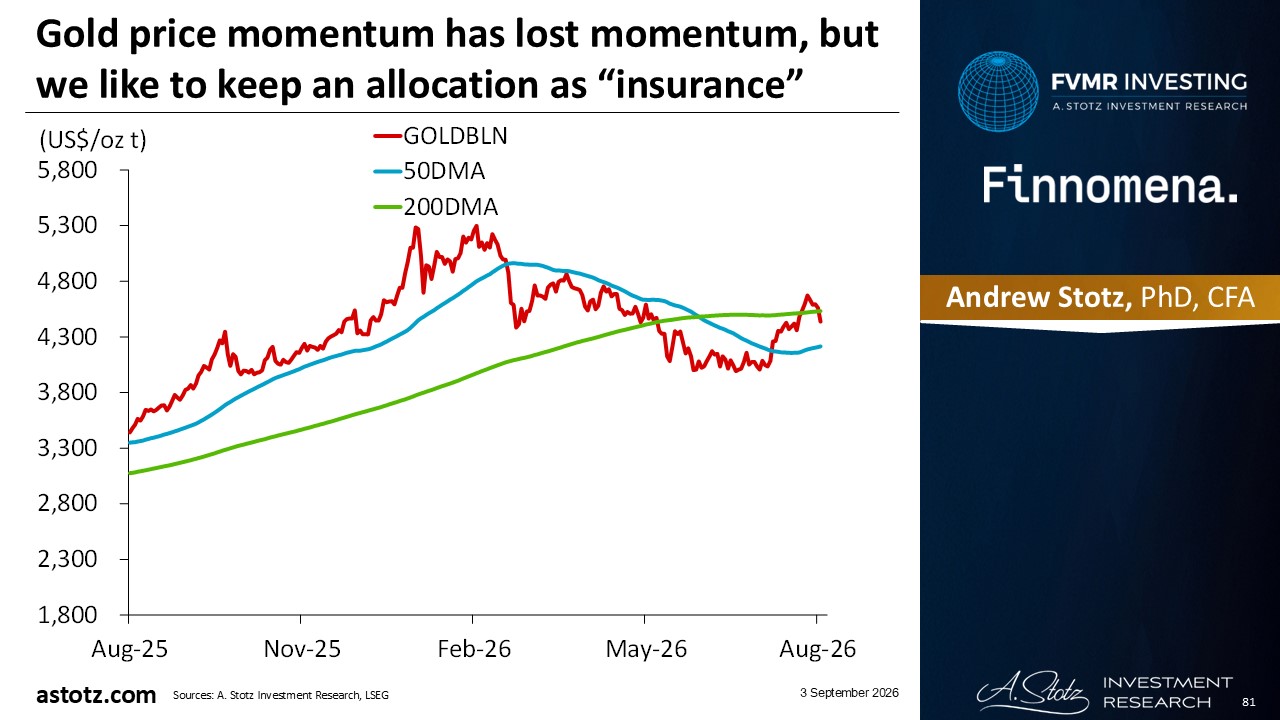
- Gold ended the month at US$4,448/oz t
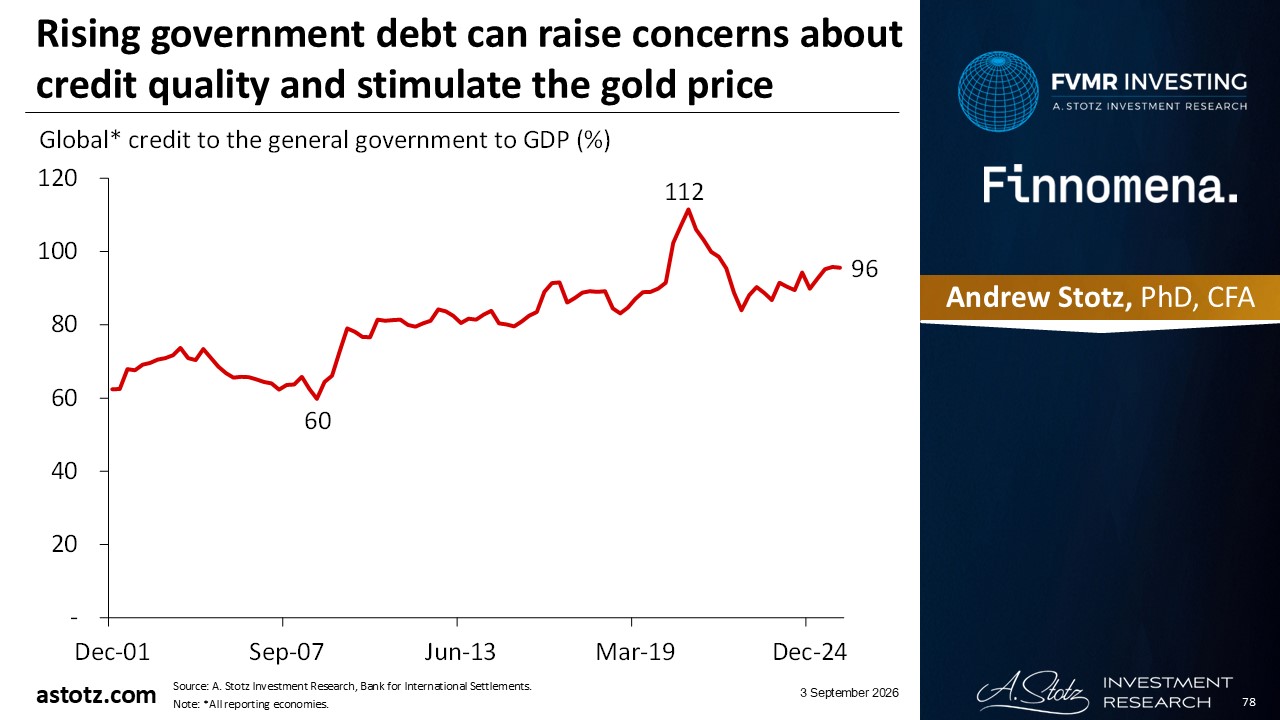
- Investors became more concerned about gov’t debt and chose to load up on a safe-haven asset
Rising government debt can raise concerns about credit quality and stimulate the gold price
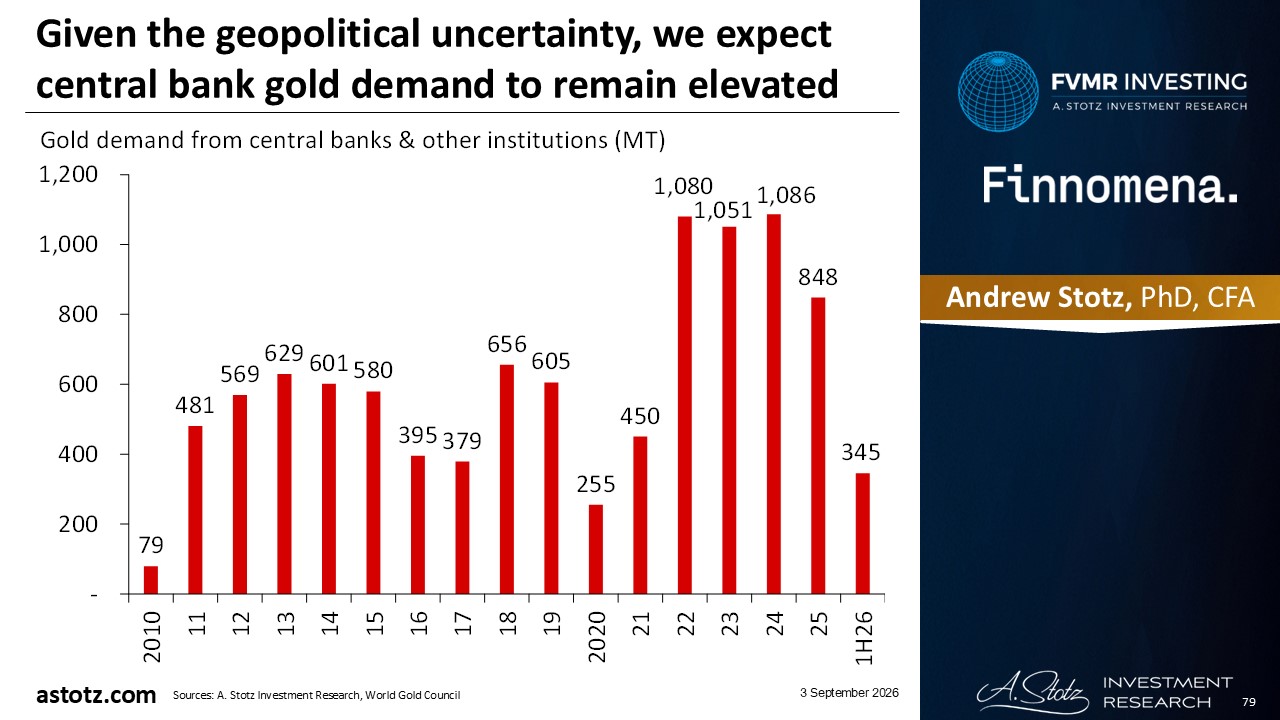
Given the geopolitical uncertainty, we expect central bank gold demand to remain elevated
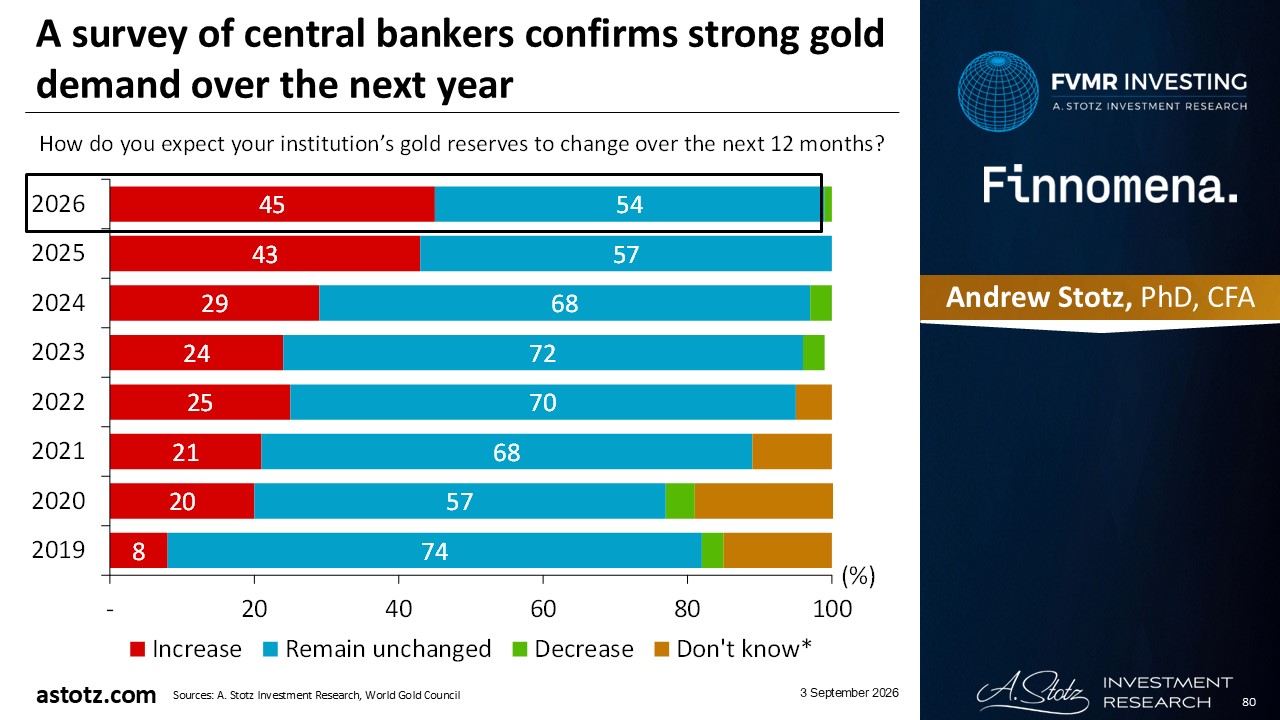
A survey of central bankers confirms strong gold demand over the next year
Gold price momentum has lost momentum, but we like to keep an allocation as “insurance”
DISCLAIMER: This content is for information purposes only. It is not intended to be investment advice. Readers should not consider statements made by the author(s) as formal recommendations and should consult their financial advisor before making any investment decisions. While the information provided is believed to be accurate, it may include errors or inaccuracies. The author(s) cannot be held liable for any actions taken as a result of reading this article.